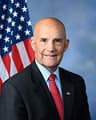
A Republican bill with 3 Democratic cosponsors · See all 5 cosponsors
Last activity — Ordered to be Reported in the Nature of a Substitute by the Yeas and Nays: 46 - 0.
Introduced, nothing more yet
Formally proposed, and not yet handed to a committee.
Nearly every bill is sent to a committee within days. Introduction alone is not a sign of support, of momentum, or of any likelihood of passing — any member may introduce any bill.
Its path through Congress
- Introduced
What this bill would do
The SHADOW Act aims to address hybrid warfare threats against United States interests. It requires the Secretary of State to assess these threats and work with foreign governments and NATO allies to improve cooperation and information sharing. The bill establishes a Coordinator for Hybrid Warfare Accountability to manage interagency and allied efforts. This Coordinator will focus on identifying gaps in threat understanding and supporting resilience in vulnerable sectors. Additionally, the bill mandates a report identifying Chinese entities that support Russia's defense industrial base and recommending sanctions.
Yes· 3 of 6
- Scored +8
Does this strengthen ties with allied countries?
The bill mandates improved cooperation and information sharing with NATO allies and other key partners.
- Scored +7
Does this better protect the country from computer attacks?
The bill encourages information sharing on cyber campaigns to improve preparedness and mitigation.
- Scored +7
Does this favour talking over confrontation abroad?
The bill requires diplomatic engagement with foreign governments to counter hybrid warfare.
The opposite
No question was scored the opposite.
Who it would affect, and how
Potential Positive Impacts for People
-
Security of Citizens Abroad: The bill directs diplomatic engagement to address hybrid warfare activities that may threaten the security of United States citizens and institutions abroad (Section 2).
-
Protection of Critical Infrastructure: The Coordinator is tasked with supporting resilience and de-risking efforts in sectors vulnerable to foreign coercion, such as energy, telecommunications, strategic materials, and critical infrastructure (Section 3(b)(4)).
-
Improved National Defense: By encouraging closer information sharing with NATO allies on cyber campaigns and identifying operational gaps, the bill seeks to strengthen preparedness and mitigation efforts against threats (Section 2 and Section 3(b)(2)).
Potential Negative Impacts for People
- No negative impacts for individuals or groups of people in the United States are explicitly mentioned in the provided text.
Groups and Interests Ranking
Every group the model scored this bill for, from -10 to +10. Tap or hover a score for the reason it gave.
- National Security And Foreign Policy
- Does this strengthen ties with allied countries? — The bill mandates improved cooperation and information sharing with NATO allies and other key partners. Does this better protect the country from computer attacks? — The bill encourages information sharing on cyber campaigns to improve preparedness and mitigation. Does this favour talking over confrontation abroad? — The bill requires diplomatic engagement with foreign governments to counter hybrid warfare.
- Governance And Ideology
- Does this make what the government does easier for the public to see? — The bill requires the publication of an unclassified report on Chinese entities supporting Russia's defense base. Does this give the federal government more power? — The bill creates a new Coordinator role within the Department of State to centralize hybrid warfare efforts.
- Social Issues And Justice
- Does this tighten control of the border? — The bill addresses the weaponization of migration flows as a hybrid warfare activity.
- 3/27/2026
- 1 Cosponsor added.
- 3/26/2026
- Committee Consideration and Mark-up Session Held
- Ordered to be Reported in the Nature of a Substitute by the Yeas and Nays: 46 - 0.
- 3/3/2026
- 1 Cosponsor added.
- 2/23/2026
- 1 Cosponsor added.
- 2/20/2026
- Referred to the House Committee on Foreign Affairs.
- 2 Cosponsors added.
- Introduced in House
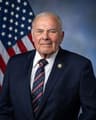 James Baird
Republican · Indiana
 William Keating
Democrat · Massachusetts
 Michael Lawler
Republican · New York
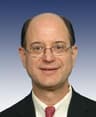 Brad Sherman
Democrat · California
 Eugene Vindman
Democrat · Virginia