
A Republican bill with 1 Republican cosponsor · See the cosponsor
Last activity — Referred to the Subcommittee on Nutrition and Foreign Agriculture.
In committee
Introduced and handed to a committee in the chamber it started in.
The committee holds it, and most bills are never heard from again. A hearing or a committee vote would be news; silence is the usual outcome, and it kills the bill without anyone voting against it.
Its path through Congress
- Introduced
- In Committee
What this bill would do
The GusNIP Expansion Act of 2026 aims to amend the Food, Conservation, and Energy Act of 2008 regarding the Gus Schumacher Nutrition Incentive Program. It introduces new financing options for nutrition incentive grants, including a waiver for persistent poverty areas. The bill also establishes a new Produce Prescription Program consisting of pilot and expansion grants. Additionally, it creates cooperative agreements to help scale incentive programs statewide. Finally, the legislation updates funding levels and durations for these various programs.
Yes· 3 of 9
- Scored +5
Would households on low incomes be better off under this?
The bill expands funding for nutrition incentives and produce prescriptions specifically aimed at reducing food insecurity.
- Scored +4
Is this likely to lift people out of poverty?
The bill provides increased funding and specialized waivers to support nutrition incentive programs in high-poverty areas.
- Scored +3
Would farmers be better off under this?
The bill prioritizes farmers markets as retail settings for expanded nutrition incentive programs.
The opposite
No question was scored the opposite.
Who it would affect, and how
Potential Positive Impacts for People
-
Increased support for high-poverty areas: The Secretary may waive the standard 50 percent Federal cost cap for activities in counties or census tracts where at least 20 percent of the population has lived in poverty for the last 30 years. (Section 2(a)(1)(ii))
-
Statewide program scaling: The bill establishes cooperative agreements between eligible entities and State SNAP agencies or local governments to scale existing incentive programs. (Section 2(a)(3)(A))
-
Health and nutrition improvements: The Produce Prescription Program pilot grants are designed to demonstrate and evaluate impacts on increasing fruit and vegetable consumption, reducing food insecurity, and reducing healthcare costs. (Section 2(b)(1)(A))
-
Support for community health and local retail: Seeding infrastructure grants are intended to help establish or validate best practices and aid community health centers and independent produce retail outlets. (Section 2(b)(1)(A)(C))
-
Clinical research expansion: Expansion grants are designed to expand clinical research on the value of delivering produce prescription programs through clinical practice. (Section 2(b)(1)(A)(B))
Potential Negative Impacts for People
-
Funding limitations for specific grants: The bill sets specific limits on grant amounts, with pilot grants capped at $400,000 and expansion grants capped at $2,500,000. (Section 2(b)(6))
-
Spending requirements for agreements: Cooperative agreements include a requirement that at least 90 percent of the funds received must be spent on redeemed incentives at the eligible retailer before the end of the agreement. (Section 2(a)(3)(B)(i)(III))
Groups and Interests Ranking
Every group the model scored this bill for, from -10 to +10. Tap or hover a score for the reason it gave.
- Demographic And Interest Groups
- Would households on low incomes be better off under this? — The bill expands funding for nutrition incentives and produce prescriptions specifically aimed at reducing food insecurity. Would farmers be better off under this? — The bill prioritizes farmers markets as retail settings for expanded nutrition incentive programs. Would people in cities be better off under this? — The bill focuses on food insecurity and nutrition in specific census tracts and counties.
- Healthcare
- Does this make health care easier to get in general? — The bill funds programs that connect clinical practice with nutritional support via produce prescriptions. Does this put more money into Medicaid, the health coverage for people on low incomes? — The bill includes a study to transition produce prescription payments to health insurance programs. Does this lower the price of prescription medicines? — The bill establishes a Produce Prescription Program to improve dietary health and reduce healthcare costs.
- Economy And Finance
- Does this make it easier to run a small business? — The bill prioritizes support for independent produce retail outlets and farmers markets through its grant criteria. Is this likely to grow the economy? — The bill allocates significant new funding for nutrition incentive and produce prescription programs which supports local retail infrastructure.
- Social Issues And Justice
- Is this likely to lift people out of poverty? — The bill provides increased funding and specialized waivers to support nutrition incentive programs in high-poverty areas.
- 3/20/2026
- Referred to the Subcommittee on Nutrition and Foreign Agriculture.
- 2/13/2026
- Referred to the House Committee on Agriculture.
- 1 Cosponsor added.
- Introduced in House
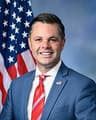 Zachary Nunn
Republican · Iowa