A Republican bill with 4 Republican cosponsors · See all 4 cosponsors
Last activity — Ordered to be Reported in the Nature of a Substitute by the Yeas and Nays: 8 - 3.
Introduced, nothing more yet
Formally proposed, and not yet handed to a committee.
Nearly every bill is sent to a committee within days. Introduction alone is not a sign of support, of momentum, or of any likelihood of passing — any member may introduce any bill.
Its path through Congress
- Introduced
What this bill would do
This bill, known as the "STEADFAST Act," seeks to convert the existing public financing program for presidential election campaigns into a program that provides grants to States and territories for election security. It establishes the Election Security Fund, which will be populated by individual taxpayer designations. The Election Assistance Commission will oversee the distribution of these payments to eligible States. To receive funds, States must meet specific requirements, including certifications regarding noncitizen voting and certain application procedures. The bill also terminates the current funding for presidential election campaigns and presidential primary matching payments.
Yes· 3 of 5
- Scored +6
Does this make elections run better?
The bill funds the modernization of voting equipment and the implementation of security features like paper trails.
- Scored +5
Does this better protect the country from computer attacks?
The bill allows states to use funds for cybersecurity efforts to protect voting systems.
- Scored +4
Does this leave more decisions to the states?
The bill shifts funds from a federal campaign financing program to a grant program administered to individual states.
The opposite· 3 of 6
- Scored -3
Does this make casting a ballot easier in practice?
The bill prioritizes states that require specific forms of photo identification, which may act as a barrier to voting for some populations.
- Scored -2
Would households on low incomes be better off under this?
The emphasis on specific photo identification requirements may disproportionately affect low-income individuals who lack these documents.
- Scored -2
Would Hispanic Americans be better off under this?
The bill requires states to implement measures to ensure noncitizens do not vote, which may target immigrant communities.
Who it would affect, and how
Potential Positive Impacts for People
-
Enhanced Election Security: States can use payments to update voting systems to meet security standards, which includes acquiring voting equipment, cybersecurity efforts, and physical security for storage (Sec. 2(c)(1)).
-
Modernization of Voting Infrastructure: Funds can be used to modernize and replace components of voting systems, as well as purchase and print paper ballots with security features (Sec. 2(c)(1)).
-
Protection of Voter Information: The bill allows for the securing and protecting of electronic poll books (Sec. 2(c)(1)).
-
Increased Transparency: States receiving payments must provide a report on a publicly accessible website detailing how the money was spent and how they complied with their application (Sec. 2(g)).
Potential Negative Impacts for People
-
Restrictions on Use of Funds: States are prohibited from using these payments for training election administrators, unless that training is specifically for using election system equipment, or for any litigation or judgment payments (Sec. 2(c)(2)).
-
Strict Eligibility Requirements for States: To receive payments, a State must certify that it does not permit noncitizens to vote in any election for public office (Sec. 2(b)(2)).
-
Priority Restrictions: The Commission will prioritize States that meet specific conditions, such as using certain forms of valid photo identification, which excludes identification cards provided by an educational institution (Sec. 2(e)(3)).
-
Termination of Existing Campaign Funding: The bill terminates the provisions for the public financing of presidential election campaigns and presidential nominating conventions (Sec. 3(a)). It also terminates the Presidential Primary Matching Payment Account (Sec. 3(b)).
Groups and Interests Ranking
Every group the model scored this bill for, from -10 to +10. Tap or hover a score for the reason it gave.
- Governance And Ideology
- Does this make elections run better? — The bill funds the modernization of voting equipment and the implementation of security features like paper trails. Does this leave more decisions to the states? — The bill shifts funds from a federal campaign financing program to a grant program administered to individual states. Does this make what the government does easier for the public to see? — States receiving payments must publish reports on how the funds were spent on a public website.
- Demographic And Interest Groups
- Would Hispanic Americans be better off under this? — The bill requires states to implement measures to ensure noncitizens do not vote, which may target immigrant communities. Would households on low incomes be better off under this? — The emphasis on specific photo identification requirements may disproportionately affect low-income individuals who lack these documents. Would students be better off under this? — The bill specifically excludes student-issued identification from being used as valid photo ID for receiving priority state payments.
- National Security And Foreign Policy
- Does this better protect the country from computer attacks? — The bill allows states to use funds for cybersecurity efforts to protect voting systems.
- Economy And Finance
- Does this reduce what the federal government spends? — The bill terminates the specific funding mechanism for presidential election campaigns and primary matching payments. Does this cut taxes for middle-income families? — The bill redirects funds previously used for presidential campaign financing toward state election security grants.
- Social Issues And Justice
- Does this protect the right to vote? — The bill provides funds to enhance the security and integrity of voting systems. Does this make casting a ballot easier in practice? — The bill prioritizes states that require specific forms of photo identification, which may act as a barrier to voting for some populations.
- 5/14/2026
- Committee Consideration and Mark-up Session Held
- Ordered to be Reported in the Nature of a Substitute by the Yeas and Nays: 8 - 3.
- 2/9/2026
- Referred to the Committee on House Administration, and in addition to the Committee on Ways and Means, for a period to be subsequently determined by the Speaker, in each case for consideration of such provisions as fall within the jurisdiction of the committee concerned.
- 4 Cosponsors added.
- Introduced in House
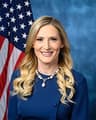 Laurel Lee
Republican · Florida
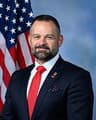 Cory Mills
Republican · Florida
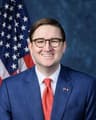 Addison McDowell
Republican · North Carolina
 Christopher Smith
Republican · New Jersey