
A Republican bill with 17 Democratic cosponsors · See all 29 cosponsors
Last activity — Referred to the Committee on Energy and Commerce, and in addition to the Committee on the Budget, for a period to be subsequently determined by the Speaker, in each case for consideration of such provisions as fall within the jurisdiction of the committee concerned.
In committee
Introduced and handed to a committee in the chamber it started in.
The committee holds it, and most bills are never heard from again. A hearing or a committee vote would be news; silence is the usual outcome, and it kills the bill without anyone voting against it.
Its path through Congress
- Introduced
- In Committee
What this bill would do
The PASTEUR Act of 2026 aims to amend the Public Health Service Act to develop a program for innovative antimicrobial drugs. This legislation establishes a system where the Secretary can enter into contracts with sponsors to ensure the availability of drugs targeting challenging pathogens and threatening infections. The bill seeks to stimulate research, development, and market access for lifesaving medicines while maintaining high medical care standards. It includes a scoring system to identify eligible antimicrobials based on patient care, innovation, and public health benefits. Additionally, the act provides for annual payments to drug sponsors and establishes a grant program to support healthcare facilities in antimicrobial stewardship.
Yes· 3 of 15
- Scored +5
Does this put more money into medical research?
The bill provides substantial funding for the research and development of novel antimicrobials.
- Scored +5
Does this put more money into scientific research?
The bill allocates billions to stimulate research for new antimicrobial drugs.
- Scored +3
Would business owners be better off under this?
The bill provides predictable revenue streams for pharmaceutical sponsors through contracts.
The opposite
- Scored -1
Does this reduce what the federal government owes?
The bill authorizes $6,000,000,000 in new spending which increases the national debt.
- Scored -1
Does this reduce what the federal government spends?
The bill increases government spending through new drug contracts and grant programs.
- Scored -1
Does this make the government pay for what it commits to?
The bill adds significant new emergency spending obligations.
Who it would affect, and how
Potential Positive Impacts for People
-
Increased Availability of Lifesaving Medicines: The bill allows the Secretary to enter into contracts with sponsors to ensure the availability of eligible antimicrobials (Section 399PP(a)).
-
Improved Patient Care Outcomes: The scoring methodology rewards drugs that improve clinical outcomes for patients with multi-drug-resistant infections, reduce toxicity, and reduce adverse events (Section 399PP(d)(2)(A)).
-
Support for Health System Preparedness: The act is intended to promote national health system preparedness and defend the United States and its military (Section 2).
-
Enhanced Stewardship in Healthcare Facilities: A grant program will be established to help hospitals, skilled nursing facilities, and other healthcare facilities judiciously use antimicrobial drugs (Section 399PP-2(a)(1)).
-
Prioritization of Underserved Areas: Grant awards will prioritize facilities in rural areas, critical access hospitals, those serving Tribal populations, and safety-net hospitals (Section 399PP-2(a)(2)).
-
Improved Outpatient Care: A pilot program will provide grants to outpatient entities, such as urgent care settings and retail clinics, to implement antibiotic stewardship programs (Section 399PP-2(b)).
-
Better Data for Public Health: The Secretary will collect and, starting two years after enactment, make publicly available data regarding antimicrobial resistance and use to improve monitoring of health trends (Section 399PP-2(c)).
Potential Negative Impacts for People
-
Financial Burden of Annual Payments: The bill authorizes annual payments to drug sponsors ranging from $75,000,000 to $300,000,000 per year (Section 399PP(f)(2)(A)).
-
Potential for Limited Access Based on Clinical Research: The bill states that the Secretary may not use evidence from comparative clinical effectiveness research to treat the lives of elderly, disabled, or terminally ill individuals as having lower value for calculating payments, but acknowledges this as a factor in calculating annual payments (Section 399PP(f)(5)(B)).
Groups and Interests Ranking
Every group the model scored this bill for, from -10 to +10. Tap or hover a score for the reason it gave.
- Demographic And Interest Groups
- Would business owners be better off under this? — The bill provides predictable revenue streams for pharmaceutical sponsors through contracts. Would people in rural areas be better off under this? — The bill prioritizes rural and critical access hospitals for health facility grants. Would Native Americans be better off under this? — The bill prioritizes hospitals serving Tribal populations for health facility grants. Would households on low incomes be better off under this? — The bill prioritizes safety-net hospitals in its grant program. Would people with disabilities be better off under this? — The bill requires drug communications to be accessible to people with disabilities. Would veterans be better off under this, taking everything together? — The bill coordinates with the Department of Veterans Affairs for data collection.
- Healthcare
- Does this put more money into medical research? — The bill provides substantial funding for the research and development of novel antimicrobials. Does this make the country readier for the next outbreak? — The act strengthens national health system preparedness against infectious threats. Does this make health care easier to get in general? — The bill aims to ensure the availability of lifesaving antimicrobials through new contracts.
- Education And Technology
- Does this put more money into scientific research? — The bill allocates billions to stimulate research for new antimicrobial drugs.
- Economy And Finance
- Is this likely to grow the economy? — The bill stimulates research and development in the pharmaceutical sector. Does this make the government pay for what it commits to? — The bill adds significant new emergency spending obligations. Does this reduce what the federal government spends? — The bill increases government spending through new drug contracts and grant programs. Does this reduce what the federal government owes? — The bill authorizes $6,000,000,000 in new spending which increases the national debt.
- Environment Energy And Infrastructure
- Does this better protect air, water and wildlife? — The bill requires drug sponsors to abide by environmental best practices for manufacturing.
- Governance And Ideology
- Does this make what the government does easier for the public to see? — The bill mandates that the Secretary make antimicrobial resistance and use data publicly available.
- National Security And Foreign Policy
- Does this increase the pay, pensions or support veterans receive? — The bill involves the Department of Veterans Affairs in collecting drug consumption data.
- Social Issues And Justice
- Does this expand the rights of people with disabilities? — The bill requires communications for individuals with disabilities regarding drug use.
- 10/15/2026
- 1 Cosponsor added.
- 10/5/2026
- 1 Cosponsor added.
- 8/31/2026
- 2 Cosponsors added.
- 8/20/2026
- 1 Cosponsor added.
- 7/13/2026
- 1 Cosponsor added.
- 6/23/2026
- 1 Cosponsor added.
- 6/15/2026
- 1 Cosponsor added.
- 6/2/2026
- 1 Cosponsor added.
- 5/14/2026
- 2 Cosponsors added.
- 5/12/2026
- 1 Cosponsor added.
- 4/30/2026
- 1 Cosponsor added.
- 3/24/2026
- 2 Cosponsors added.
- 3/12/2026
- 2 Cosponsors added.
- 3/5/2026
- 1 Cosponsor added.
- 2/24/2026
- 1 Cosponsor added.
- 2/10/2026
- 2 Cosponsors added.
- 2/9/2026
- 4 Cosponsors added.
- 2/4/2026
- Referred to the Committee on Energy and Commerce, and in addition to the Committee on the Budget, for a period to be subsequently determined by the Speaker, in each case for consideration of such provisions as fall within the jurisdiction of the committee concerned.
- 4 Cosponsors added.
- Introduced in House
One bill Congress.gov lists as related to this one — companions in the other chamber, earlier versions, and bills this one absorbed or was folded into.
 Jake Auchincloss
Democrat · Massachusetts
 Don Bacon
Republican · Nebraska
 Yvette Clarke
Democrat · New York
 Angie Craig
Democrat · Minnesota
 Mike Carey
Republican · Ohio
 Donald Davis
Democrat · North Carolina
 Suzan DelBene
Democrat · Washington
 Charles Fleischmann
Republican · Tennessee
 Brian Fitzpatrick
Republican · Pennsylvania
 Josh Gottheimer
Democrat · New Jersey
 Chrissy Houlahan
Democrat · Pennsylvania
 Thomas Kean
Republican · New Jersey
 Mike Levin
Democrat · California
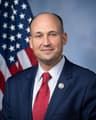 Nicholas Langworthy
Republican · New York
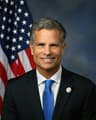 Daniel Meuser
Republican · Pennsylvania
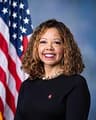 Lucy McBath
Democrat · Georgia
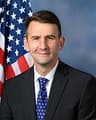 Frank Mrvan
Democrat · Indiana
 Mariannette Miller-Meeks
Republican · Iowa
 Scott Peters
Democrat · California
 Mike Quigley
Democrat · Illinois
 Deborah Ross
Democrat · North Carolina
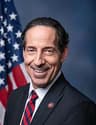 Jamie Raskin
Democrat · Maryland
 Maria Salazar
Republican · Florida
 Christopher Smith
Republican · New Jersey
 Adrian Smith
Republican · Nebraska
 Terri Sewell
Democrat · Alabama
 Lori Trahan
Democrat · Massachusetts
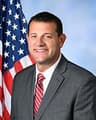 David Valadao
Republican · California
 Nikema Williams
Democrat · Georgia