
A Democratic bill with 14 Democratic cosponsors · See all 14 cosponsors
Last activity — Referred to the House Committee on Education and Workforce.
In committee
Introduced and handed to a committee in the chamber it started in.
The committee holds it, and most bills are never heard from again. A hearing or a committee vote would be news; silence is the usual outcome, and it kills the bill without anyone voting against it.
Its path through Congress
- Introduced
- In Committee
What this bill would do
This bill, known as the "Growing Reputable Academic Departments Act" or the "GRAD Act," seeks to amend the Higher Education Act of 1965. It aims to expand grant eligibility for certain institutions. Specifically, the bill would include certain part B institutions and Predominantly Black Institutions that offer qualified masters degree programs. These changes would adjust how funds are allocated for these specific groups.
Yes· 3 of 6
- Scored +5
Would Black Americans be better off under this?
The bill specifically expands grant eligibility for institutions that serve the Black community, such as Predominantly Black Institutions.
- Scored +5
Does this narrow racial gaps in how people are treated?
The bill expands grant eligibility for part B institutions and Predominantly Black Institutions.
- Scored +4
Does this put more money into public schools?
The bill expands eligibility for certain institutions to receive federal grants through the Higher Education Act.
The opposite
No question was scored the opposite.
Who it would affect, and how
Potential Positive Impacts for People
-
Expansion of grant eligibility for Historically Black Colleges and Universities: The bill would allow a part B institution that offers a qualified masters degree program and is not already listed to be eligible for certain grants (Section 2(a)).
-
Expansion of grant eligibility for Predominantly Black Institutions: The bill would allow a Predominantly Black Institution that offers a qualified masters degree program and is not already listed to be eligible for certain grants (Section 2(b)).
-
Changes to fund allocation limits: The bill removes specific dollar amount caps, such as the "$9,000,000" limit for certain institutions and the "$2,500,000" limit for Predominantly Black Institutions, replacing them with language regarding remaining amounts (Section 2(a)(1) and Section 2(b)(1)).
Potential Negative Impacts for People
- No negative impacts are explicitly stated in the provided text.
Groups and Interests Ranking
Every group the model scored this bill for, from -10 to +10. Tap or hover a score for the reason it gave.
- Demographic And Interest Groups
- Would Black Americans be better off under this? — The bill specifically expands grant eligibility for institutions that serve the Black community, such as Predominantly Black Institutions. Would students be better off under this? — Expanding grant eligibility for master's degree programs can increase educational opportunities for students at these institutions. Would households on low incomes be better off under this? — Increasing funding for historically black institutions can provide more educational opportunities for low-income students.
- Education And Technology
- Does this put more money into public schools? — The bill expands eligibility for certain institutions to receive federal grants through the Higher Education Act. Does this make college cost less? — By expanding grant availability for master's degree programs at specific institutions, it supports the financial viability of those programs.
- Social Issues And Justice
- Does this narrow racial gaps in how people are treated? — The bill expands grant eligibility for part B institutions and Predominantly Black Institutions.
- 2/9/2026
- 1 Cosponsor added.
- 2/4/2026
- Referred to the House Committee on Education and Workforce.
- 13 Cosponsors added.
- Introduced in House
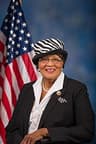 Alma Adams
Democrat · North Carolina
 Yvette Clarke
Democrat · New York
 Steve Cohen
Democrat · Tennessee
 André Carson
Democrat · Indiana
 Troy Carter
Democrat · Louisiana
 Danny Davis
Democrat · Illinois
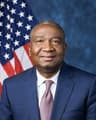 Cleo Fields
Democrat · Louisiana
 Valerie Foushee
Democrat · North Carolina
 Henry Johnson
Democrat · Georgia
 Summer Lee
Democrat · Pennsylvania
 Eleanor Norton
Democrat · District of Columbia
 Terri Sewell
Democrat · Alabama
 Lateefah Simon
Democrat · California
 Eugene Vindman
Democrat · Virginia