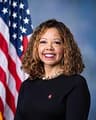
Lucy McBath (D-GA)
Family Violence Prevention and Services Improvement Act of 2026
A Democratic bill with 3 Republican cosponsors · See all 49 cosponsors
Last activity — Referred to the Committee on Education and Workforce, and in addition to the Committee on Energy and Commerce, for a period to be subsequently determined by the Speaker, in each case for consideration of such provisions as fall within the jurisdiction of the committee concerned.
In committee
Introduced and handed to a committee in the chamber it started in.
The committee holds it, and most bills are never heard from again. A hearing or a committee vote would be news; silence is the usual outcome, and it kills the bill without anyone voting against it.
Its path through Congress
- Introduced
- In Committee
What this bill would do
This bill, known as the "Family Violence Prevention and Services Improvement Act of 2026," aims to amend the Family Violence Prevention and Services Act to improve services and interventions for victims. It focuses on advancing the primary and secondary prevention of family, domestic, and dating violence. The legislation provides for increased support for States, Indian Tribes, and underserved populations through various grant programs. It specifically enhances resources for national hotlines, including new digital services and a specific national Indian domestic violence hotline. Additionally, the bill establishes specialized resource centers for Alaska Native and Native Hawaiian communities.
Yes· 3 of 16
- Scored +9
Would Native Americans be better off under this?
The bill significantly strengthens support for Indian Tribes, including a national Indian domestic violence hotline and specific resource centers.
- Scored +7
Would women be better off under this?
The bill enhances resources and protections for victims of domestic and dating violence, which disproportionately affects women.
- Scored +7
Does this narrow racial gaps in how people are treated?
The bill establishes new resource centers and grant programs specifically for Alaska Native, Native Hawaiian, and other underserved racial or ethnic populations.
The opposite
No question was scored the opposite.
Who it would affect, and how
Potential Positive Impacts for People
-
Improved Access to Services for Victims: The bill aims to improve services and interventions for victims of family, domestic, and dating violence through local programs that are trauma-informed and culturally relevant (Section 101).
-
Increased Support for Indian Tribes: The act strengthens the capacity of Indian Tribes to exercise sovereign authority to respond to violence committed against Indians (Section 101).
-
Enhanced Resources for Underserved Populations: New grant programs are established to assist communities in organizing resources to address violence experienced by underserved populations (Section 313B).
-
Improved Hotline Accessibility: The bill expands national hotlines to include digital services, making it easier for people to access support through electronic communication platforms (Section 313).
-
Targeted Support for Alaska Native and Native Hawaiian Communities: The bill authorizes the creation of specific resource centers to reduce disparities for these communities (Section 111).
-
Protection of Victim Privacy: The bill requires grantees to protect the confidentiality and privacy of persons receiving assistance (Section 302A(b)).
-
No Financial Barriers to Assistance: The law prohibits imposing income eligibility standards or levying fees for assistance or services supported by these funds (Section 302A(c)).
Potential Negative Impacts for People
-
Requirement for Documentation for Coalitions: Tribal Domestic Violence Coalitions must provide documentation of their history and ability to conduct specific activities to be eligible for grants (Section 311A(c)).
-
Limitations on Grant Duration: Many of the specialized grant programs, such as those for underserved populations and culturally specific services, are limited to specific timeframes, such as 3 or 5 years (Section 313B(5), Section 313C(e)).
-
Conditional Funding for Hotlines: Payments for the national Indian domestic violence hotline are subject to annual approval by the Secretary and the availability of appropriations (Section 313A(c)).
Groups and Interests Ranking
Every group the model scored this bill for, from -10 to +10. Tap or hover a score for the reason it gave.
- Demographic And Interest Groups
- Would Native Americans be better off under this? — The bill significantly strengthens support for Indian Tribes, including a national Indian domestic violence hotline and specific resource centers. Would women be better off under this? — The bill enhances resources and protections for victims of domestic and dating violence, which disproportionately affects women. Would children be better off under this? — The bill prioritizes services for children and youth exposed to violence and includes specialized services for abused parents and their children. Would people with disabilities be better off under this? — The bill mandates accessible digital formats and specialized training for assisting people with disabilities. Would people in their twenties and thirties be better off under this? — The bill includes funding for teen dating violence prevention demonstration projects. Would households on low incomes be better off under this? — The bill prohibits charging fees or requiring income eligibility for assistance services. Would Black Americans be better off under this? — The bill includes grants for underserved racial or ethnic populations which often include Black communities. Would Hispanic Americans be better off under this? — The bill provides funding for underserved racial and ethnic populations through specialized grants. Would retired people be better off under this? — The bill includes specific mentions of protecting elderly persons from family violence. Would people over 65 be better off under this? — The bill includes protections for elderly persons within the definition of family violence.
- Social Issues And Justice
- Does this narrow racial gaps in how people are treated? — The bill establishes new resource centers and grant programs specifically for Alaska Native, Native Hawaiian, and other underserved racial or ethnic populations. Does this expand the rights of people with disabilities? — The bill enhances services for victims with disabilities, including providing information in accessible formats and training personnel. Is this likely to lift people out of poverty? — The bill prohibits imposing income eligibility standards or fees for assistance to victims.
- Healthcare
- Does this make mental health care easier to get? — The bill funds the response of mental health and substance use disorder systems to victims of violence.
- Education And Technology
- Does this get reliable internet to more people? — The bill expands national hotlines to include digital services via electronic communication platforms.
- Governance And Ideology
- Does this make what the government does easier for the public to see? — The bill requires the Secretary to make evaluation reports from prevention programs publicly available on the HHS website.
- 9/3/2026
- 1 Cosponsor added.
- 8/17/2026
- 4 Cosponsors added.
- 6/29/2026
- 3 Cosponsors added.
- 6/18/2026
- 5 Cosponsors added.
- 6/11/2026
- 7 Cosponsors added.
- 6/9/2026
- 1 Cosponsor added.
- 6/2/2026
- 1 Cosponsor added.
- 4/20/2026
- 1 Cosponsor added.
- 3/4/2026
- 2 Cosponsors added.
- 2/25/2026
- 1 Cosponsor added.
- 2/23/2026
- 20 Cosponsors added.
- 2/3/2026
- Referred to the Committee on Education and Workforce, and in addition to the Committee on Energy and Commerce, for a period to be subsequently determined by the Speaker, in each case for consideration of such provisions as fall within the jurisdiction of the committee concerned.
- 3 Cosponsors added.
- Introduced in House
One bill Congress.gov lists as related to this one — companions in the other chamber, earlier versions, and bills this one absorbed or was folded into.
 Suzanne Bonamici
Democrat · Oregon
 Nanette Barragán
Democrat · California
 Nikki Budzinski
Democrat · Illinois
 Becca Balint
Democrat · Vermont
 Emanuel Cleaver
Democrat · Missouri
 Steve Cohen
Democrat · Tennessee
 Judy Chu
Democrat · California
 Sheila Cherfilus-McCormick
Democrat · Florida
 Mark DeSaulnier
Democrat · California
 Debbie Dingell
Democrat · Michigan
 Maxine Dexter
Democrat · Oregon
 Adriano Espaillat
Democrat · New York
 Sarah Elfreth
Democrat · Maryland
 Brian Fitzpatrick
Republican · Pennsylvania
 Adelita Grijalva
Democrat · Arizona
 Henry Johnson
Democrat · Georgia
 Jonathan Jackson
Democrat · Illinois
 Raja Krishnamoorthi
Democrat · Illinois
 Young Kim
Republican · California
 Kimberlyn King-Hinds
Republican · Northern Mariana Islands
 Zoe Lofgren
Democrat · California
 Stephen Lynch
Democrat · Massachusetts
 Summer Lee
Democrat · Pennsylvania
 Betty McCollum
Democrat · Minnesota
 Gwen Moore
Democrat · Wisconsin
 Seth Moulton
Democrat · Massachusetts
 Frank Mrvan
Democrat · Indiana
 Jared Moskowitz
Democrat · Florida
 Morgan McGarvey
Democrat · Kentucky
 Eleanor Norton
Democrat · District of Columbia
 Joe Neguse
Democrat · Colorado
 Ilhan Omar
Democrat · Minnesota
 Mike Quigley
Democrat · Illinois
 Deborah Ross
Democrat · North Carolina
 Raul Ruiz
Democrat · California
 Jamie Raskin
Democrat · Maryland
 Delia Ramirez
Democrat · Illinois
 Janice Schakowsky
Democrat · Illinois
 Eric Swalwell
Democrat · California
 Mary Gay Scanlon
Democrat · Pennsylvania
 Melanie Stansbury
Democrat · New Mexico
 Andrea Salinas
Democrat · Oregon
 Lateefah Simon
Democrat · California
 Dina Titus
Democrat · Nevada
 Shri Thanedar
Democrat · Michigan
 Lauren Underwood
Democrat · Illinois
 Gabe Vasquez
Democrat · New Mexico
 Nikema Williams
Democrat · Georgia
 Frederica Wilson
Democrat · Florida