
A Democratic bill with 13 Republican cosponsors · See all 25 cosponsors
Last activity — Subcommittee Hearings Held
In committee
Introduced and handed to a committee in the chamber it started in.
The committee holds it, and most bills are never heard from again. A hearing or a committee vote would be news; silence is the usual outcome, and it kills the bill without anyone voting against it.
Its path through Congress
- Introduced
- In Committee
What this bill would do
This bill, known as the "Whale CHARTS Act of 2026," seeks to amend the James M. Inhofe National Defense Authorization Act for Fiscal Year 2023. It establishes a program focused on mapping, surveying, monitoring, and mitigating risks for migratory whales and other large cetaceans. The legislation directs the creation of high-accuracy distribution maps and conducts surveys for understudied species. Additionally, it creates a competitive grant program to develop detection technologies and reduce harmful interactions between ocean users and whales. A near real-time monitoring and mitigation subprogram is also established to reduce risks from vessel collisions.
Yes· 3 of 4
- Scored +7
Does this better protect air, water and wildlife?
The bill establishes programs to map, monitor, and mitigate risks to migratory whales and other large cetaceans.
- Scored +6
Does this put more money into scientific research?
The bill funds research into novel data sources and innovative methodologies for whale detection and distribution modeling.
- Scored +5
Would business owners be better off under this?
The grant program specifically prioritizes ocean-user industries like fishing and tourism that may benefit from new detection technologies.
The opposite
No question was scored the opposite.
Who it would affect, and how
Potential Positive Impacts for People
-
Enhanced Safety and Information for Ocean Users: The bill requires the creation of distribution maps in machine-readable formats that can be integrated into on-board vessel navigation systems, which could help people navigate more safely (Section 2(a)(10)(v)(i)(aa)).
-
Economic Benefits for Small Businesses: The grant program gives priority to applications that demonstrate the potential to provide economic benefits to small businesses that rely on fishing, tourism, and maritime-related activities (Section 2(a)(5)(6)(C)).
-
Support for Research and Innovation: Through a competitive grant program, eligible entities can receive funds to research and develop innovative detection technologies and on-the-water approaches to support the coexistence of ocean users and whales (Section 2(a)(5)(5)).
-
Public Access to Environmental Data: The Under Secretary is required to make distribution maps available through an online platform for the general public (Section 2(a)(10)(v)(i)(aa)(BB)).
Potential Negative Impacts for People
-
Potential Regulatory Burdens for Vessel Operators: The bill allows for the creation of distribution maps that may be used in coordination with the Coast Guard to set carriage requirements for commercial or recreational vessels (Section 2(a)(10)(v)(i)(aa)(CC)).
-
Restrictions on Grant Fund Distribution: Under the grant program, eligible entities are prohibited from using funds to distribute resources to any entity or individual that is not a United States person (Section 2(a)(5)(7)(A)).
Groups and Interests Ranking
Every group the model scored this bill for, from -10 to +10. Tap or hover a score for the reason it gave.
- Environment Energy And Infrastructure
- Does this better protect air, water and wildlife? — The bill establishes programs to map, monitor, and mitigate risks to migratory whales and other large cetaceans.
- Education And Technology
- Does this put more money into scientific research? — The bill funds research into novel data sources and innovative methodologies for whale detection and distribution modeling.
- Demographic And Interest Groups
- Would business owners be better off under this? — The grant program specifically prioritizes ocean-user industries like fishing and tourism that may benefit from new detection technologies.
- Economy And Finance
- Does this make it easier to run a small business? — The bill provides priority for grant applications that demonstrate potential economic benefits to small businesses in the fishing and tourism sectors.
- 7/21/2026
- Subcommittee Hearings Held
- 7/14/2026
- Referred to the Subcommittee on Water, Wildlife and Fisheries.
- 2/17/2026
- 2 Cosponsors added.
- 2/9/2026
- 2 Cosponsors added.
- 2/4/2026
- Referred to the Subcommittee on Coast Guard and Maritime Transportation.
- 2/3/2026
- Referred to the Committee on Natural Resources, and in addition to the Committee on Transportation and Infrastructure, for a period to be subsequently determined by the Speaker, in each case for consideration of such provisions as fall within the jurisdiction of the committee concerned.
- 21 Cosponsors added.
- Introduced in House
 Gus Bilirakis
Republican · Florida
 Vern Buchanan
Republican · Florida
 Suzanne Bonamici
Democrat · Oregon
 Julia Brownley
Democrat · California
 Earl Carter
Republican · Georgia
 Maxine Dexter
Democrat · Oregon
 Sarah Elfreth
Democrat · Maryland
 Brian Fitzpatrick
Republican · Pennsylvania
 Jared Huffman
Democrat · California
 Raja Krishnamoorthi
Democrat · Illinois
 Young Kim
Republican · California
 Jennifer Kiggans
Republican · Virginia
 Kimberlyn King-Hinds
Republican · Northern Mariana Islands
 Michael Lawler
Republican · New York
 George Latimer
Democrat · New York
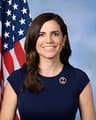 Nancy Mace
Republican · South Carolina
 Nicole Malliotakis
Republican · New York
 Seth Moulton
Democrat · Massachusetts
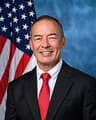 James Moylan
Republican · Guam
 Frank Pallone
Democrat · New Jersey
 Mike Quigley
Democrat · Illinois
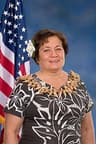 Aumua Amata Radewagen
Republican · American Samoa
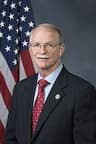 John Rutherford
Republican · Florida
 Adam Smith
Democrat · Washington
 Thomas Suozzi
Democrat · New York