
A Democratic bill with 5 Democratic cosponsors · See all 5 cosponsors
Last activity — Referred to the House Committee on Education and Workforce.
In committee
Introduced and handed to a committee in the chamber it started in.
The committee holds it, and most bills are never heard from again. A hearing or a committee vote would be news; silence is the usual outcome, and it kills the bill without anyone voting against it.
Its path through Congress
- Introduced
- In Committee
What this bill would do
The Empowering Young Readers Act of 2026 directs the Secretary of Education to create a pilot program for awarding grants to eligible organizations. These grants are intended to fund activities that improve book access for children under 19 years of age. Organizations can use the funds to purchase books, distribute books, donate to public libraries, or host literacy-related programming. The grant process will be competitive, with amounts capped at $200,000 for a two-year period. The Secretary must ensure the application review process follows viewpoint-neutral criteria. Finally, a report on the program's results must be submitted to Congress after the final grant period expires.
Yes· 3 of 5
- Scored +8
Would children be better off under this?
The bill directly funds book access and literacy programming for individuals under 19 years of age.
- Scored +5
Would students be better off under this?
The bill enhances literacy opportunities and book access for children and young adults.
- Scored +3
Would households on low incomes be better off under this?
Increased book access and library donations can provide educational resources to low-income families.
The opposite
No question was scored the opposite.
Who it would affect, and how
Potential Positive Impacts for People
-
Increased access to reading materials: Organizations can use grant funds to purchase or acquire new or used books for distribution to children (Section 2(c)(1)).
-
Direct distribution of books: Funds can be used for the actual distribution of books to children through delivery or in-person events (Section 2(c)(2)).
-
Support for public libraries: Organizations may use the funds to donate new or used books to public libraries (Section 2(c)(3)).
-
Community literacy engagement: The bill allows for the hosting of programming such as book fairs, reading hours, book drives, and story times for children and their families (Section 2(c)(4)).
Potential Negative Impacts for People
- No specific negative impacts are explicitly stated in the text.
Groups and Interests Ranking
Every group the model scored this bill for, from -10 to +10. Tap or hover a score for the reason it gave.
- Demographic And Interest Groups
- Would children be better off under this? — The bill directly funds book access and literacy programming for individuals under 19 years of age. Would students be better off under this? — The bill enhances literacy opportunities and book access for children and young adults. Would households on low incomes be better off under this? — Increased book access and library donations can provide educational resources to low-income families.
- Education And Technology
- Does this put more money into public schools? — The bill provides grants that can be used to donate books to public libraries which serve school-aged children.
- Social Issues And Justice
- Does this make child care cost less? — The bill provides for literacy-related programming for children and their families.
- 7/20/2026
- 1 Cosponsor added.
- 7/18/2026
- 1 Cosponsor added.
- 3/12/2026
- 1 Cosponsor added.
- 2/10/2026
- 1 Cosponsor added.
- 2/3/2026
- Referred to the House Committee on Education and Workforce.
- 1 Cosponsor added.
- Introduced in House
 Alma Adams
Democrat · North Carolina
 Lloyd Doggett
Democrat · Texas
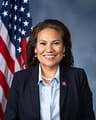 Veronica Escobar
Democrat · Texas
 Mike Quigley
Democrat · Illinois
 Deborah Ross
Democrat · North Carolina