
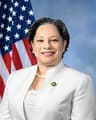
Mariannette Miller-Meeks (R-IA)
Rural and Municipal Utility Cybersecurity Act
A Republican bill with 1 Democratic cosponsor · See all 2 cosponsors
Last activity — Received in the Senate and Read twice and referred to the Committee on Energy and Natural Resources.
In the other chamber's committee
Passed one chamber and has been handed to a committee in the other.
The committee decides whether it goes any further, and most bills that reach a committee never leave it. A committee that simply does nothing kills a bill without anyone ever voting against it, so no news from here is usually the news.
Its path through Congress
- Introduced
- Passed House voice vote
- In Senate committee
The House by voice vote (members called out yes or no together): no member's position on it was recorded.
What this bill would do
The Rural and Municipal Utility Cybersecurity Act seeks to amend the Infrastructure Investment and Jobs Act. It aims to reauthorize the Rural and Municipal Utility Advanced Cybersecurity Grant and Technical Assistance Program. This program provides funding through grants, cooperative agreements, and prizes to help electric utilities protect against cybersecurity threats. The Secretary of Energy is tasked with providing technical assistance and deploying advanced cybersecurity technologies. Additionally, the bill seeks to increase participation in cybersecurity threat information sharing. The act authorizes $250,000,000 for the period of fiscal years 2027 through 2031.
Yes· 3 of 6
- Scored +8
Does this better protect the country from computer attacks?
The bill funds the deployment of advanced cybersecurity technologies to protect electric utilities and defense critical infrastructure.
- Scored +5
Would business owners be better off under this?
The bill provides financial and technical assistance to owners of small-scale electric utilities.
- Scored +5
Does this make it easier to run a small business?
The bill provides grants and technical assistance to small-scale electric utilities like rural cooperatives and municipally owned utilities.
The opposite
- Scored -4
Does this make what the government does easier for the public to see?
The bill exempts information shared under the program from public disclosure laws, including FOIA and state open records laws.
Who it would affect, and how
Potential Positive Impacts for People
-
Increased protection for electric utilities: The program helps eligible entities protect against, detect, respond to, and recover from cybersecurity threats (Section 2, subsection b).
-
Support for smaller or resource-limited utilities: The Secretary is directed to give priority to eligible entities that have limited cybersecurity resources or own assets critical to the reliability of the bulk-s-power system or defense critical electric infrastructure (Section 2, subsection d, 2).
-
Deployment of modern security technology: The program's objectives include the deployment of advanced cybersecurity technologies for electric utility systems (Section 2, subsection c, 1).
-
Improved information sharing: The program aims to increase the participation of eligible entities in cybersecurity threat information sharing programs (Section 2, subsection c, 2).
Potential Negative Impacts for People
- Limits on government transparency: Information shared by or with the Federal Government or a State, Tribal, or local government under this program is deemed voluntarily shared and is exempt from disclosure under the Freedom of Information Act or any similar State, Tribal, or local open government or public records laws (Section 2, subsection e).
Groups and Interests Ranking
Every group the model scored this bill for, from -10 to +10. Tap or hover a score for the reason it gave.
- Demographic And Interest Groups
- Would business owners be better off under this? — The bill provides financial and technical assistance to owners of small-scale electric utilities. Would people in rural areas be better off under this? — The bill enhances the security and reliability of the electric grid serving rural areas through cooperative funding.
- National Security And Foreign Policy
- Does this better protect the country from computer attacks? — The bill funds the deployment of advanced cybersecurity technologies to protect electric utilities and defense critical infrastructure.
- Economy And Finance
- Does this make it easier to run a small business? — The bill provides grants and technical assistance to small-scale electric utilities like rural cooperatives and municipally owned utilities.
- Environment Energy And Infrastructure
- Does this invest in rural communities? — The bill provides critical cybersecurity resources and funding specifically for rural electric cooperatives.
- Governance And Ideology
- Does this protect people from being watched or searched? — The bill protects the privacy of entities by exempting their shared cybersecurity information from public records requests. Does this make what the government does easier for the public to see? — The bill exempts information shared under the program from public disclosure laws, including FOIA and state open records laws.
- 7/13/2026
- Received in the Senate and Read twice and referred to the Committee on Energy and Natural Resources.
- 6/29/2026
- Motion to reconsider laid on the table Agreed to without objection.
- Passed/agreed to in House: On motion to suspend the rules and pass the bill, as amended Agreed to by voice vote. (text: CR H4299)
- On motion to suspend the rules and pass the bill, as amended Agreed to by voice vote. (text: CR H4299)
- DEBATE - The House proceeded with forty minutes of debate on H.R. 7266.
- Considered under suspension of the rules. (consideration: CR H4299-4300)
- Mr. Guthrie moved to suspend the rules and pass the bill, as amended.
- 4/30/2026
- Reported by the Committee on Energy and Commerce. H. Rept. 119-629.
- Placed on the Union Calendar, Calendar No. 545.
- 2/4/2026
- Subcommittee Consideration and Mark-up Session Held
- Forwarded by Subcommittee to Full Committee by Voice Vote.
- 1/30/2026
- 1 Cosponsor added.
- 1/27/2026
- Referred to the House Committee on Energy and Commerce.
- Referred to the Subcommittee on Energy.
- 1 Cosponsor added.
- Introduced in House
One bill Congress.gov lists as related to this one — companions in the other chamber, earlier versions, and bills this one absorbed or was folded into.
 Diana Harshbarger
Republican · Tennessee
 Jennifer McClellan
Democrat · Virginia