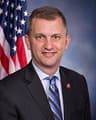
Sean Casten (D-IL)
Addressing Climate Financial Risk Act of 2026
A Democratic bill with 15 Democratic cosponsors · See all 15 cosponsors
Last activity — Referred to the House Committee on Financial Services.
In committee
Introduced and handed to a committee in the chamber it started in.
The committee holds it, and most bills are never heard from again. A hearing or a committee vote would be news; silence is the usual outcome, and it kills the bill without anyone voting against it.
Its path through Congress
- Introduced
- In Committee
What this bill would do
This bill, known as the "Addressing Climate Financial Risk Act of 2026," establishes specific committees within the Financial Stability Oversight Council to manage climate-related financial risks. It creates the Climate Financial Risk Committee to coordinate information and the Advisory Committee on Climate Risk to provide expert consultation. The legislation requires various federal agencies to update supervisory guidance and implement strategies to mitigate climate risks within their jurisdictions. Additionally, it mandates regular reports to Congress regarding the potential impact of climate change on financial stability and the insurance sector. The bill also directs the Federal Insurance Office to collect and publish granular data on homeowners insurance underwriting.
Yes· 3 of 9
- Scored +3
Does this better protect air, water and wildlife?
The bill establishes frameworks to address the financial risks driven by climate change.
- Scored +3
Does this make what the government does easier for the public to see?
The bill mandates annual reports to Congress and public reports on insurance underwriting data.
- Scored +2
Is this likely to grow the economy?
The bill aims to mitigate climate-related financial risks that could threaten the stability of the US economy.
The opposite
No question was scored the opposite.
Who it would affect, and how
Potential Positive Impacts for People
-
Improved Risk Identification: The establishment of the Climate Financial Risk Committee is intended to help the Council identify and mitigate climate-related risks to the financial system (Section 121A(a)(1)).
-
Expert Consultation: The creation of the Advisory Committee on Climate Risk allows the Council to utilize experts in climate science, economics, and various financial sectors to inform their decisions (Section 121B(a)(1)).
-
Increased Transparency for Consumers: The bill includes provisions for consumer advocacy or labor union groups to have representation on the Advisory Committee (Section 121B(b)(4)).
-
Better Insurance Market Oversight: The Federal Insurance Office is required to assess how climate risks affect insurance availability and affordability, which could help monitor trends affecting housing finance and credit markets (Section 121C(a)(1)(D)).
-
Detailed Insurance Data: The mandate for the Federal Insurance Office to collect granular data on homeowners insurance—including premiums, claims, and non-renewals—aims to assess risks across State insurance markets (Section 6(a) and 6(b)).
Potential Negative Impacts for People
-
Restrictions on Industry Participation: The Advisory Committee on Climate Risk is prohibited from including any stakeholders from the oil or gas industry (Section 121B(b)(6)).
-
Regulatory Burdens on Large Institutions: Federal banking agencies must update supervisory guidance, requiring institutions with more than $50,000,000,000 in assets to identify and mitigate climate financial risks (Section 3(b)).
Groups and Interests Ranking
Every group the model scored this bill for, from -10 to +10. Tap or hover a score for the reason it gave.
- Demographic And Interest Groups
- Would households on low incomes be better off under this? — The bill monitors insurance affordability which impacts household financial stability. Would middle-income households be better off under this? — The bill monitors homeowners insurance data which is critical for middle-class property ownership. Would people in cities be better off under this? — The bill's focus on homeowners insurance data may benefit urban areas facing climate-related insurance risks.
- Economy And Finance
- Is this likely to grow the economy? — The bill aims to mitigate climate-related financial risks that could threaten the stability of the US economy. Does this make the government pay for what it commits to? — By managing systemic financial risks from climate change, the bill promotes long-term financial stability.
- Environment Energy And Infrastructure
- Does this better protect air, water and wildlife? — The bill establishes frameworks to address the financial risks driven by climate change.
- Governance And Ideology
- Does this make what the government does easier for the public to see? — The bill mandates annual reports to Congress and public reports on insurance underwriting data.
- National Security And Foreign Policy
- Does this strengthen ties with allied countries? — The bill encourages joining international organizations and coordinating with global regulators on climate financial risks.
- Social Issues And Justice
- Does this make housing cost less? — The bill assesses how insurance availability and affordability trends affect housing finance.
- 7/21/2026
- 1 Cosponsor added.
- 5/12/2026
- 1 Cosponsor added.
- 2/24/2026
- 1 Cosponsor added.
- 1/27/2026
- Referred to the House Committee on Financial Services.
- 12 Cosponsors added.
- Introduced in House
One bill Congress.gov lists as related to this one — companions in the other chamber, earlier versions, and bills this one absorbed or was folded into.
 Yassamin Ansari
Democrat · Arizona
 Suzanne Bonamici
Democrat · Oregon
 Joyce Beatty
Democrat · Ohio
 Julia Brownley
Democrat · California
 Kathy Castor
Democrat · Florida
 Dwight Evans
Democrat · Pennsylvania
 Daniel Goldman
Democrat · New York
 Jared Huffman
Democrat · California
 Ted Lieu
Democrat · California
 Mike Levin
Democrat · California
 Seth Magaziner
Democrat · Rhode Island
 Kevin Mullin
Democrat · California
 Dave Min
Democrat · California
 Melanie Stansbury
Democrat · New Mexico
 Nydia Velázquez
Democrat · New York