
A Democratic bill with 12 Democratic cosponsors · See all 12 cosponsors
Last activity — Referred to the House Committee on Education and Workforce.
In committee
Introduced and handed to a committee in the chamber it started in.
The committee holds it, and most bills are never heard from again. A hearing or a committee vote would be news; silence is the usual outcome, and it kills the bill without anyone voting against it.
Its path through Congress
- Introduced
- In Committee
What this bill would do
The Youth Financial Learning Act aims to improve the financial literacy of secondary school students. It authorizes the Secretary to award competitive grants to State educational agencies for integrating financial literacy into public elementary or secondary schools. These state agencies would then distribute subgrants to local educational agencies to fund specific activities. The program focuses on enhancing student understanding of topics like personal credit, student loans, and financial aid. Grants are limited to a duration of no more than 4 years. The act also allows for partnerships with community-based organizations to provide innovative learning activities.
Yes· 3 of 7
- Scored +7
Would people in their twenties and thirties be better off under this?
The bill provides students with essential knowledge regarding personal credit, student loans, and financial aid.
- Scored +7
Would students be better off under this?
The bill directly improves student outcomes by providing specialized instruction on personal finance and entrepreneurship.
- Scored +6
Would children be better off under this?
The bill enhances the educational curriculum for elementary and secondary school students through financial literacy training.
The opposite
No question was scored the opposite.
Who it would affect, and how
Potential Positive Impacts for People
-
Enhanced Student Understanding: Local educational agencies can use funds to implement curriculum that improves understanding of consumer, economic, entrepreneurship, and personal finance concepts, such as student loans and personal credit (Section 2(c)(1)).
-
Innovative Learning Opportunities: The bill allows for the promotion of partnerships between local educational agencies and community-based organizations to provide innovative, evidence-based financial literacy activities, which may include after-school activities (Section 2(c)(2)).
-
Support for Teacher Growth: Funds can be used to promote professional development programs to embed financial literacy or entrepreneurship education into a well-rounded education (Section 2(c)(3)).
-
Targeted Assistance for High-Need Areas: State educational agencies are directed to give priority to subgrants for local educational agencies that demonstrate the greatest need and a commitment to helping the lowest-performing schools (Section 2(b)(4)(B)(ii-iii)).
-
Geographic Diversity: The application process requires state educational agencies to ensure that grant activities benefit students across urban, rural, and suburban locations (Section 2(b)(3)(D)).
Potential Negative Impacts for People
-
Financial Burden on States: A State educational agency that receives a grant is required to provide matching funds from non-Federal sources equal to 25 percent of the grant amount (Section 2(d)).
-
Time Limitations: Grants awarded under this section are limited to a period of not more than 4 years (Section 2(b)(2)).
Groups and Interests Ranking
Every group the model scored this bill for, from -10 to +10. Tap or hover a score for the reason it gave.
- Demographic And Interest Groups
- Would students be better off under this? — The bill directly improves student outcomes by providing specialized instruction on personal finance and entrepreneurship. Would people in their twenties and thirties be better off under this? — The bill provides students with essential knowledge regarding personal credit, student loans, and financial aid. Would children be better off under this? — The bill enhances the educational curriculum for elementary and secondary school students through financial literacy training. Would households on low incomes be better off under this? — The bill prioritizes subgrants for agencies demonstrating the greatest need, which often corresponds to lower-income areas. Would people in rural areas be better off under this? — The bill requires state agencies to ensure geographic diversity so that grant activities benefit students in rural locations. Would people in cities be better off under this? — The bill requires state agencies to ensure geographic diversity so that grant activities benefit students in urban locations.
- Education And Technology
- Does this put more money into public schools? — The bill authorizes competitive grants to state and local educational agencies to integrate financial literacy into public schools.
- 8/20/2026
- 1 Cosponsor added.
- 4/13/2026
- 1 Cosponsor added.
- 1/22/2026
- 1 Cosponsor added.
- 1/21/2026
- Referred to the House Committee on Education and Workforce.
- 9 Cosponsors added.
- Introduced in House
 Brendan Boyle
Democrat · Pennsylvania
 Ed Case
Democrat · Hawaii
 Yvette Clarke
Democrat · New York
 André Carson
Democrat · Indiana
 Troy Carter
Democrat · Louisiana
 Dwight Evans
Democrat · Pennsylvania
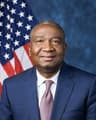 Cleo Fields
Democrat · Louisiana
 Henry Johnson
Democrat · Georgia
 Eleanor Norton
Democrat · District of Columbia
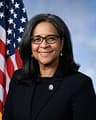 Marilyn Strickland
Democrat · Washington
 Dina Titus
Democrat · Nevada
 Jill Tokuda
Democrat · Hawaii