
A Democratic bill with 29 Democratic cosponsors · See all 29 cosponsors
Last activity — Referred to the Subcommittee on Border Security and Enforcement.
In committee
Introduced and handed to a committee in the chamber it started in.
The committee holds it, and most bills are never heard from again. A hearing or a committee vote would be news; silence is the usual outcome, and it kills the bill without anyone voting against it.
Its path through Congress
- Introduced
- In Committee
What this bill would do
This bill is known as the DHS Use of Force Oversight Act. It amends the Homeland Security Act of 2002 to require a Department-wide policy on the use of force and deescalation for law enforcement officers and agents. The bill limits officers to using only objectively reasonable force based on the circumstances. It prohibits the use of chokeholds and carotid restraints against non-compliant persons resisting arrest. Additionally, the legislation mandates regular training, internal reviews, and public reporting on use of force incidents. Finally, it directs the Inspector General to continuously review compliance with these new rules.
Yes· 3 of 6
- Scored +7
Does this change how police departments operate?
The bill mandates deescalation, prohibits chokeholds, and establishes expert oversight and public reporting for DHS law enforcement.
- Scored +6
Does this make what the government does easier for the public to see?
The bill requires the publication of detailed use of force data and incident summaries on a public website.
- Scored +3
Does this narrow racial gaps in how people are treated?
The bill's use of force oversight and deescalation mandates can help reduce disparate outcomes in law enforcement encounters.
The opposite
- Scored -1
Does this protect people from being watched or searched?
The requirement to publish specific incident data and circumstances may create minor privacy risks despite specified protections.
Who it would affect, and how
Potential Positive Impacts for People
-
Ban on Dangerous Restraints: Section 890E(a)(4) explicitly prohibits law enforcement officers and agents from using chokeholds and carotid restraints to control non-compliant persons who are resisting arrest. This protects individuals from severe physical harm or death resulting from these specific physical holds.
-
Deescalation and Training: Section 890E(b) requires that the Department-wide policy clearly state that deescalation is preferred and mandates that officers complete initial and recurrent training in deescalation and use of force tactics. This benefits the public by ensuring officers are trained to calm tense situations before resorting to force.
-
Public Transparency and Reporting: Section 890E(c) requires the Secretary to publish a report every six months on the Department website detailing incidents where force was used resulting in injury, death, deadly force, deployment of less-than-lethal devices or canines, kinetic impacts, or disabling fire against vessels or aircraft. This promotes accountability by keeping the public informed about how and when force is used.
-
Rapid Congressional Briefings: Section 890E(c)(4) requires the Secretary to brief specific congressional committees and inform the public regarding the facts of any use of force incident that results in the hospitalization or death of an officer or a person within 24 hours. This ensures swift disclosure and accountability when severe incidents occur.
Potential Negative Impacts for People
Based on the provided text, there are no specific sections or provisions identified that create negative consequences, burdens, or harms for individuals or groups of people in the United States.
Groups and Interests Ranking
Every group the model scored this bill for, from -10 to +10. Tap or hover a score for the reason it gave.
- Social Issues And Justice
- Does this change how police departments operate? — The bill mandates deescalation, prohibits chokeholds, and establishes expert oversight and public reporting for DHS law enforcement. Does this narrow racial gaps in how people are treated? — The bill's use of force oversight and deescalation mandates can help reduce disparate outcomes in law enforcement encounters.
- Demographic And Interest Groups
- Would Black Americans be better off under this? — Increased police accountability and deescalation training can disproportionately benefit communities of color targeted by use of force. Would Hispanic Americans be better off under this? — Increased police accountability and deescalation training can disproportionately benefit communities of color targeted by use of force. Would people in cities be better off under this? — Increased oversight of DHS law enforcement can improve safety outcomes in densely populated urban jurisdictions.
- Governance And Ideology
- Does this make what the government does easier for the public to see? — The bill requires the publication of detailed use of force data and incident summaries on a public website. Does this protect people from being watched or searched? — The requirement to publish specific incident data and circumstances may create minor privacy risks despite specified protections.
- 9/24/2026
- 1 Cosponsor added.
- 7/21/2026
- 1 Cosponsor added.
- 6/23/2026
- 1 Cosponsor added.
- 6/18/2026
- 2 Cosponsors added.
- 3/26/2026
- 1 Cosponsor added.
- 2/20/2026
- 1 Cosponsor added.
- 2/9/2026
- 2 Cosponsors added.
- 1/16/2026
- Referred to the Subcommittee on Oversight, Investigations, and Accountability.
- Referred to the Subcommittee on Border Security and Enforcement.
- 2 Cosponsors added.
- 1/15/2026
- Referred to the Committee on Homeland Security, and in addition to the Committee on the Judiciary, for a period to be subsequently determined by the Speaker, in each case for consideration of such provisions as fall within the jurisdiction of the committee concerned.
- 18 Cosponsors added.
- Introduced in House
 Joyce Beatty
Democrat · Ohio
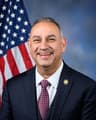 Gilbert Cisneros
Democrat · California
 Troy Carter
Democrat · Louisiana
 Jasmine Crockett
Democrat · Texas
 Sarah Elfreth
Democrat · Maryland
 Valerie Foushee
Democrat · North Carolina
 Al Green
Democrat · Texas
 Sylvia Garcia
Democrat · Texas
 Daniel Goldman
Democrat · New York
 Adelita Grijalva
Democrat · Arizona
 Jonathan Jackson
Democrat · Illinois
 Julie Johnson
Democrat · Texas
 Raja Krishnamoorthi
Democrat · Illinois
 John Larson
Democrat · Connecticut
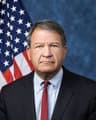 George Latimer
Democrat · New York
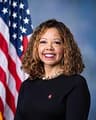 Lucy McBath
Democrat · Georgia
 Seth Magaziner
Democrat · Rhode Island
 Kevin Mullin
Democrat · California
 LaMonica McIver
Democrat · New Jersey
 Eleanor Norton
Democrat · District of Columbia
 Joe Neguse
Democrat · Colorado
 Mark Pocan
Democrat · Wisconsin
 Mike Quigley
Democrat · Illinois
 Janice Schakowsky
Democrat · Illinois
 Terri Sewell
Democrat · Alabama
 Lateefah Simon
Democrat · California
 Bennie Thompson
Democrat · Mississippi
 Shri Thanedar
Democrat · Michigan
 James Walkinshaw
Democrat · Virginia