
A Democratic bill with 2 Democratic cosponsors · See all 2 cosponsors
Last activity — Referred to the House Committee on Energy and Commerce.
In committee
Introduced and handed to a committee in the chamber it started in.
The committee holds it, and most bills are never heard from again. A hearing or a committee vote would be news; silence is the usual outcome, and it kills the bill without anyone voting against it.
Its path through Congress
- Introduced
- In Committee
What this bill would do
The AI in Health Care Efficiency and Study Act requires the Secretary of Health and Human Services to conduct a study on using artificial intelligence in the health care industry. This study aims to find ways to use AI to improve administrative and clerical work while protecting patient data privacy and security. The Secretary is tasked with evaluating strategies to reduce burdens like scheduling and claims processing. The study must also look at how AI can improve patient record-keeping and defend against cybersecurity threats like ransomware. Finally, the Secretary must submit a report containing findings, risks, and policy recommendations to Congress.
Yes· 3 of 8
- Scored +5
Does this better protect the country from computer attacks?
The bill specifically tasks the Secretary with evaluating how AI can detect, prevent, and mitigate cybersecurity attacks like ransomware and data breaches.
- Scored +3
Does this make health care easier to get in general?
The bill aims to reduce administrative burdens and provider burnout, which may improve the delivery and availability of healthcare services.
- Scored +2
Does this lower what people pay for private health insurance?
The study investigates using AI to improve efficiency in claims processing and administrative tasks which could lower healthcare costs.
The opposite
No question was scored the opposite.
Who it would affect, and how
Potential Positive Impacts for People
-
Reduction in Provider Burnout and Costs: The bill finds that administrative and clerical work contributes to health care costs and provider burnout, and notes that AI has the potential to streamline these tasks (Section 2).
-
Increased Time for Patient Care: By streamlining clerical work and record keeping, AI technologies may allow health care providers to spend more time with patients (Section 2).
-
Improved Administrative Efficiency: The study aims to identify ways to reduce administrative burden in areas such as scheduling, claims processing, documentation, and prior authorization workflows (Section 3(b)(1)).
-
Better Record Keeping: AI could be used to improve the accuracy, timeliness, and interoperability of patient record-keeping, including electronic health record documentation (Section 3(b)(2)).
-
Enhanced Data Security: The study will evaluate how AI can ensure the privacy, security, and integrity of patient data (Section 3(b)(3)).
-
Protection Against Cyberattacks: The Secretary will evaluate how AI can be used to detect, prevent, and mitigate cybersecurity attacks, including ransomware incidents and data breaches (Section 3(b)(4)).
Potential Negative Impacts for People
-
Identification of Risks and Challenges: The report required by the Secretary must include identified risks and implementation challenges associated with the use of artificial intelligence (Section 3(d)(1)).
-
Limitations of Current Tools: The study must assess the effectiveness and limitations of existing artificial intelligence tools currently used for administrative or clerical functions (Section 3(d)(2)).
Groups and Interests Ranking
Every group the model scored this bill for, from -10 to +10. Tap or hover a score for the reason it gave.
- Healthcare
- Does this make health care easier to get in general? — The bill aims to reduce administrative burdens and provider burnout, which may improve the delivery and availability of healthcare services. Does this lower what people pay for private health insurance? — The study investigates using AI to improve efficiency in claims processing and administrative tasks which could lower healthcare costs. Does this make the country readier for the next outbreak? — Strengthening healthcare data security and administrative efficiency helps fortify the healthcare system against crises.
- National Security And Foreign Policy
- Does this better protect the country from computer attacks? — The bill specifically tasks the Secretary with evaluating how AI can detect, prevent, and mitigate cybersecurity attacks like ransomware and data breaches.
- Demographic And Interest Groups
- Would households on low incomes be better off under this? — Increased administrative efficiency in healthcare may lead to more stable costs and better access to care. Would people in cities be better off under this? — Improved healthcare efficiency can benefit all residents, including those in urban areas.
- Education And Technology
- Does this put more money into scientific research? — The bill mandates a study that includes recommendations for future research regarding AI in healthcare.
- Governance And Ideology
- Does this make what the government does easier for the public to see? — The requirement for a formal report to Congress increases transparency regarding the use of AI in healthcare administration.
- 2/9/2026
- 1 Cosponsor added.
- 1/14/2026
- Referred to the House Committee on Energy and Commerce.
- 1 Cosponsor added.
- Introduced in House
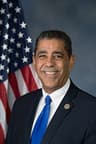 Adriano Espaillat
Democrat · New York
 Ted Lieu
Democrat · California