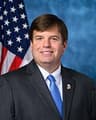
Dale Strong (R-AL)
DHS Biodetection Improvement Act
A Republican bill with 1 Republican cosponsor · See the cosponsor
Last activity — Received in the Senate and Read twice and referred to the Committee on Homeland Security and Governmental Affairs.
In the other chamber's committee
Passed one chamber and has been handed to a committee in the other.
The committee decides whether it goes any further, and most bills that reach a committee never leave it. A committee that simply does nothing kills a bill without anyone ever voting against it, so no news from here is usually the news.
Its path through Congress
- Introduced
- Passed House voice vote
- In Senate committee
The House by voice vote (members called out yes or no together): no member's position on it was recorded.
What this bill would do
The DHS Biodetection Improvement Act aims to improve the biodetection functions of the Department of Homeland Security. It directs the Secretary of Homeland Security to assess how Department of Energy national laboratories and sites have been used for research and development related to DHS missions. The Secretary must also submit a strategy within 180 days for coordinating research and development with those laboratories and sites. This strategy includes identifying necessary technologies, creating an acquisition plan for BioWatch jurisdictions, and conducting external evaluations. Additionally, the Secretary is tasked with assisting various partners in developing technical requirements for environmental biodetection programs.
Yes· 3 of 10
- Scored +6
Does this make the country readier for the next outbreak?
The bill enhances biological detection capabilities which is a critical component of public health preparedness.
- Scored +4
Does this put more money into scientific research?
The bill specifically targets R&D coordination with national laboratories to advance biodetection technology.
- Scored +3
Does this put more money into medical research?
It promotes research and development in biodetection through partnerships with national laboratories.
The opposite
No question was scored the opposite.
Who it would affect, and how
Potential Positive Impacts for People
-
Improved Biodetection Capabilities: The bill requires the identification of technologies to meet mission needs, such as those informed by studies like the National Re-Assessment of the BioWatch Collector Network (Section 2(b)(1)).
-
Deployment of Technology to Jurisdictions: The strategy includes developing a plan to acquire and provide biodetection technologies to existing BioWatch jurisdictions (Section 2(b)(2)).
-
Increased Safety and Reliability: The mandate to conduct periodic external evaluations helps identify gaps and failure points, allowing for contingency plans if technologies do not perform as intended (Section 2(b)(3)).
-
Collaborative Development: The Act encourages assistance and partnership with Federal, State, local, and Tribal governments, higher education institutions, and the private sector to define program and technical requirements (Section 2(b)(4)).
Potential Negative Impacts for People
- No specific negative impacts or burdens are mentioned in the provided text.
Groups and Interests Ranking
Every group the model scored this bill for, from -10 to +10. Tap or hover a score for the reason it gave.
- Healthcare
- Does this make the country readier for the next outbreak? — The bill enhances biological detection capabilities which is a critical component of public health preparedness. Does this put more money into medical research? — It promotes research and development in biodetection through partnerships with national laboratories.
- Environment Energy And Infrastructure
- Does this improve help for people hit by a disaster? — Biodetection is a critical component of responding to and mitigating biological disaster events. Does this better protect air, water and wildlife? — The bill focuses on environmental biodetection, which contributes to monitoring environmental safety.
- National Security And Foreign Policy
- Does this put more money into stopping terrorism? — Strengthening biodetection capabilities aids in countering biological threats which are a national security concern. Does this give the government more power to monitor people inside the country? — The expansion of environmental biodetection programs inherently involves increased monitoring of the domestic environment.
- Education And Technology
- Does this put more money into scientific research? — The bill specifically targets R&D coordination with national laboratories to advance biodetection technology.
- Governance And Ideology
- Does this give the federal government more power? — It expands the role of federal agencies like DHS and DOE in coordinating biodetection research. Does this make what the government does easier for the public to see? — The requirement for reports to Congress increases oversight of these new strategies.
- Social Issues And Justice
- Does this tighten control of the border? — Improving biodetection contributes to the broader mission of homeland security and border safety.
- 3/12/2025
- Received in the Senate and Read twice and referred to the Committee on Homeland Security and Governmental Affairs.
- 3/11/2025
- Motion to reconsider laid on the table Agreed to without objection.
- Passed/agreed to in House: On motion to suspend the rules and pass the bill Agreed to by voice vote. (text: 3/10/2025 CR H1046-1047)
- On motion to suspend the rules and pass the bill Agreed to by voice vote. (text: 3/10/2025 CR H1046-1047)
- Considered as unfinished business. (consideration: CR H1126)
- 3/10/2025
- At the conclusion of debate, the chair put the question on the motion to suspend the rules. Mr. Green (TN) objected to the vote on the grounds that a quorum was not present. Further proceedings on the motion were postponed. The point of no quorum was considered as withdrawn.
- DEBATE - The House proceeded with forty minutes of debate on H.R. 706.
- Considered under suspension of the rules. (consideration: CR H1046-1048)
- Mr. Green (TN) moved to suspend the rules and pass the bill.
- 1/23/2025
- Referred to the House Committee on Homeland Security.
- Referred to the Subcommittee on Emergency Management and Technology.
- 1 Cosponsor added.
- Introduced in House
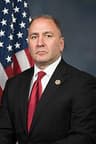 Clay Higgins
Republican · Louisiana