
A Democratic bill with 15 Democratic cosponsors · See all 15 cosponsors
Last activity — Referred to the House Committee on Energy and Commerce.
In committee
Introduced and handed to a committee in the chamber it started in.
The committee holds it, and most bills are never heard from again. A hearing or a committee vote would be news; silence is the usual outcome, and it kills the bill without anyone voting against it.
Its path through Congress
- Introduced
- In Committee
What this bill would do
The Public Health Nursing Act aims to amend the Public Health Service Act to support the public health nursing workforce. It requires the Secretary of Health and Human Services to carry out activities to establish, expand, and sustain this workforce. This includes providing grants to State, local, and territorial public health departments. Funds can be used for recruiting, hiring, training, and medical supplies for registered nurses. The bill also prioritizes specific vulnerable populations and provides for long-term funding through 2035.
Yes· 3 of 9
- Scored +7
Does this make health care easier to get in general?
The bill expands the nursing workforce to serve medically underserved, rural, and low-income areas through various care models.
- Scored +6
Would children be better off under this?
The bill targets improvements in infant mortality and maternal health outcomes.
- Scored +6
Would households on low incomes be better off under this?
The bill prioritizes grant recipients serving low-income populations.
The opposite
No question was scored the opposite.
Who it would affect, and how
Potential Positive Impacts for People
-
Expansion of Nursing Workforce: The Secretary is tasked with establishing, expanding, and sustaining a publics health nursing workforce through grants to various health departments (Section 2, subsection a).
-
Support for Medically Underserved Areas: Funds can be used for recruiting and hiring registered nurses to serve in medically underserved areas (Section 2, subsection b, paragraph 1, subparagraph A, clause i).
-
Improved Access via Mobile and Home Care: The bill allows for nurses to work in public health facilities, mobile health clinics, acute care hospitals, or via home visitation (Section 2, subsection b, paragraph 1, subparagraph A, clause ii).
-
Targeted Aid for Vulnerable Groups: Priority is given to those serving populations with high rates of chronic disease, infant mortality, or maternal morbidity and mortality; low-income populations; health professional shortage areas; and rural or traditionally underserved populations (Section 2, subsection c, paragraph 1).
-
Culturally Appropriate Care: The bill encourages plans to provide services in a language and cultural context appropriate to the individuals being served (Section 2, subsection c, paragraph 2).
-
Comprehensive Health Services: Nurses can provide services and education regarding preventive health, nutrition, infectious diseases, chronic disease management, and maternal, prenatal, and postpartum care (Section 2, subsection e).
Potential Negative Impacts for People
- Expenditure Requirements: Recipients must agree to maintain their non-Federal spending for these activities at a level no less than what they spent in the previous fiscal year (Section 2, subsection d).
Groups and Interests Ranking
Every group the model scored this bill for, from -10 to +10. Tap or hover a score for the reason it gave.
- Demographic And Interest Groups
- Would children be better off under this? — The bill targets improvements in infant mortality and maternal health outcomes. Would households on low incomes be better off under this? — The bill prioritizes grant recipients serving low-income populations. Would women be better off under this? — The bill specifically focuses on improving maternal health, prenatal, and postpartum care. Would people in rural areas be better off under this? — The bill gives priority to programs serving rural or traditionally underserved populations. Would Hispanic Americans be better off under this? — The bill encourages services provided in a language and cultural context appropriate to the individuals served. Would union members be better off under this? — The bill gives priority to grant applicants that have documented collective bargaining agreements with labor organizations.
- Healthcare
- Does this make health care easier to get in general? — The bill expands the nursing workforce to serve medically underserved, rural, and low-income areas through various care models.
- Economy And Finance
- Is this likely to create jobs? — The bill funds the recruiting, hiring, and training of a new public health nursing workforce.
- Social Issues And Justice
- Is this likely to lift people out of poverty? — The bill prioritizes services for low-income populations to improve health outcomes.
- 7/21/2026
- 1 Cosponsor added.
- 4/28/2026
- 1 Cosponsor added.
- 4/21/2026
- 1 Cosponsor added.
- 4/20/2026
- 1 Cosponsor added.
- 4/14/2026
- 1 Cosponsor added.
- 3/4/2026
- 2 Cosponsors added.
- 2/3/2026
- 2 Cosponsors added.
- 1/20/2026
- 1 Cosponsor added.
- 1/13/2026
- 1 Cosponsor added.
- 1/12/2026
- 2 Cosponsors added.
- 1/9/2026
- 1 Cosponsor added.
- 1/8/2026
- Referred to the House Committee on Energy and Commerce.
- 1 Cosponsor added.
- Introduced in House
One bill Congress.gov lists as related to this one — companions in the other chamber, earlier versions, and bills this one absorbed or was folded into.
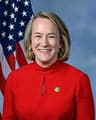 Nikki Budzinski
Democrat · Illinois
 Judy Chu
Democrat · California
 Maxwell Frost
Democrat · Florida
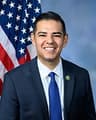 Robert Garcia
Democrat · California
 Daniel Goldman
Democrat · New York
 Adelita Grijalva
Democrat · Arizona
 Pramila Jayapal
Democrat · Washington
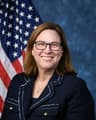 Julie Johnson
Democrat · Texas
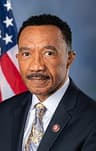 Kweisi Mfume
Democrat · Maryland
 Gwen Moore
Democrat · Wisconsin
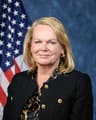 April McClain Delaney
Democrat · Maryland
 Eleanor Norton
Democrat · District of Columbia
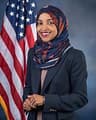 Ilhan Omar
Democrat · Minnesota
 Maxine Waters
Democrat · California
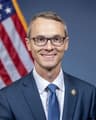 James Walkinshaw
Democrat · Virginia