
A Democratic bill with 3 Republican cosponsors · See all 10 cosponsors
Last activity — Referred to the House Committee on the Judiciary.
In committee
Introduced and handed to a committee in the chamber it started in.
The committee holds it, and most bills are never heard from again. A hearing or a committee vote would be news; silence is the usual outcome, and it kills the bill without anyone voting against it.
Its path through Congress
- Introduced
- In Committee
What this bill would do
This bill, known as the "Blue Envelope Awareness Act," aims to amend the Omnibus Crime Control and Safe Streets Act of 1968. It specifically seeks to authorize the use of Byrne grants for "blue envelope programs." These programs are designed to assist individuals with speech, hearing, or developmental disabilities during traffic stops. The program works by distributing blue envelopes for documentation and providing specific training to law enforcement officers.
Yes
- Scored +7
Would people with disabilities be better off under this?
The program provides tools like blue envelopes and officer training to help people with disabilities navigate traffic stops more effectively.
- Scored +6
Does this expand the rights of people with disabilities?
The bill facilitates better communication and documentation for individuals with speech, hearing, or developmental disabilities during law enforcement interactions.
- Scored +4
Does this change how police departments operate?
The bill implements specialized training for law enforcement officers to better interact with individuals with disabilities.
The opposite
No question was scored the opposite.
Who it would affect, and how
Potential Positive Impacts for People
-
Improved Communication During Traffic Stops: The bill defines a "blue envelope program" as one that helps individuals with speech, hearing, or developmental disabilities communicate more effectively with law enforcement officers (Section 2, subsection b).
-
Documentation Accessibility: The program allows individuals to use blue envelopes to keep documentation regarding their disability to present to officers during an interaction (Section 2, subsection b, part A).
-
Law Enforcement Preparation: The bill provides for training law enforcement officers on how to interact with individuals who have speech, hearing, or developmental disabilities (Section 2, subsection b, part B).
Potential Negative Impacts for People
- No negative impacts or burdens are explicitly stated in the provided text.
Groups and Interests Ranking
Every group the model scored this bill for, from -10 to +10. Tap or hover a score for the reason it gave.
- Social Issues And Justice
- Does this expand the rights of people with disabilities? — The bill facilitates better communication and documentation for individuals with speech, hearing, or developmental disabilities during law enforcement interactions. Does this change how police departments operate? — The bill implements specialized training for law enforcement officers to better interact with individuals with disabilities.
- Demographic And Interest Groups
- Would people with disabilities be better off under this? — The program provides tools like blue envelopes and officer training to help people with disabilities navigate traffic stops more effectively.
- 3/26/2026
- 1 Cosponsor added.
- 2/4/2026
- 1 Cosponsor added.
- 1/30/2026
- 1 Cosponsor added.
- 1/27/2026
- 1 Cosponsor added.
- 1/22/2026
- 1 Cosponsor added.
- 1/12/2026
- 2 Cosponsors added.
- 12/18/2025
- Referred to the House Committee on the Judiciary.
- 3 Cosponsors added.
- Introduced in House
 Josh Gottheimer
Democrat · New Jersey
 Daniel Goldman
Democrat · New York
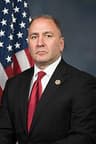 Clay Higgins
Republican · Louisiana
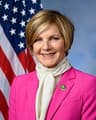 Susie Lee
Democrat · Nevada
 Barry Moore
Republican · Alabama
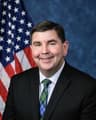 John Mannion
Democrat · New York
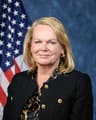 April McClain Delaney
Democrat · Maryland
 Pete Sessions
Republican · Texas
 Lateefah Simon
Democrat · California
 George Whitesides
Democrat · California