
A Democratic bill with 1 Republican cosponsor · See all 11 cosponsors
Last activity — Referred to the House Committee on Energy and Commerce.
In committee
Introduced and handed to a committee in the chamber it started in.
The committee holds it, and most bills are never heard from again. A hearing or a committee vote would be news; silence is the usual outcome, and it kills the bill without anyone voting against it.
Its path through Congress
- Introduced
- In Committee
What this bill would do
The NIH Clinical Trial Integrity Act directs the Secretary of Health and Human Services to implement steps to increase diversity in clinical trials. It requires sponsors of NIH-approved trials to submit specific goals for recruiting and retaining participants based on race, ethnicity, age, and sex. The bill mandates that sponsors share aggregate demographic information and participant retention rates annually. It also requires researchers to undergo education and training regarding diversity and health inequities. Additionally, the act authorizes a national awareness campaign and grants to assist with outreach. Finally, it directs studies to address cost barriers and participation challenges.
Yes· 3 of 10
- Scored +6
Would Black Americans be better off under this?
The bill mandates diversity goals that specifically aim to increase the representation of underrepresented racial groups in clinical trials.
- Scored +6
Would Hispanic Americans be better off under this?
The bill mandates diversity goals that specifically aim to increase the representation of underrepresented ethnic groups in clinical trials.
- Scored +6
Does this narrow racial gaps in how people are treated?
The act mandates measurable goals for recruiting and retaining participants from diverse racial and ethnic backgrounds in clinical trials.
The opposite
No question was scored the opposite.
Who it would affect, and how
Potential Positive Impacts for People
-
Increased Participant Diversity: Sponsors must submit clear and measurable goals for recruitment and retention that reflect the race, ethnicity, age, and sex of the patients or the general population (Section 2(a)(1)).
-
Reduced Participant Burden: The bill encourages less burdensome follow-up requirements, such as phone or online follow-ups, home visits by nurse coordinators, virtual visits, or the use of wearable technology (Section 2(a)(4)).
-
Improved Outreach and Knowledge: A national campaign will be conducted to increase awareness among patients and healthcare professionals regarding the need for diverse clinical trials (Section 4(a)).
-
Support for Community Organizations: The Secretary will establish a grant program for nonprofit private entities, including community-based organizations and faith communities, to test outreach strategies and cover administrative costs for diversifying trials (Section 4(d)).
-
Addressing Barriers to Participation: The law directs a study to examine actions taken to address barriers to participation and identifies challenges in implementation (Section 2(g)).
Potential Negative Impacts for People
-
Requirements for Increased Reporting: Sponsors are required to share aggregate demographic information and participant retention rates annually, which adds specific reporting duties (Section 2(b)(1)).
-
Mandatory Education and Training: Researchers and clinical trial supporters must complete specific education and training programs regarding diversity (Section 2(b)(1)(C)).
-
Mandatory Strategic Plans for Non-compliance: If a trial fails to meet its diversity goals, the sponsor must develop and submit a strategic plan in consultation with advocacy and community-based organizations (Section 2(e)(1)).
Groups and Interests Ranking
Every group the model scored this bill for, from -10 to +10. Tap or hover a score for the reason it gave.
- Demographic And Interest Groups
- Would Black Americans be better off under this? — The bill mandates diversity goals that specifically aim to increase the representation of underrepresented racial groups in clinical trials. Would Hispanic Americans be better off under this? — The bill mandates diversity goals that specifically aim to increase the representation of underrepresented ethnic groups in clinical trials. Would households on low incomes be better off under this? — The bill directs a study to address cost barriers such as out-of-pocket expenses and compensation for trial participation. Would women be better off under this? — The bill requires clinical trial sponsors to include specific goals for sex-based diversity in their recruitment and retention plans. Would people over 65 be better off under this? — The bill encourages less burdensome follow-up methods such as phone, home, or virtual visits which may benefit older populations. Would people in their twenties and thirties be better off under this? — The bill encourages less burdensome follow-up methods like virtual or online options which may benefit younger demographics.
- Social Issues And Justice
- Does this narrow racial gaps in how people are treated? — The act mandates measurable goals for recruiting and retaining participants from diverse racial and ethnic backgrounds in clinical trials. Does this narrow the gap between how men and women are treated? — The bill requires clinical trial sponsors to include specific goals for sex-based diversity in their recruitment and retention plans.
- Healthcare
- Does this make health care easier to get in general? — The bill seeks to increase clinical trial diversity and reduce participation barriers to improve healthcare access for underrepresented groups.
- Economy And Finance
- Does this make it easier to run a small business? — The bill provides grants to nonprofit private entities and community organizations to assist with clinical trial diversification.
- 1/21/2026
- 1 Cosponsor added.
- 1/15/2026
- 1 Cosponsor added.
- 1/13/2026
- 1 Cosponsor added.
- 1/7/2026
- 7 Cosponsors added.
- 12/18/2025
- Referred to the House Committee on Energy and Commerce.
- 1 Cosponsor added.
- Introduced in House
 Sean Casten
Democrat · Illinois
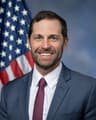 Jason Crow
Democrat · Colorado
 Brian Fitzpatrick
Republican · Pennsylvania
 Josh Gottheimer
Democrat · New Jersey
 Pramila Jayapal
Democrat · Washington
 Gwen Moore
Democrat · Wisconsin
 Jennifer McClellan
Democrat · Virginia
 Eleanor Norton
Democrat · District of Columbia
 Mark Pocan
Democrat · Wisconsin
 Melanie Stansbury
Democrat · New Mexico
 Paul Tonko
Democrat · New York