
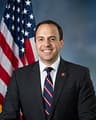
Gabe Evans (R-CO)
Advanced Wound Care and Regenerative Medicine Access and Reform Act
A Republican bill with 2 Republican cosponsors · See all 2 cosponsors
Last activity — Referred to the Committee on Energy and Commerce, and in addition to the Committee on Ways and Means, for a period to be subsequently determined by the Speaker, in each case for consideration of such provisions as fall within the jurisdiction of the committee concerned.
In committee
Introduced and handed to a committee in the chamber it started in.
The committee holds it, and most bills are never heard from again. A hearing or a committee vote would be news; silence is the usual outcome, and it kills the bill without anyone voting against it.
Its path through Congress
- Introduced
- In Committee
What this bill would do
This bill, the "Advanced Wound Care and Regenerative Medicine Access and Reform Act," changes how Medicare pays for skin substitute products. It establishes a new payment system based on a volume-weighted average and creates a single billing code for these products. The bill also introduces strict monitoring for "outlier providers" to prevent fraud, waste, and abuse. Additionally, it directs the government to review and streamline the approval process for human cellular and tissue-based products.
Yes· 3 of 10
- Scored +5
Does this make the government pay for what it commits to?
Introduces fraud, waste, and abuse monitoring for the top 3% of providers receiving payments.
- Scored +4
Does this reduce what the federal government spends?
Aims to reduce wasteful spending in Medicare through stricter monitoring of outlier providers and wastage exclusions.
- Scored +4
Does this make what the government does easier for the public to see?
Requires the Secretary to make the list of outlier providers publicly available.
The opposite
- Scored -4
Would business owners be better off under this?
Payment caps and strict outlier monitoring may negatively impact high-volume wound care providers.
- Scored -2
Does this put more money into Medicare, the health coverage for people over 65?
Actually seeks to reduce spending through tighter payment controls and wastage exclusions.
Who it would affect, and how
Potential Positive Impacts for People
-
Increased Accountability: The Secretary will identify the top 3 percent of providers receiving the most payments as "outlier providers" and refer them to the Inspector General to check for fraud, waste, or abuse (Section 4(aa)(1)).
-
Streamlined Product Approvals: The Secretary of Health and Human Services will review and identify ways to streamline application requirements and review timelines for human cellular and tissue-based products, which may improve patient access (Section 5(a)).
-
Consistent Payment Across Sites: The bill ensures that reimbursement for skin substitute products is the same regardless of the site of care where the product is applied (Section 3).
-
Reduced Wasteful Spending: Medicare will only pay for the reasonable and necessary portion of a skin substitute product, specifically excluding wastage (Section 4(aa)(5)).
Potential Negative Impacts for People
-
Restricted Access via Prior Authorization: Certain "outlier providers" will be required to get prior authorization before furnishing skin substitute products, which could potentially delay treatment (Section 4(aa)(3)).
-
Risk of Provider Exclusion: Providers identified as outliers who have a prior authorization denial rate exceeding 75 percent for six consecutive months may be determined to have abused billing privileges and could be excluded from Federal health care programs (Section 4(aa)(4)).
-
Payment Caps: The bill moves skin substitute products to a payment amount based on a volume-weighted average, which may limit the amount providers can be reimbursed (Section 2(b)(1)(A)).
Groups and Interests Ranking
Every group the model scored this bill for, from -10 to +10. Tap or hover a score for the reason it gave.
- Economy And Finance
- Does this make the government pay for what it commits to? — Introduces fraud, waste, and abuse monitoring for the top 3% of providers receiving payments. Does this reduce what the federal government spends? — Aims to reduce wasteful spending in Medicare through stricter monitoring of outlier providers and wastage exclusions. Does this give people more protection from unfair business practices? — Increases accountability and reduces fraud in the delivery of skin substitute products. Does this reduce what the federal government owes? — Reduces Medicare spending by eliminating payment for product wastage and implementing volume-weighted average payments.
- Governance And Ideology
- Does this make what the government does easier for the public to see? — Requires the Secretary to make the list of outlier providers publicly available. Does this give the federal government more power? — Increases HHS oversight and regulatory control over skin substitute product providers and approvals.
- Demographic And Interest Groups
- Would retired people be better off under this? — Medicare retirees benefit from an emphasis on program integrity and improved access to skin substitutes. Would people over 65 be better off under this? — Medicare beneficiaries may benefit from improved product access and reduced fraud in wound care. Would people with disabilities be better off under this? — Patients with chronic wounds often associated with disabilities may see more streamlined access to regenerative treatments. Would business owners be better off under this? — Payment caps and strict outlier monitoring may negatively impact high-volume wound care providers.
- Healthcare
- Does this make health care easier to get in general? — Streamlines approval processes for regenerative medicine products, potentially increasing patient access to new treatments. Does this put more money into Medicare, the health coverage for people over 65? — Actually seeks to reduce spending through tighter payment controls and wastage exclusions.
- 8/27/2026
- 1 Cosponsor added.
- 2/3/2026
- 1 Cosponsor added.
- 12/18/2025
- Referred to the Committee on Energy and Commerce, and in addition to the Committee on Ways and Means, for a period to be subsequently determined by the Speaker, in each case for consideration of such provisions as fall within the jurisdiction of the committee concerned.
- Introduced in House
 Lance Gooden
Republican · Texas
 Richard McCormick
Republican · Georgia