
A Republican bill with 5 Republican cosponsors · See all 5 cosponsors
Last activity — Referred to the Subcommittee on Counterterrorism and Intelligence.
In committee
Introduced and handed to a committee in the chamber it started in.
The committee holds it, and most bills are never heard from again. A hearing or a committee vote would be news; silence is the usual outcome, and it kills the bill without anyone voting against it.
Its path through Congress
- Introduced
- In Committee
What this bill would do
This bill, known as the "DEFEND Act," seeks to amend the Homeland Security Act of 2002. It requires the Secretary of Homeland Security to perform annual assessments regarding terrorism threats posed by the malicious use of unmanned aircraft systems by covered foreign adversaries and terrorist organizations. These assessments will cover various threats, including the use of drones for surveillance, infrastructure attacks, and the potential for mass casualties. The Secretary must also develop training and exercises for various law enforcement agencies to improve domestic preparedness. Finally, the bill mandates that the Secretary provide a classified briefing to congressional committees following each assessment.
Yes· 3 of 5
- Scored +5
Does this tighten control of the border?
The bill mandates assessments of how drones might be used to compromise border security.
- Scored +3
Does this make what the government does easier for the public to see?
The bill requires the publication of an unclassified annex of drone threat assessments on the Department's website.
- Scored +3
Does this better protect the country from computer attacks?
The bill directs the evaluation of drone technologies that include cybersecurity-resilient architectures.
The opposite
No question was scored the opposite.
Who it would affect, and how
Potential Positive Impacts for People
-
Enhanced Security Intelligence: The bill requires the Secretary to analyze how adversaries use drones to survei, disrupt, or destroy critical infrastructure and target civilian populations, which helps identify potential threats to public safety (Section 2(a), Section 2(b)(1)).
-
Improved Domestic Preparedness: The Secretary is tasked with evaluating risks that these drone tactics could be used by lone actors or extremists to compromise border security, transportation systems, or mass gathering events (Section 2(a), Section 2(b)(2)).
-
Enhanced Law Enforcement Capabilities: The bill mandates the development of recommendations, training modules, and exercises to help Federal, State, local, Tribal, and territorial law enforcement recognize and respond to malicious drone use (Section 2(c)).
-
Public Awareness: While the full assessment is classified, the bill requires an unclassified annex to be made available to the public on the Department's website (Section 2(g)).
Potential Negative Impacts for People
- No specific negative impacts or burdens on individuals or groups are explicitly identified within the provided text.
Groups and Interests Ranking
Every group the model scored this bill for, from -10 to +10. Tap or hover a score for the reason it gave.
- Social Issues And Justice
- Does this tighten control of the border? — The bill mandates assessments of how drones might be used to compromise border security.
- Governance And Ideology
- Does this make what the government does easier for the public to see? — The bill requires the publication of an unclassified annex of drone threat assessments on the Department's website.
- National Security And Foreign Policy
- Does this better protect the country from computer attacks? — The bill directs the evaluation of drone technologies that include cybersecurity-resilient architectures.
- Demographic And Interest Groups
- Would people in cities be better off under this? — The bill aims to protect against drone-led attacks on high-risk venues and mass gathering events often found in urban areas.
- Education And Technology
- Does this put more money into scientific research? — The bill requires a review of the Department's research and development efforts to counter drone threats.
- 1/12/2026
- 1 Cosponsor added.
- 12/19/2025
- Referred to the Subcommittee on Transportation and Maritime Security.
- Referred to the Subcommittee on Counterterrorism and Intelligence.
- 12/18/2025
- Referred to the House Committee on Homeland Security.
- 4 Cosponsors added.
- Introduced in House
 Andrew Garbarino
Republican · New York
 Michael McCaul
Republican · Texas
 Andrew Ogles
Republican · Tennessee
 August Pfluger
Republican · Texas
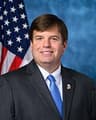 Dale Strong
Republican · Alabama