
Julia Brownley (D-CA)
Producing Real Opportunities for Technology and Entrepreneurs Investing in Nutrition Act
A Democratic bill with 17 Democratic cosponsors · See all 17 cosponsors
Last activity — Referred to the Subcommittee on Conservation, Research, and Biotechnology.
In committee
Introduced and handed to a committee in the chamber it started in.
The committee holds it, and most bills are never heard from again. A hearing or a committee vote would be news; silence is the usual outcome, and it kills the bill without anyone voting against it.
Its path through Congress
- Introduced
- In Committee
What this bill would do
This bill, titled the "Producing Real Opportunities for Technology and Entrepreneurs Investing in Nutrition Act," seeks to amend the Food, Agriculture, Conservation, and Trade Act of 1990. It directs the Secretary of Agriculture to establish research centers of excellence focused on alternative protein innovation. The legislation also establishes a national program dedicated to protein security and a food biomanufacturing grant program. Additionally, it creates a food bioworkforce development grant program and requires a national strategy on alternative proteins. These efforts aim to diversify the food system through bioprocessing and biomanufacturing.
Yes· 3 of 24
- Scored +8
Does this put more money into scientific research?
Establishes research centers and grant programs for protein innovation.
- Scored +7
Would farmers be better off under this?
Directly aims to increase farmer profits and rural prosperity through biomass conversion.
- Scored +7
Would people in rural areas be better off under this?
Focuses on rural prosperity and the development of agricultural biomass into high-value products.
The opposite
- Scored -4
Would immigrants be better off under this?
Grant eligibility is strictly limited to entities owned and controlled by U.S. citizens.
- Scored -2
Does this reduce what the federal government owes?
The bill authorizes new government spending for grants and research centers.
- Scored -2
Does this reduce what the federal government spends?
The bill increases government spending through several new grant and research programs.
Who it would affect, and how
Potential Positive Impacts for People
-
Economic Productivity and Job Creation: The bill notes that investment in agricultural research yields significant economic productivity and highlights the potential for millions of jobs in the protein sector (Section 2).
-
Food Security and Choice: Diversifying protein sources is intended to increase domestic supply chain resilience and provide more choices to American consumers (Section 2).
-
Workforce Development and Education: The establishment of research centers and grant programs aims to provide students with necessary skills in agricultural science, technology, engineering, and mathematics (Section 3, Section 7).
-
Support for Rural Prosperity: The creation of a national program dedicated to protein security is intended to increase rural prosperity and farmer profits (Section 5).
-
Infrastructure and Industry Support: The grant program allows for the construction of new commercial-scale facilities or the expansion of existing ones to support food biomanufacturing (Section 6).
-
Training and Scholarship Opportunities: Grant funds can be used to train employees, establish training centers, and provide higher-education scholarships at institutions including community colleges (Section 7).
Potential Negative Impacts for People
- No negative impacts or burdens are explicitly mentioned in the provided text.
Groups and Interests Ranking
Every group the model scored this bill for, from -10 to +10. Tap or hover a score for the reason it gave.
- Demographic And Interest Groups
- Would farmers be better off under this? — Directly aims to increase farmer profits and rural prosperity through biomass conversion. Would people in rural areas be better off under this? — Focuses on rural prosperity and the development of agricultural biomass into high-value products. Would business owners be better off under this? — Provides significant grants for private entities and entrepreneurs to scale production. Would students be better off under this? — Provides scholarships and targeted education for students in STEM and biomanufacturing. Would people in their twenties and thirties be better off under this? — Provides scholarships and workforce training for students and new entrants to the field. Would Black Americans be better off under this? — Mandates a center of excellence be led by an 1890 Institution. Would households on low incomes be better off under this? — Potential to lower food costs by diversifying protein supply and improving security. Would people in middle age be better off under this? — Creates job opportunities and business growth for entrepreneurs. Would middle-income households be better off under this? — Increases consumer choices and supports job creation in new industries. Would Native Americans be better off under this? — Allows Indian Tribes to be eligible for workforce development grants. Would children be better off under this? — Aims to improve food security and diversity of food choices for future generations. Would immigrants be better off under this? — Grant eligibility is strictly limited to entities owned and controlled by U.S. citizens.
- Economy And Finance
- Is this likely to create jobs? — The bill focuses on workforce development and the growth of the food biomanufacturing sector to create jobs. Is this likely to grow the economy? — Investment in agricultural research and biomanufacturing is expected to increase economic productivity. Does this make it easier to run a small business? — Provides grants for for-profit private entities to build or retrofit biomanufacturing facilities. Does this reduce what the federal government spends? — The bill increases government spending through several new grant and research programs. Does this reduce what the federal government owes? — The bill authorizes new government spending for grants and research centers.
- Environment Energy And Infrastructure
- Does this invest in rural communities? — Directly aims to increase rural prosperity and provide grants for facility construction. Does this cut the pollution that drives climate change? — Alternative proteins often have lower carbon footprints than traditional livestock. Does this better protect air, water and wildlife? — Focuses on the use of under-utilized biomass for food production.
- Education And Technology
- Does this put more money into scientific research? — Establishes research centers and grant programs for protein innovation. Does this make college cost less? — Provides higher-education scholarships for students in biomanufacturing and bioprocessing.
- Healthcare
- Does this put more money into medical research? — Directly increases funding for food and agricultural research and development.
- Social Issues And Justice
- Does this narrow racial gaps in how people are treated? — Requires at least one center of excellence to be led by an 1890 Institution, which are historically Black colleges. Is this likely to lift people out of poverty? — Aims to increase rural prosperity and farmer profits.
- National Security And Foreign Policy
- Does this make trade with other countries easier? — Aims to ensure U.S. leadership in food biomanufacturing to meet global demand.
- Governance And Ideology
- Does this give the federal government more power? — Creates new federal mandates and strategies for national protein security.
- 9/14/2026
- 1 Cosponsor added.
- 9/10/2026
- 1 Cosponsor added.
- 9/2/2026
- 2 Cosponsors added.
- 6/24/2026
- 1 Cosponsor added.
- 5/20/2026
- Referred to the Subcommittee on Conservation, Research, and Biotechnology.
- 5/7/2026
- 1 Cosponsor added.
- 4/16/2026
- 1 Cosponsor added.
- 4/14/2026
- 1 Cosponsor added.
- 3/24/2026
- 1 Cosponsor added.
- 2/20/2026
- 1 Cosponsor added.
- 2/17/2026
- 1 Cosponsor added.
- 1/13/2026
- 1 Cosponsor added.
- 12/17/2025
- Referred to the Committee on Agriculture, and in addition to the Committee on Education and Workforce, for a period to be subsequently determined by the Speaker, in each case for consideration of such provisions as fall within the jurisdiction of the committee concerned.
- 5 Cosponsors added.
- Introduced in House
One bill Congress.gov lists as related to this one — companions in the other chamber, earlier versions, and bills this one absorbed or was folded into.
 Ami Bera
Democrat · California
 Nikki Budzinski
Democrat · Illinois
 Debbie Dingell
Democrat · Michigan
 Robert Garcia
Democrat · California
 Ro Khanna
Democrat · California
 Zoe Lofgren
Democrat · California
 Ted Lieu
Democrat · California
 James McGovern
Democrat · Massachusetts
 Joseph Morelle
Democrat · New York
 Kevin Mullin
Democrat · California
 Eleanor Norton
Democrat · District of Columbia
 Chellie Pingree
Democrat · Maine
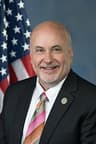 Mark Pocan
Democrat · Wisconsin
 Deborah Ross
Democrat · North Carolina
 Kim Schrier
Democrat · Washington
 Jill Tokuda
Democrat · Hawaii
 George Whitesides
Democrat · California