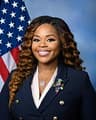
Sheila Cherfilus-McCormick (D-FL)
Historically Underserved Veterans Inclusion Act of 2025
A Democratic bill with 3 Democratic cosponsors · See all 3 cosponsors
Last activity — Referred to the Subcommittee on Oversight and Investigations.
In committee
Introduced and handed to a committee in the chamber it started in.
The committee holds it, and most bills are never heard from again. A hearing or a committee vote would be news; silence is the usual outcome, and it kills the bill without anyone voting against it.
Its path through Congress
- Introduced
- In Committee
What this bill would do
The Historically Underserved Veterans Inclusion Act of 2025 seeks to expand the scope of the Center for Minority Veterans and the Advisory Committee on Minority Veterans. This bill adds "historically underserved" veterans to the existing focus on minority veterans. It modifies the roles of the Center and the Advisory Committee to include a broader range of services and oversight. The bill also introduces specific criteria for what constitutes a historically underserved veteran. Furthermore, it mandates the reinstatement of the Office of Equity Assurance within the Veterans Benefits Administration. Finally, it requires regular briefings to Congress regarding equity research and implementation.
Yes· 3 of 14
- Scored +6
Would veterans be better off under this, taking everything together?
The bill expands the mission of the Center for Minority Veterans to include a broader range of underserved populations.
- Scored +6
Does this increase the pay, pensions or support veterans receive?
The bill expands the scope of assistance and oversight to include historically underserved veterans.
- Scored +5
Would LGBTQ people be better off under this?
The bill adds sexual orientation and gender identity to the criteria for underserved veterans.
The opposite
No question was scored the opposite.
Who it would affect, and how
Potential Positive Impacts for People
-
Expanded Scope of Services: The bill expands the Center for Minority Veterans to include "historically underserved" veterans (Section 2(a)). This could benefit people who have faced difficulties receiving benefits based on factors like sexual orientation, gender identity, English language proficiency, religion, or residing in rural communities (Section 2(b)(7)(3)).
-
Improved Access to Benefits: The Advisory Committee is tasked with advising on expanding benefits and services, specifically relating to health care, suicide prevention, and homelessness (Section 2(b)(3)(5)(B)).
-
Enhanced Program Oversight: The Committee is directed to help covered veterans receive the benefits and services they are entitled to under the law (Section 2(b)(3)(5)(G)).
-
Addressing Benefit Disparities: The Secretary is required to carry out a biennial review to identify disparities among groups of veterans in the receipt of benefits (Section 2(b)(4)(1)).
-
Restoration of Equity Oversight: The bill mandates the permanent reinstatement of the Office of Equity Assurance (Section 3(a)(1)), which includes the reinstatement of its employees (Section 3(a)(2)).
Potential Negative Impacts for People
- No specific negative impacts are explicitly stated in the provided text.
Groups and Interests Ranking
Every group the model scored this bill for, from -10 to +10. Tap or hover a score for the reason it gave.
- Demographic And Interest Groups
- Would veterans be better off under this, taking everything together? — The bill expands the mission of the Center for Minority Veterans to include a broader range of underserved populations. Would LGBTQ people be better off under this? — The bill adds sexual orientation and gender identity to the criteria for underserved veterans. Would Black Americans be better off under this? — The bill aims to address disparities in benefit receipt through the Office of Equity Assurance. Would Hispanic Americans be better off under this? — The bill provides mechanisms to address disparities faced by minority group members. Would people in rural areas be better off under this? — The bill recognizes residing in a rural community as a factor for being a historically underserved veteran. Would households on low incomes be better off under this? — The bill explicitly includes low socioeconomic status as a criterion for underserved status. Would women be better off under this? — The bill specifically includes women in the updated definitions for the Advisory Committee.
- Social Issues And Justice
- Does this narrow racial gaps in how people are treated? — The bill mandates the reinstatement of the Office of Equity Assurance to examine racial and ethnic disparities in compensation. Does this expand the rights of LGBTQ people? — The bill includes sexual orientation and gender identity as factors for being considered a historically underserved veteran. Is this likely to reduce homelessness? — The bill directs the Advisory Committee to advise on expanding services relating to homelessness. Is this likely to lift people out of poverty? — The bill recognizes low socioeconomic status as a factor in being a historically underserved veteran.
- Healthcare
- Does this make health care easier to get in general? — The bill expands the scope of the Center for Minority Veterans to include historically underserved veterans to improve access to health care. Does this make mental health care easier to get? — The bill tasks the Advisory Committee with expanding benefits and services relating to suicide prevention.
- National Security And Foreign Policy
- Does this increase the pay, pensions or support veterans receive? — The bill expands the scope of assistance and oversight to include historically underserved veterans.
- 1/5/2026
- Referred to the Subcommittee on Oversight and Investigations.
- 12/15/2025
- 2 Cosponsors added.
- 12/12/2025
- 1 Cosponsor added.
- 12/10/2025
- Referred to the House Committee on Veterans' Affairs.
- Introduced in House
 Salud Carbajal
Democrat · California
 Seth Moulton
Democrat · Massachusetts
 Dina Titus
Democrat · Nevada