
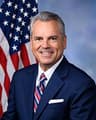
Andy Barr (R-KY)
Affordable Homeownership Access Act
A Republican bill with 1 Democratic cosponsor · See all 4 cosponsors
Last activity — Referred to the House Committee on Financial Services.
In committee
Introduced and handed to a committee in the chamber it started in.
The committee holds it, and most bills are never heard from again. A hearing or a committee vote would be news; silence is the usual outcome, and it kills the bill without anyone voting against it.
Its path through Congress
- Introduced
- In Committee
What this bill would do
The Affordable Homeownership Access Act aims to exempt small seller financers from certain licensing requirements. It targets owner financers who provide credit for properties they own to buyers who may not use traditional bank financing. The bill modifies the S.A.F.E. Mortgage Licensing Act and the Truth in Lending Act to create specific exceptions for these individuals or entities. These exceptions apply to those extending credit for a limited number of residential mortgage loans or manufactured homes. Additionally, the bill mandates a joint study by the Secretaries of Housing and Urban Development and the Treasury regarding owner financing trends.
Yes· 3 of 8
- Scored +6
Does this make it easier to run a small business?
The bill exempts small seller financers from certain mortgage licensing requirements to make it easier for them to provide credit.
- Scored +5
Would business owners be better off under this?
The bill reduces regulatory burdens for small business owners who act as real estate owner financers.
- Scored +5
Does this make housing cost less?
By expanding access to owner financing, the bill aims to assist underserved buyers in obtaining homes.
The opposite
- Scored -2
Does this give people more protection from unfair business practices?
Reducing licensing requirements for mortgage originators may reduce the level of regulatory oversight for consumers.
Who it would affect, and how
Potential Positive Impacts for People
-
Increased Homeownership Opportunities: The bill states that using owner financing can assist with family wealth creation through increased homeownership (Section 2).
-
Neighborhood Stability: The findings suggest that more homes sold with owner financing can benefit home values and increase neighborhood stabilization (Section 2).
-
Support for Underserved Buyers: The bill notes that the owner finance industry provides financing to underserved buyers who cannot or prefer not to obtain traditional bank or loan-based financing (Section 2).
-
Licensing Exemptions for Small Sellers: Small seller financers who extend credit for no more than 24 residential mortgage loans in a 12-month period for property they own would be exempt from certain requirements (Section 3).
-
Expanded Exceptions for Manufactured Homes: The bill provides exceptions for owner financing of consumer loans or extensions of credit secured by a manufactured home, provided the owner did not manufacture the home (Section 4).
Potential Negative Impacts for People
-
Requirement for Ability to Pay Verification: To qualify for the exception, the owner must determine in good faith and document that the buyer has a reasonable ability to pay (Section 4).
-
Loan Restrictions: The exemptions are subject to specific rules, such as the loan being fully amortizing and having specific interest rate structures (Section 4).
-
Regulatory Oversight: The exceptions are subject to meeting any other criteria the Bureau may prescribe by rule (Section 4).
Groups and Interests Ranking
Every group the model scored this bill for, from -10 to +10. Tap or hover a score for the reason it gave.
- Demographic And Interest Groups
- Would business owners be better off under this? — The bill reduces regulatory burdens for small business owners who act as real estate owner financers. Would households on low incomes be better off under this? — The bill targets underserved buyers who may struggle to obtain traditional bank financing. Would people in cities be better off under this? — The bill notes that owner financing can increase neighborhood stabilization. Would middle-income households be better off under this? — Increased homeownership opportunities may assist with middle-class wealth creation. Would people in rural areas be better off under this? — Expanding financing options can benefit various communities including rural ones via owner financing.
- Social Issues And Justice
- Does this make housing cost less? — By expanding access to owner financing, the bill aims to assist underserved buyers in obtaining homes. Is this likely to lift people out of poverty? — The bill notes that owner financing can assist with family wealth creation through increased homeownership.
- Economy And Finance
- Does this make it easier to run a small business? — The bill exempts small seller financers from certain mortgage licensing requirements to make it easier for them to provide credit. Does this give people more protection from unfair business practices? — Reducing licensing requirements for mortgage originators may reduce the level of regulatory oversight for consumers.
- 2/10/2026
- 2 Cosponsors added.
- 1/21/2026
- 1 Cosponsor added.
- 12/9/2025
- Referred to the House Committee on Financial Services.
- 1 Cosponsor added.
- Introduced in House
 Mark Alford
Republican · Missouri
 Vicente Gonzalez
Democrat · Texas
 Erin Houchin
Republican · Indiana
 Daniel Webster
Republican · Florida