
A Democratic bill with 3 Republican cosponsors · See all 4 cosponsors
Last activity — Referred to the Committee on Energy and Commerce, and in addition to the Committee on Ways and Means, for a period to be subsequently determined by the Speaker, in each case for consideration of such provisions as fall within the jurisdiction of the committee concerned.
In committee
Introduced and handed to a committee in the chamber it started in.
The committee holds it, and most bills are never heard from again. A hearing or a committee vote would be news; silence is the usual outcome, and it kills the bill without anyone voting against it.
Its path through Congress
- Introduced
- In Committee
What this bill would do
The Territories Health Equity Act of 2025 aims to improve the treatment of U.S. territories under Medicare and Medicaid programs. It seeks to eliminate general Medicaid funding limitations and specific FMAP limitations for Puerto Rico. The bill also modifies Medicare DSH payments and target amounts for hospitals located in the territories. Additionally, it eliminates certain late enrollment penalties for Medicare Part B residents in Puerto Rico. Finally, the act addresses premium and cost-sharing subsidies for low-income territorial residents and provides mechanisms for access to coverage in areas without exchange plans.
Yes· 3 of 12
- Scored +8
Would households on low incomes be better off under this?
The bill provides automatic eligibility for premium and cost-sharing subsidies and enhances Medicaid support.
- Scored +8
Does this make health care easier to get in general?
The bill significantly expands healthcare access through increased Medicaid, Medicare, and subsidy provisions in the territories.
- Scored +7
Would people over 65 be better off under this?
The bill improves Medicare coverage, increases benchmarks, and eliminates late enrollment penalties for many seniors.
The opposite
No question was scored the opposite.
Who it would affect, and how
Potential Positive Impacts for People
-
Elimination of Medicaid Funding Caps: The bill removes general Medicaid funding limitations for Puerto Rico, the Virgin Islands, Guam, the Northern Mariana Islands, and American Samoa, effective fiscal year 2026 (Section 101).
-
Improved Medicaid DSH Allotments: The bill permits Medicaid DSH allotments for territories, establishing a specific ratio for fiscal year 2026 based on the number of low-income or uninsured individuals (Section 103).
-
Adjusted Medicare Payments for Puerto Rico Hospitals: It changes the calculation of Medicare DSH payments for inpatient prospective payment system hospitals in Puerto Rico (Section 201).
-
Rebased Target Amounts for Territorial Hospitals: Hospitals in the territories will have a rebased target amount for payments, which may result in higher payment amounts (Section 202).
-
Increased Target Amounts for Certain Territory Hospitals: Hospitals in territories other than Puerto Rico may receive a target amount increase based on their disproportionate patient percentage (Section 203).
-
Elimination of Medicare Part B Penalties: Certain individuals residing in Puerto Rico will no longer face late enrollment penalties under Medicare Part B (Section 211).
-
Increased Medicare Advantage Benchmarks: The bill adjusts the benchmark for low-base payment counties in Puerto Rico (Section 221).
-
Automatic Subsidies for Low-Income Residents: Certain low-income territorial residents will gain automatic eligibility for premium and cost-sharing subsidies under the Medicare program (Section 231).
-
Access to Coverage via New Mechanisms: The bill establishes a mechanism to ensure individuals in territories without qualified health plans through an Exchange can access insurance coverage similar to the District of Columbia's Exchange (Section 303).
Potential Negative Impacts for People
-
Sunset of Enhanced Allotment Program: The bill includes a sunset provision for the enhanced allotment program as of January 1, 2026 (Section 231).
-
Limitation on Medicare Advantage Benchmarks: The blended benchmark amount for territories is prohibited from exceeding the lowest blended benchmark amount for any area within the 50 States and the District of Columbia (Section 221).
Groups and Interests Ranking
Every group the model scored this bill for, from -10 to +10. Tap or hover a score for the reason it gave.
- Demographic And Interest Groups
- Would households on low incomes be better off under this? — The bill provides automatic eligibility for premium and cost-sharing subsidies and enhances Medicaid support. Would people over 65 be better off under this? — The bill improves Medicare coverage, increases benchmarks, and eliminates late enrollment penalties for many seniors. Would Hispanic Americans be better off under this? — The bill provides significant healthcare relief to residents of Puerto Rico, which has a large Hispanic population. Would middle-income households be better off under this? — The bill primarily targets low-income subsidies and specific elder care needs.
- Healthcare
- Does this make health care easier to get in general? — The bill significantly expands healthcare access through increased Medicaid, Medicare, and subsidy provisions in the territories. Does this strengthen the Affordable Care Act? — The bill establishes new mechanisms for health insurance access in territories without exchanges. Does this lower what people pay for private health insurance? — The act provides automatic eligibility for premium and cost-sharing subsidies for low-income residents.
- Social Issues And Justice
- Does this narrow racial gaps in how people are treated? — The bill addresses historical funding inequities for residents in U.S. territories. Is this likely to lift people out of poverty? — Increasing healthcare subsidies and funding can reduce the financial burden on low-income households.
- Governance And Ideology
- Does this make what the government does easier for the public to see? — The bill mandates the publication of detailed information regarding Medicaid and CHIP expenditures in the territories. Does this give the federal government more power? — The bill expands the scope of federal healthcare programs and oversight within the territories.
- Economy And Finance
- Is this likely to grow the economy? — The bill increases federal transfers to territorial healthcare systems which can stimulate local economies.
- 12/5/2025
- Referred to the Committee on Energy and Commerce, and in addition to the Committee on Ways and Means, for a period to be subsequently determined by the Speaker, in each case for consideration of such provisions as fall within the jurisdiction of the committee concerned.
- 4 Cosponsors added.
- Introduced in House
One bill Congress.gov lists as related to this one — companions in the other chamber, earlier versions, and bills this one absorbed or was folded into.
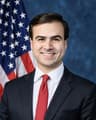 Pablo Hernández
Democrat · Puerto Rico
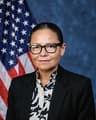 Kimberlyn King-Hinds
Republican · Northern Mariana Islands
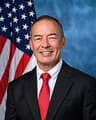 James Moylan
Republican · Guam
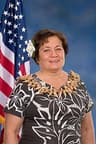 Aumua Amata Radewagen
Republican · American Samoa