
A Democratic bill with 18 Republican cosponsors · See all 37 cosponsors
Last activity — Referred to the House Committee on Foreign Affairs.
In committee
Introduced and handed to a committee in the chamber it started in.
The committee holds it, and most bills are never heard from again. A hearing or a committee vote would be news; silence is the usual outcome, and it kills the bill without anyone voting against it.
Its path through Congress
- Introduced
- In Committee
What this bill would do
This bill, known as the "Feasibility Review of Emerging Equipment for Digital Open Media Act" or the "FREEDOM Act," requires a report on internet freedom in Iran. The Secretary of State must prepare this report within 120 days of the Act's enactment. This report is to be done in consultation with the Federal Communications Commission and the Department of the Treasury. It will be submitted to the House Committee on Foreign Affairs and the Senate Committee on Foreign Relations. The report will update and supplement previous requirements from the National Defense Authorization Act for Fiscal Year 2025.
Yes· 3 of 5
- Scored +5
Does this get reliable internet to more people?
The bill investigates emerging wireless communication technologies to expand connectivity.
- Scored +3
Does this favour talking over confrontation abroad?
The bill promotes internet freedom and digital openness as a tool of foreign policy regarding Iran.
- Scored +2
Does this better protect the country from computer attacks?
The bill requires an assessment of the security and resilience of wireless communications against signal jamming and countermeasures.
The opposite
No question was scored the opposite.
Who it would affect, and how
Potential Positive Impacts for People
-
Expansion of internet access: The bill calls for an assessment of using direct-to-cell wireless communications technologies to expand internet access for the people of Iran (Section 2(b)(1)).
-
Understanding of communication freedom: The report requires a survey of telecommunications service providers to determine the implications of ownership and control on communications freedom and censorship (Section 2(b)(3)).
-
Risk and opportunity assessment: The bill seeks to gather information to assess opportunities and risks associated with different communications technologies in Iran (Section 2(b)(4)).
Potential Negative Impacts for People
-
Security and technical risks: The bill notes that the assessment of direct-to-cell wireless communications must consider technical, regulatory, and security considerations (Section 2(b)(1)).
-
Impact of interference: The analysis must account for how drone-based platforms, signal jamming technologies, and related countermeasures could impact the security and resilience of wireless communications (Section 2(b)(2)).
Groups and Interests Ranking
Every group the model scored this bill for, from -10 to +10. Tap or hover a score for the reason it gave.
- Education And Technology
- Does this get reliable internet to more people? — The bill investigates emerging wireless communication technologies to expand connectivity.
- National Security And Foreign Policy
- Does this favour talking over confrontation abroad? — The bill promotes internet freedom and digital openness as a tool of foreign policy regarding Iran. Does this better protect the country from computer attacks? — The bill requires an assessment of the security and resilience of wireless communications against signal jamming and countermeasures.
- Demographic And Interest Groups
- Would people in cities be better off under this? — Increased internet access through wireless technology can benefit urban population connectivity.
- Social Issues And Justice
- Does this protect the right to vote? — The bill assesses technologies to expand internet access which can support digital expression and information access.
- 6/29/2026
- 2 Cosponsors added.
- 3/16/2026
- 2 Cosponsors added.
- 2/4/2026
- 2 Cosponsors added.
- 2/2/2026
- 2 Cosponsors added.
- 1/30/2026
- 2 Cosponsors added.
- 1/16/2026
- 2 Cosponsors added.
- 1/14/2026
- 2 Cosponsors added.
- 1/13/2026
- 2 Cosponsors added.
- 1/12/2026
- 2 Cosponsors added.
- 1/7/2026
- 2 Cosponsors added.
- 1/6/2026
- 2 Cosponsors added.
- 12/9/2025
- 2 Cosponsors added.
- 12/5/2025
- 1 Cosponsor added.
- 12/4/2025
- Referred to the House Committee on Foreign Affairs.
- 12 Cosponsors added.
- Introduced in House
One bill Congress.gov lists as related to this one — companions in the other chamber, earlier versions, and bills this one absorbed or was folded into.
 Yassamin Ansari
Democrat · Arizona
 Stephanie Bice
Republican · Oklahoma
 Gus Bilirakis
Republican · Florida
 Aaron Bean
Republican · Florida
 Tom Barrett
Republican · Michigan
 Jim Costa
Democrat · California
 Steve Cohen
Democrat · Tennessee
 André Carson
Democrat · Indiana
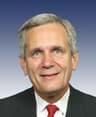 Lloyd Doggett
Democrat · Texas
 Virginia Foxx
Republican · North Carolina
 Brian Fitzpatrick
Republican · Pennsylvania
 Scott Franklin
Republican · Florida
 Josh Gottheimer
Democrat · New Jersey
 Daniel Goldman
Democrat · New York
 James Himes
Democrat · Connecticut
 Young Kim
Republican · California
 Thomas Kean
Republican · New Jersey
 Zoe Lofgren
Democrat · California
 Susie Lee
Democrat · Nevada
 Mike Levin
Democrat · California
 Nick LaLota
Republican · New York
 Michael Lawler
Republican · New York
 Cory Mills
Republican · Florida
 Jared Moskowitz
Democrat · Florida
 Kevin Mullin
Democrat · California
 Scott Peters
Democrat · California
 Maria Salazar
Republican · Florida
 Pete Sessions
Republican · Texas
 Brad Sherman
Democrat · California
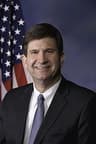 Bradley Schneider
Democrat · Illinois
 Eric Swalwell
Democrat · California
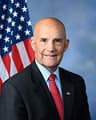 Keith Self
Republican · Texas
 Jefferson Shreve
Republican · Indiana
 Suhas Subramanyam
Democrat · Virginia
 Claudia Tenney
Republican · New York
 Robert Wittman
Republican · Virginia
 James Walkinshaw
Democrat · Virginia