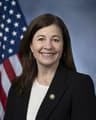
Kristen McDonald Rivet (D-MI)
Affordable Clean Water Infrastructure Act
A Democratic bill with 3 Republican cosponsors · See all 4 cosponsors
Last activity — Referred to the Subcommittee on Water Resources and Environment.
In committee
Introduced and handed to a committee in the chamber it started in.
The committee holds it, and most bills are never heard from again. A hearing or a committee vote would be news; silence is the usual outcome, and it kills the bill without anyone voting against it.
Its path through Congress
- Introduced
- In Committee
What this bill would do
This bill, titled the "Affordable Clean Water Infrastructure Act," seeks to amend the Federal Water Pollution Control Act. The primary goal is to provide more financial assistance to rural, small, and tribal publicly owned treatment works. It changes how states can use capitalization grants to provide additional subsidization. This includes adjusting language to help ratepayers afford wastewater and stormwater services. The bill also sets specific limits and minimums for how much money a State may use for these subsidies.
Yes· 3 of 8
- Scored +5
Would people in rural areas be better off under this?
The bill enables states to provide an additional 10 percent of capitalization grants to rural treatment works.
- Scored +5
Does this invest in rural communities?
The bill specifically allows for additional subsidization to be directed to rural publicly owned treatment works.
- Scored +4
Would Native Americans be better off under this?
The bill provides for additional subsidization specifically for tribal publicly owned treatment works.
The opposite
No question was scored the opposite.
Who it would affect, and how
Potential Positive Impacts for People
-
Help with Water Costs: The bill changes the language to help ratepayers afford wastewater and stormwater services (Section 2, paragraph (1)(C)).
-
Extra Help for Specific Communities: States may make an additional 10 percent of their capitalization grant available to provide extra subsidization specifically for rural, small, and tribal publicly owned treatment works (Section 2, paragraph (3)(B)).
-
Guaranteed Minimum Support: A State is required to use an amount that is not less than 20 percent of its total capitalization grants for providing additional subsidization, provided there are enough qualifying applications (Section 2, paragraph (3)(C)).
Potential Negative Impacts for People
- Loan Limitations: A loan from the water pollution control revolving fund that has an interest rate of 0 percent or higher is not considered "additional subsidization" under this specific subsection (Section 2, paragraph (4)).
Groups and Interests Ranking
Every group the model scored this bill for, from -10 to +10. Tap or hover a score for the reason it gave.
- Demographic And Interest Groups
- Would people in rural areas be better off under this? — The bill enables states to provide an additional 10 percent of capitalization grants to rural treatment works. Would Native Americans be better off under this? — The bill provides for additional subsidization specifically for tribal publicly owned treatment works. Would households on low incomes be better off under this? — The bill aims to help ratepayers afford wastewater and stormwater services through increased subsidization. Would middle-income households be better off under this? — The bill includes provisions to assist ratepayers in affording water-related services.
- Environment Energy And Infrastructure
- Does this invest in rural communities? — The bill specifically allows for additional subsidization to be directed to rural publicly owned treatment works. Does this better protect air, water and wildlife? — The bill provides financial assistance for water pollution control and treatment works.
- Economy And Finance
- Is this likely to grow the economy? — The bill supports infrastructure through increased subsidization for water treatment works.
- Social Issues And Justice
- Is this likely to lift people out of poverty? — The bill provides assistance to help ratepayers afford essential wastewater and stormwater services.
- 2/2/2026
- Referred to the Subcommittee on Water Resources and Environment.
- 12/4/2025
- Referred to the House Committee on Transportation and Infrastructure.
- 4 Cosponsors added.
- Introduced in House
One bill Congress.gov lists as related to this one — companions in the other chamber, earlier versions, and bills this one absorbed or was folded into.
 Robert Bresnahan
Republican · Pennsylvania
 Brian Fitzpatrick
Republican · Pennsylvania
 Emilia Sykes
Democrat · Ohio
 Tony Wied
Republican · Wisconsin