
A Democratic bill with 3 Republican cosponsors · See all 11 cosponsors
Last activity — Ordered to be Reported in the Nature of a Substitute (Amended) by the Yeas and Nays: 35 - 0.
Introduced, nothing more yet
Formally proposed, and not yet handed to a committee.
Nearly every bill is sent to a committee within days. Introduction alone is not a sign of support, of momentum, or of any likelihood of passing — any member may introduce any bill.
Its path through Congress
- Introduced
What this bill would do
This bill is known as the READ AI Models Act. It directs the Director of the National Institute of Standards and Technology to start a pilot program. This program will create a structured template and technical guidelines for documenting artificial intelligence models and associated data. The template can be used by both the public and private sectors. The Director must also gather stakeholder input and publish drafts for public comment. Finally, a report and the final template must be submitted and published within 12 months.
Yes· 3 of 7
- Scored +3
Does this give people more protection from unfair business practices?
The bill provides consumers with more information regarding AI model developers, release dates, and terms of service.
- Scored +3
Does this make what the government does easier for the public to see?
The bill requires public publication of templates and a report on the pilot program's effectiveness.
- Scored +2
Is this likely to grow the economy?
Standardizing AI documentation may help foster trust and consistency in the technology market.
The opposite
No question was scored the opposite.
Who it would affect, and how
Potential Positive Impacts for People
-
Under Section 2(a)(2)(A), the Director must produce a structured template to document information about artificial intelligence models, such as the model name, developer, release date, and supported languages. This is positive because it brings clear information and transparency to the public about how AI models are built and used.
-
Under Section 2(a)(2)(B), the template must be modular so users can flexibly adopt sections for specific use cases and sector-specific needs. This is a positive benefit because it allows different industries to use the tool practically without being forced into a one-size-fits-all approach.
-
Under Section 2(a)(3)(B), the Director must publish a draft in the Federal Register and give the public at least 60 days to submit comments. This is a positive provision because it holds officials accountable by letting everyday people have a direct say in shaping the guidelines.
Potential Negative Impacts for People
- Based on the provided text, there are no explicitly stated negative consequences or burdens for individuals or groups of people in the United States.
Groups and Interests Ranking
Every group the model scored this bill for, from -10 to +10. Tap or hover a score for the reason it gave.
- Economy And Finance
- Does this give people more protection from unfair business practices? — The bill provides consumers with more information regarding AI model developers, release dates, and terms of service. Is this likely to grow the economy? — Standardizing AI documentation may help foster trust and consistency in the technology market.
- Education And Technology
- Does this put more rules on large technology companies? — The bill creates new documentation and transparency requirements for AI model developers. Does this give people more control over their personal data? — The bill encourages documenting model training data and terms of service which can aid in understanding data usage. Does this put more money into scientific research? — The bill utilizes NIST to develop technical guidelines and benchmarks for AI models.
- Governance And Ideology
- Does this make what the government does easier for the public to see? — The bill requires public publication of templates and a report on the pilot program's effectiveness.
- Demographic And Interest Groups
- Would students be better off under this? — The bill involves collaboration with institutions of higher education in the development of AI documentation standards.
- 9/24/2026
- 1 Cosponsor added.
- 7/22/2026
- 1 Cosponsor added.
- 6/25/2026
- Committee Consideration and Mark-up Session Held
- Ordered to be Reported in the Nature of a Substitute (Amended) by the Yeas and Nays: 35 - 0.
- 6/23/2026
- 2 Cosponsors added.
- 6/2/2026
- 2 Cosponsors added.
- 5/7/2026
- 2 Cosponsors added.
- 3/12/2026
- 1 Cosponsor added.
- 2/17/2026
- 1 Cosponsor added.
- 12/4/2025
- Referred to the House Committee on Science, Space, and Technology.
- 1 Cosponsor added.
- Introduced in House
 Jake Auchincloss
Democrat · Massachusetts
 André Carson
Democrat · Indiana
 Angie Craig
Democrat · Minnesota
 Jasmine Crockett
Democrat · Texas
 Suzan DelBene
Democrat · Washington
 Josh Gottheimer
Democrat · New Jersey
 Thomas Kean
Republican · New Jersey
 Michael Lawler
Republican · New York
 Jay Obernolte
Republican · California
 Hillary Scholten
Democrat · Michigan
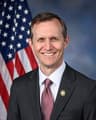 George Whitesides
Democrat · California