
A Democratic bill with 8 Republican cosponsors · See all 18 cosponsors
Last activity — Referred to the Committee on Energy and Commerce, and in addition to the Committee on the Judiciary, for a period to be subsequently determined by the Speaker, in each case for consideration of such provisions as fall within the jurisdiction of the committee concerned.
In committee
Introduced and handed to a committee in the chamber it started in.
The committee holds it, and most bills are never heard from again. A hearing or a committee vote would be news; silence is the usual outcome, and it kills the bill without anyone voting against it.
Its path through Congress
- Introduced
- In Committee
What this bill would do
The "Freedom to Heal Act of 2025" aims to create a special registration process under the Controlled Substances Act. This process is designed for physicians who want to directly administer schedule I eligible investigational drugs to patients under the Federal Right to Try law. The bill requires the Attorney General to register these physicians after they submit specific evidence and documentation. It establishes requirements for applications, including proof of valid registration for other substances and agreements with manufacturers. The act also outlines how physicians can request additional drug amounts and how multiple treatment sites can be handled. Finally, it mandates that the Attorney General issue interim and final rules to implement these controls.
Yes
- Scored +6
Does this make health care easier to get in general?
The bill expands access to investigational drugs for eligible patients through a new physician registration process.
The opposite
- Scored -1
Does this make what the government does easier for the public to see?
The bill increases administrative complexity by requiring more detailed record-keeping and reporting to the Attorney General.
Who it would affect, and how
Potential Positive Impacts for People
-
Access to investigational drugs: The bill allows physicians to directly administer schedule I eligible investigational drugs to eligible patients under the Federal Right to Try law (Sec. 2, paragraph 2).
-
Streamlined administration through supplemental notifications: Physicians can request additional amounts of an investigational drug through a supplemental notification that is deemed approved after 30 days unless an order to show cause is served (Sec. 2, paragraph 5).
-
Flexibility for treatment sites: A single registration can cover multiple treatment sites if they are in the same city or county and under the same control, which can simplify the administration of treatment (Sec. 2, paragraph 6).
Potential Negative Impacts for People
-
Administrative burden on physicians: Physicians must submit detailed applications including evidence of registration for other substances, documentation from manufacturers, agreements, proof of state legality, evidence of training, and descriptions of storage sites (Sec. 2, paragraph 3(A)).
-
Strict limitations on drug possession: Physicians are restricted to possessing only the amounts identified in their initial application or their supplemental notifications (Sec. 2, paragraph 5).
-
Requirement for Attorney General oversight: The Attorney General has the authority to serve an order to show cause upon applicants, which could delay or impact the registration process (Sec. 2, paragraph 3(B) and paragraph 5(B)(ii)).
Groups and Interests Ranking
Every group the model scored this bill for, from -10 to +10. Tap or hover a score for the reason it gave.
- Healthcare
- Does this make health care easier to get in general? — The bill expands access to investigational drugs for eligible patients through a new physician registration process.
- Governance And Ideology
- Does this make what the government does easier for the public to see? — The bill increases administrative complexity by requiring more detailed record-keeping and reporting to the Attorney General.
- 10/9/2026
- 1 Cosponsor added.
- 3/27/2026
- 1 Cosponsor added.
- 2/23/2026
- 1 Cosponsor added.
- 2/12/2026
- 1 Cosponsor added.
- 2/4/2026
- 1 Cosponsor added.
- 1/12/2026
- 1 Cosponsor added.
- 1/7/2026
- 1 Cosponsor added.
- 12/16/2025
- 2 Cosponsors added.
- 12/15/2025
- 2 Cosponsors added.
- 12/4/2025
- Referred to the Committee on Energy and Commerce, and in addition to the Committee on the Judiciary, for a period to be subsequently determined by the Speaker, in each case for consideration of such provisions as fall within the jurisdiction of the committee concerned.
- 7 Cosponsors added.
- Introduced in House
2 bills Congress.gov lists as related to this one — companions in the other chamber, earlier versions, and bills this one absorbed or was folded into.
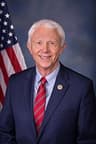 Jack Bergman
Republican · Michigan
 Steve Cohen
Democrat · Tennessee
 J. Correa
Democrat · California
 Dan Crenshaw
Republican · Texas
 Sarah Elfreth
Democrat · Maryland
 Brian Fitzpatrick
Republican · Pennsylvania
 Glenn Grothman
Republican · Wisconsin
 Daniel Goldman
Democrat · New York
 Julie Johnson
Democrat · Texas
 Ro Khanna
Democrat · California
 Ted Lieu
Democrat · California
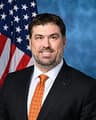 Morgan Luttrell
Republican · Texas
 Nancy Mace
Republican · South Carolina
 Sarah McBride
Democrat · Delaware
 Thomas Suozzi
Democrat · New York
 Eric Sorensen
Democrat · Illinois
 Derrick Van Orden
Republican · Wisconsin
 Tony Wied
Republican · Wisconsin