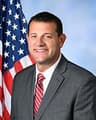
A Republican bill with 1 Democratic cosponsor · See the cosponsor
Last activity — Referred to the Committee on House Administration, and in addition to the Committee on Science, Space, and Technology, for a period to be subsequently determined by the Speaker, in each case for consideration of such provisions as fall within the jurisdiction of the committee concerned.
In committee
Introduced and handed to a committee in the chamber it started in.
The committee holds it, and most bills are never heard from again. A hearing or a committee vote would be news; silence is the usual outcome, and it kills the bill without anyone voting against it.
Its path through Congress
- Introduced
- In Committee
What this bill would do
This bill, known as the "SECURE IT Act," seeks to amend the Help America Vote Act of 2002. It requires the Election Assistance Commission to include penetration testing as part of the certification process for voting system hardware and software. Additionally, the bill establishes an Independent Security Testing and Coordinated Vulnerability Disclosure Pilot Program for Election Systems. This pilot program is intended to test for and disclose cybersecurity vulnerabilities within election systems. The program involves a mechanism for vendors to share systems and code with vetted researchers. It also includes provisions for how vulnerabilities are reported, fixed, and kept confidential.
Yes· 3 of 5
- Scored +7
Does this better protect the country from computer attacks?
The bill implements proactive penetration testing and a coordinated vulnerability disclosure program to secure election-related information systems.
- Scored +5
Does this protect the right to vote?
The bill enhances the security and integrity of voting systems through mandatory penetration testing and a vulnerability disclosure program.
- Scored +3
Does this give people more control over their personal data?
The focus on securing election systems helps protect voter registration databases and sensitive election communications.
The opposite
- Scored -2
Does this make what the government does easier for the public to see?
The bill explicitly exempts discovered cybersecurity vulnerabilities from Freedom of Information Act requests to maintain security.
Who it would affect, and how
Potential Positive Impacts for People
-
Enhanced Security of Voting Systems: The bill requires penetration testing as part of the testing, certification, decertification, and recertification of voting system hardware and software (Section 2).
-
Proactive Vulnerability Identification: The establishment of a pilot program allows for the testing of and disclosure of cybersecurity vulnerabilities in election systems (Section 3(a)).
-
Expert Oversight of Testing: The Director of the National Institute of Standards and Technology is tasked with recommending accredited entities to carry out penetration testing (Section 2).
-
Structured Vulnerability Resolution: The bill requires vendors to send patches or fixes for critical or high vulnerabilities to State and local election officials (Section 3(c)(3)(D)(i)).
-
Expedited Security Fixes: The Commission must provide an expedited review of patches or fixes intended for certified systems within 90 days (Section 3(c)(4)(A)).
-
Legal Protection for Researchers: The bill provides a "safe harbor" where research and publication are treated as authorized under the Computer Fraud and Abuse Act and are exempt from the Digital Millennium Copyright Act (Section 3(d)(2)).
Potential Negative Impacts for People
- Limited Duration of Program: The established Independent Security Testing and Coordinated Vulnerability Disclosure Pilot Program is only scheduled to be conducted for a period of 5 years (Section 3(b)).
Groups and Interests Ranking
Every group the model scored this bill for, from -10 to +10. Tap or hover a score for the reason it gave.
- National Security And Foreign Policy
- Does this better protect the country from computer attacks? — The bill implements proactive penetration testing and a coordinated vulnerability disclosure program to secure election-related information systems.
- Social Issues And Justice
- Does this protect the right to vote? — The bill enhances the security and integrity of voting systems through mandatory penetration testing and a vulnerability disclosure program. Does this make casting a ballot easier in practice? — By securing election infrastructure, the bill helps maintain trust in the ability to cast and count ballots effectively.
- Education And Technology
- Does this give people more control over their personal data? — The focus on securing election systems helps protect voter registration databases and sensitive election communications.
- Governance And Ideology
- Does this make what the government does easier for the public to see? — The bill explicitly exempts discovered cybersecurity vulnerabilities from Freedom of Information Act requests to maintain security.
- Demographic And Interest Groups
- Would people in cities be better off under this? — Securing election infrastructure provides a general benefit to all residents involved in the democratic process.
- 11/25/2025
- Referred to the Committee on House Administration, and in addition to the Committee on Science, Space, and Technology, for a period to be subsequently determined by the Speaker, in each case for consideration of such provisions as fall within the jurisdiction of the committee concerned.
- 1 Cosponsor added.
- Introduced in House
 Christopher Deluzio
Democrat · Pennsylvania