
Kevin Mullin (D-CA)
Dredging Coordination Improvement Act
A Democratic bill with 2 Republican cosponsors · See all 3 cosponsors
Last activity — Referred to the Subcommittee on Water Resources and Environment.
In committee
Introduced and handed to a committee in the chamber it started in.
The committee holds it, and most bills are never heard from again. A hearing or a committee vote would be news; silence is the usual outcome, and it kills the bill without anyone voting against it.
Its path through Congress
- Introduced
- In Committee
What this bill would do
This bill is called the Dredging Coordination Improvement Act. It requires the Secretary of the Army to talk with stakeholders when figuring out the scope and timeline for maintenance dredging contracts. The Secretary must prioritize certain types of dredging, such as for commercial and navigation activities, emergencies, environmental windows, and national interests, before recreational waters. If an emergency happens or a national interest is at stake, the Secretary can set the contract scope and timeline without talking to stakeholders who are not a party to the contract. The Secretary also has to notify the non-Federal sponsor within three business days about changes that affect the contract performance period and must provide capability numbers upon request.
Yes· 3 of 9
- Scored +4
Does this make what the government does easier for the public to see?
Improves communication by requiring the Secretary to notify non-Federal sponsors of changes within three business days and provide capability numbers.
- Scored +3
Does this make it easier to do business across state lines?
Better coordination and prioritization of commercial navigation contracts enhance interstate commerce.
- Scored +3
Would business owners be better off under this?
Improves operations and planning for businesses reliant on commercial shipping and waterway infrastructure.
The opposite
No question was scored the opposite.
Who it would affect, and how
Potential Positive Impacts for People
-
Stakeholder Consultation: Under Section 2(a)(1)(A), the Secretary must consult with stakeholders, including the applicable non-Federal sponsor and other relevant entities, when determining the scope and performance timeline for maintenance dredging contracts. This gives people and local groups a voice in the process.
-
Clear Priorities: Under Section 2(a)(1)(B), the Secretary must prioritize the completion of maintenance dredging in waters used for commercial and navigation activities, emergencies, environmental windows, and important national interests before waters used primarily for recreation or other non-commerce purposes. This ensures that critical commercial and emergency needs are met first.
-
Better Communication: Under Section 2(b), the Secretary must notify the applicable non-Federal sponsor within three business days of receiving information about changes that are reasonably likely to affect the period of performance of a dredging contract. This keeps local partners informed in a timely manner.
-
Access to Information: Under Section 2(c), the Secretary must make respective capability numbers available to the non-Federal sponsor upon request for any maintenance dredging activity. This gives sponsors direct access to important operational data.
Potential Negative Impacts for People
- Exclusion in Emergencies: Under Section 2(a)(2), the Secretary may determine the scope and performance timeline of a contract without consulting stakeholders who are not a party to the contract if the Secretary determines that an emergency exists or an important national interest is at stake. This means everyday citizens and non-party stakeholders will be left out of the decision-making process during emergencies.
Groups and Interests Ranking
Every group the model scored this bill for, from -10 to +10. Tap or hover a score for the reason it gave.
- Governance And Ideology
- Does this make what the government does easier for the public to see? — Improves communication by requiring the Secretary to notify non-Federal sponsors of changes within three business days and provide capability numbers. Does this make it easier to do business across state lines? — Better coordination and prioritization of commercial navigation contracts enhance interstate commerce.
- Demographic And Interest Groups
- Would business owners be better off under this? — Improves operations and planning for businesses reliant on commercial shipping and waterway infrastructure. Would farmers be better off under this? — Agricultural shipping benefits from prioritized commercial and navigation maintenance dredging.
- Economy And Finance
- Is this likely to grow the economy? — Prioritizing commercial and navigation dredging supports maritime commerce and economic activity. Does this make it easier to run a small business? — Commercial navigation priorities help small businesses dependent on waterways for shipping and trade.
- Environment Energy And Infrastructure
- Does this improve help for people hit by a disaster? — The bill ensures emergency dredging needs are prioritized and addressed efficiently. Does this better protect air, water and wildlife? — The bill explicitly accounts for and prioritizes maintenance dredging needed to accommodate environmental windows.
- National Security And Foreign Policy
- Does this make trade with other countries easier? — Prioritizing commercial and navigation dredging improves the efficiency of ports and international trade.
- 11/25/2025
- 1 Cosponsor added.
- 11/22/2025
- Referred to the Subcommittee on Water Resources and Environment.
- 11/21/2025
- Referred to the House Committee on Transportation and Infrastructure.
- 2 Cosponsors added.
- Introduced in House
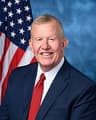 Mike Ezell
Republican · Mississippi
 John Garamendi
Democrat · California
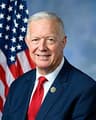 Randy Weber
Republican · Texas