
Ralph Norman (R-SC)
Ensuring Accurate and Complete Abortion Data Reporting Act of 2025
A Republican bill with 7 Republican cosponsors · See all 7 cosponsors
Last activity — Referred to the House Committee on Energy and Commerce.
In committee
Introduced and handed to a committee in the chamber it started in.
The committee holds it, and most bills are never heard from again. A hearing or a committee vote would be news; silence is the usual outcome, and it kills the bill without anyone voting against it.
Its path through Congress
- Introduced
- In Committee
What this bill would do
The Ensuring Accurate and Complete Abortion Data Reporting Act of 2025 seeks to amend the Social Security Act and the Public Health Service Act. It aims to improve the reporting of abortion data to the Centers for Disease Control and Prevention (CDC) by creating a standardized surveillance system. The bill makes the submission of specific abortion data a condition for States to receive certain Medicaid payments for family planning services and supplies. It establishes mandatory data points, such as maternal age, race, and gestational age. Additionally, the Secretary of Health and Human Services is tasked with maintaining this system and publishing annual reports.
Yes· 3 of 7
- Scored +2
Does this give the federal government more power?
The bill expands federal oversight of state-level health data by making Medicaid payments contingent on specific reporting requirements.
- Scored +2
Does this make what the government does easier for the public to see?
The bill mandates the publication of annual reports regarding abortion data to increase transparency in public health statistics.
- Scored +1
Would Hispanic Americans be better off under this?
The bill's focus on capturing ethnicity data can improve public health tracking for Hispanic populations.
The opposite· 3 of 4
- Scored -2
Does this reduce what the federal government spends?
The bill creates a mechanism where states may lose Medicaid payments for family planning if they provide false abortion data.
- Scored -2
Does this put more money into Medicaid, the health coverage for people on low incomes?
The bill subjects Medicaid family planning payments to conditions regarding abortion data reporting, creating a risk of lost funding.
- Scored -1
Would households on low incomes be better off under this?
The potential loss of Medicaid family planning payments due to reporting disputes could impact services used by low-income households.
Who it would affect, and how
Potential Positive Impacts for People
-
Improved Data Accuracy for Public Health: The bill states that accurate statistical data regarding abortion and survival rates is critical to public health and policy analysis (Section 2).
-
Standardized Information Collection: The Secretary will maintain a surveillance system to collect aggregate data in a standardized format (Section 4, subsection a, paragraph 1).
-
Technical Support for States: The Secretary is required to provide technical assistance to States to help improve their data reporting to the system (Section 4, subsection c).
Potential Negative Impacts for People
-
Financial Risk to Medicaid Family Planning Services: States must submit required abortion data by December 31 to receive payment for family planning services and supplies under section 1903(a)(5) (Section 3, subsection cc, paragraph 1).
-
Loss of Federal Payments for False Reporting: If the Director of the CDC determines a State has knowingly provided false information, that State may lose payments for family planning services and supplies during the following fiscal year (Section 3, subsection cc, paragraph 3B).
Groups and Interests Ranking
Every group the model scored this bill for, from -10 to +10. Tap or hover a score for the reason it gave.
- Governance And Ideology
- Does this make what the government does easier for the public to see? — The bill mandates the publication of annual reports regarding abortion data to increase transparency in public health statistics. Does this give the federal government more power? — The bill expands federal oversight of state-level health data by making Medicaid payments contingent on specific reporting requirements.
- Economy And Finance
- Does this reduce what the federal government spends? — The bill creates a mechanism where states may lose Medicaid payments for family planning if they provide false abortion data.
- Demographic And Interest Groups
- Would Hispanic Americans be better off under this? — The bill's focus on capturing ethnicity data can improve public health tracking for Hispanic populations. Would women be better off under this? — The bill improves the collection of critical statistics regarding maternal health and abortion outcomes. Would households on low incomes be better off under this? — The potential loss of Medicaid family planning payments due to reporting disputes could impact services used by low-income households.
- Healthcare
- Does this make health care easier to get in general? — The bill aims to improve public health through better statistical data and standardized surveillance of abortion-related outcomes. Does this put more money into medical research? — The bill establishes a standardized surveillance system to collect aggregate data for public health and policy analysis. Does this put more money into Medicaid, the health coverage for people on low incomes? — The bill subjects Medicaid family planning payments to conditions regarding abortion data reporting, creating a risk of lost funding.
- Social Issues And Justice
- Does this narrow racial gaps in how people are treated? — The bill requires the collection of maternal race and ethnicity data to improve public health analysis. Is this likely to lift people out of poverty? — By conditioning Medicaid family planning payments on data submission, the bill introduces potential financial instability for state-funded services.
- 4/1/2025
- 1 Cosponsor added.
- 2/5/2025
- 2 Cosponsors added.
- 1/22/2025
- Referred to the House Committee on Energy and Commerce.
- 4 Cosponsors added.
- Introduced in House
One bill Congress.gov lists as related to this one — companions in the other chamber, earlier versions, and bills this one absorbed or was folded into.
 Rick Allen
Republican · Georgia
 Andy Biggs
Republican · Arizona
 Sheri Biggs
Republican · South Carolina
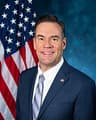 Russ Fulcher
Republican · Idaho
 Andy Harris
Republican · Maryland
 Keith Self
Republican · Texas
 Daniel Webster
Republican · Florida