
Earl Carter (R-GA)
Medicaid Staffing Flexibility and Protection Act of 2025
A Republican bill with 1 Democratic cosponsor · See all 4 cosponsors
Last activity — Referred to the House Committee on Energy and Commerce.
In committee
Introduced and handed to a committee in the chamber it started in.
The committee holds it, and most bills are never heard from again. A hearing or a committee vote would be news; silence is the usual outcome, and it kills the bill without anyone voting against it.
Its path through Congress
- Introduced
- In Committee
What this bill would do
This bill, known as the ``Medicaid Staffing Flexibility and Protection Act of 2025'', aims to amend title XIX of the Social Security Act. It seeks to give States more flexibility in how they handle Medicaid processes. Specifically, it allows States the option to use contractors or other State and local agencies to make eligibility determinations and redeterminations. It also allows these entities to conduct fair hearings on behalf of the State Medicaid plan. The bill includes specific restrictions to prevent certain financial incentives and conflicts of interest.
Yes· 3 of 6
- Scored +5
Does this leave more decisions to the states?
The bill explicitly increases state flexibility by allowing them to contract out eligibility and fair hearing functions.
- Scored +2
Does this make what the government does easier for the public to see?
The bill includes safeguards against conflicts of interest to ensure integrity in the Medicaid administration process.
- Scored +2
Does this make health care easier to get in general?
The bill allows states to use various agencies or contractors to process eligibility, which may streamline access to care.
The opposite
No question was scored the opposite.
Who it would affect, and how
Potential Positive Impacts for People
-
Increased State Flexibility: States would have the option to use contractors or other agencies to handle eligibility determinations and redctions (Section 2(a)).
-
Expanded Fair Hearing Options: States can choose to have fair hearings conducted by a contractor or another State or local agency (Section 2(b)).
-
Protections Against Delayed or Denied Benefits: The bill prevents contracts from providing incentives to delay eligibility determinations or to deny eligibility for individuals who are otherwise eligible (Section 2(a)).
-
Protections for Fair Hearings: The bill prevents agencies or contractors from receiving incentives to delay a fair hearing or deny eligibility for eligible individuals (Section 2(b)).
-
Conflict of Interest Safeguards: The bill prohibits the use of contractors that have a direct or indirect financial relationship with Medicaid managed care organizations or their affiliated network providers (Section 3).
Potential Negative Impacts for People
- No specific negative impacts are explicitly detailed in the provided text.
Groups and Interests Ranking
Every group the model scored this bill for, from -10 to +10. Tap or hover a score for the reason it gave.
- Governance And Ideology
- Does this leave more decisions to the states? — The bill explicitly increases state flexibility by allowing them to contract out eligibility and fair hearing functions. Does this make what the government does easier for the public to see? — The bill includes safeguards against conflicts of interest to ensure integrity in the Medicaid administration process.
- Healthcare
- Does this make health care easier to get in general? — The bill allows states to use various agencies or contractors to process eligibility, which may streamline access to care. Does this put more money into Medicaid, the health coverage for people on low incomes? — The bill increases administrative flexibility for Medicaid without directly increasing funding levels.
- Demographic And Interest Groups
- Would households on low incomes be better off under this? — Allowing more flexible administration of Medicaid may help low-income households navigate eligibility more efficiently.
- Social Issues And Justice
- Is this likely to lift people out of poverty? — Streamlining Medicaid eligibility processes can help low-income individuals maintain access to essential health benefits.
- 11/21/2025
- Referred to the House Committee on Energy and Commerce.
- 4 Cosponsors added.
- Introduced in House
 Don Bacon
Republican · Nebraska
 Donald Davis
Democrat · North Carolina
 Neal Dunn
Republican · Florida
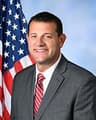 David Valadao
Republican · California