
A Democratic bill with 21 Democratic cosponsors · See all 21 cosponsors
Last activity — Referred to the Subcommittee on Highways and Transit.
In committee
Introduced and handed to a committee in the chamber it started in.
The committee holds it, and most bills are never heard from again. A hearing or a committee vote would be news; silence is the usual outcome, and it kills the bill without anyone voting against it.
Its path through Congress
- Introduced
- In Committee
What this bill would do
This bill, known as the "RIDER Safety Act," seeks to amend title 49 of the United States Code. It aims to make transit support specialists eligible for crime prevention and security grants. These specialists are defined as unarmed personnel who work on transit vehicles, stops, and stations. Their duties include monitoring stations, assisting riders, and reporting emergencies. The bill also focuses on de-escalating conflicts and handling non-criminal issues.
Yes· 3 of 8
- Scored +5
Does this improve buses, trains and other public transport?
The bill enhances public transit security and passenger assistance through the creation of transit support specialist roles.
- Scored +4
Would people over 65 be better off under this?
The bill's focus on assistance and medical emergency reporting provides additional support for older transit patrons.
- Scored +4
Would people in cities be better off under this?
Residents in urban areas who utilize public transit will benefit from increased security presence and conflict de-escalation.
The opposite
No question was scored the opposite.
Who it would affect, and how
Potential Positive Impacts for People
-
Increased Security and Presence: The bill introduces "transit support specialists" who are unarmed personnel meant to provide an added sense of security to patrons through their presence on vehicles, stops, and stations (Section 2, subsection b).
-
Improved Assistance and Emergency Response: These specialists are tasked with providing assistance to transit riders and personnel, as well as assisting with and reporting medical emergencies (Section 2, subsection b, parts 2 and 3).
-
Conflict De-escalation: The role includes performing crisis intervention services to de-escalate conflicts and handling minor, non-criminal conflicts (Section 2, subsection b, parts 6 and 7).
-
Resource Preservation: By handling minor, non-criminal conflicts through alternative channels, these specialists help preserve law enforcement resources for critical or emergency incidents (Section 2, subsection b, part 6).
-
Enhanced Monitoring: Personnel will monitor transit stations and vehicles, and observe/report suspicious activity and security threats to personnel and law enforcement (Section 2, subsection b, parts 1 and 5).
Potential Negative Impacts for People
- No negative impacts or burdens are explicitly mentioned in the provided text.
Groups and Interests Ranking
Every group the model scored this bill for, from -10 to +10. Tap or hover a score for the reason it gave.
- Demographic And Interest Groups
- Would people over 65 be better off under this? — The bill's focus on assistance and medical emergency reporting provides additional support for older transit patrons. Would people in cities be better off under this? — Residents in urban areas who utilize public transit will benefit from increased security presence and conflict de-escalation. Would households on low incomes be better off under this? — Enhanced safety and assistance on public transit systems benefits those who rely on these services for essential travel. Would children be better off under this? — Increased presence of safety personnel on transit vehicles can provide a more secure environment for young riders.
- Environment Energy And Infrastructure
- Does this improve buses, trains and other public transport? — The bill enhances public transit security and passenger assistance through the creation of transit support specialist roles.
- Economy And Finance
- Is this likely to create jobs? — The bill authorizes operational grants for public transportation systems to employ transit support specialists.
- Healthcare
- Does this make mental health care easier to get? — The bill empowers transit support specialists to perform crisis intervention services to de-escalate conflicts.
- Social Issues And Justice
- Is this likely to lift people out of poverty? — By improving transit safety and assistance, the bill supports the reliability of public transportation often used by low-income individuals.
- 11/10/2026
- 1 Cosponsor added.
- 6/23/2026
- 1 Cosponsor added.
- 6/18/2026
- 1 Cosponsor added.
- 6/8/2026
- 1 Cosponsor added.
- 6/3/2026
- 1 Cosponsor added.
- 4/28/2026
- 1 Cosponsor added.
- 4/27/2026
- 1 Cosponsor added.
- 2/9/2026
- 1 Cosponsor added.
- 1/22/2026
- 1 Cosponsor added.
- 1/13/2026
- 1 Cosponsor added.
- 1/6/2026
- 1 Cosponsor added.
- 12/9/2025
- 2 Cosponsors added.
- 12/4/2025
- 1 Cosponsor added.
- 12/3/2025
- 1 Cosponsor added.
- 12/2/2025
- 2 Cosponsors added.
- 11/18/2025
- Referred to the Subcommittee on Highways and Transit.
- 11/17/2025
- Referred to the House Committee on Transportation and Infrastructure.
- 4 Cosponsors added.
- Introduced in House
 Steve Cohen
Democrat · Tennessee
 Judy Chu
Democrat · California
 Jasmine Crockett
Democrat · Texas
 Mark DeSaulnier
Democrat · California
 Valerie Foushee
Democrat · North Carolina
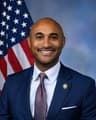 Shomari Figures
Democrat · Alabama
 Laura Friedman
Democrat · California
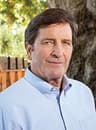 John Garamendi
Democrat · California
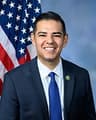 Robert Garcia
Democrat · California
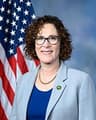 Val Hoyle
Democrat · Oregon
 John Larson
Democrat · Connecticut
 Gwen Moore
Democrat · Wisconsin
 Seth Magaziner
Democrat · Rhode Island
 Kevin Mullin
Democrat · California
 Ilhan Omar
Democrat · Minnesota
 Nellie Pou
Democrat · New Jersey
 Mike Quigley
Democrat · Illinois
 Eric Swalwell
Democrat · California
 Thomas Suozzi
Democrat · New York
 Dina Titus
Democrat · Nevada
 Juan Vargas
Democrat · California