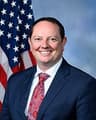
Eric Burlison (R-MO)
Government Shutdown Efficiency Act
A Republican bill with no cosponsors
Last activity — Referred to the Subcommittee on Economic Development, Public Buildings, and Emergency Management.
In committee
Introduced and handed to a committee in the chamber it started in.
The committee holds it, and most bills are never heard from again. A hearing or a committee vote would be news; silence is the usual outcome, and it kills the bill without anyone voting against it.
Its path through Congress
- Introduced
- In Committee
What this bill would do
The "Government Shutdown Efficiency Act" gives the President the power to sell Federal real property when there is a partial or full lapse in appropriations. Funds from these sales can be used to pay the salaries and expenses of Federal employees who are excepted from furlough. The bill prohibits selling this property to specific foreign adversary countries. Additionally, funds from these sales may be used to purchase Greenland or deposited into the Treasury for deficit reduction.
Yes· 3 of 8
- Scored +5
Does this give the federal government more power?
Grants the President broad authority to sell Federal real property during shutdowns.
- Scored +2
Would business owners be better off under this?
Potentially allows business owners to purchase Federal real property.
- Scored +2
Would people with substantial wealth be better off under this?
Provides an opportunity to acquire Federal real estate.
The opposite
No question was scored the opposite.
Who it would affect, and how
Potential Positive Impacts for People
-
Payment for Federal Employees: Under Section 2(a)(2), funds from property sales can be used to pay the salary and expenses of Federal officers or employees who are excepted from furlough during a shutdown. This provides a source of pay for those still working.
-
Deficit Reduction: According to Section 2(d)(1), any money received from these sales after a shutdown ends must be deposited into the general fund of the Treasury specifically to reduce the deficit.
-
Protection of Tribal Lands: Section 2(e)(3) ensures that the President cannot sell real property held in trust for, or reservations of, an Indian Tribe.
Potential Negative Impacts for People
- Loss of Backpay: Section 2(c) states that any Federal officer or employee who receives salary and expenses through these property sales will not receive back pay under section 1341(c) of title 31, United States Code.
Groups and Interests Ranking
Every group the model scored this bill for, from -10 to +10. Tap or hover a score for the reason it gave.
- Demographic And Interest Groups
- Would billionaires be better off under this? — Provides an opportunity to acquire Federal real estate. Would business owners be better off under this? — Potentially allows business owners to purchase Federal real property. Would people with substantial wealth be better off under this? — Provides an opportunity to acquire Federal real estate. Would the very wealthiest people be better off under this? — Provides an opportunity to acquire Federal real estate. Would Native Americans be better off under this? — Explicitly protects Tribal lands and reservations from being sold.
- Governance And Ideology
- Does this give the federal government more power? — Grants the President broad authority to sell Federal real property during shutdowns.
- Economy And Finance
- Does this reduce what the federal government owes? — Funds from property sales received after a shutdown must be deposited into the Treasury for deficit reduction. Does this make the government pay for what it commits to? — Directs proceeds from asset sales toward deficit reduction.
- 11/13/2025
- Referred to the Subcommittee on Economic Development, Public Buildings, and Emergency Management.
- 11/12/2025
- Referred to the Committee on Transportation and Infrastructure, and in addition to the Committees on Oversight and Government Reform, and Foreign Affairs, for a period to be subsequently determined by the Speaker, in each case for consideration of such provisions as fall within the jurisdiction of the committee concerned.
- Introduced in House