
Tony Wied (R-WI)
Supporting Troops’ Access to Recognition Services Act
A Republican bill with 1 Republican cosponsor · See the cosponsor
Last activity — Referred to the House Committee on Armed Services.
In committee
Introduced and handed to a committee in the chamber it started in.
The committee holds it, and most bills are never heard from again. A hearing or a committee vote would be news; silence is the usual outcome, and it kills the bill without anyone voting against it.
Its path through Congress
- Introduced
- In Committee
What this bill would do
The "Supporting Troops' Access to Recognition Services Act," or "STARS Act," would require the Department of Defense to provide identification and eligibility facilities near large cities. Specifically, a facility must be located within 30 miles of any metropolitan statistical area with a population of 300,000 or more. These facilities must be staffed by at least one qualified person at least two days per week during regular business hours. The goal is to help members of the armed forces and their eligible dependents with identification matters. These matters include the Defense Enrollment Eligibility Reporting System and the Real-Time Automated Personnel Identification System.
Yes· 3 of 5
- Scored +5
Would people in cities be better off under this?
Specifically mandates facilities within 30 miles of large metropolitan areas.
- Scored +3
Would people in their twenties and thirties be better off under this?
Young adults entering the armed forces will have easier access to ID services.
- Scored +3
Would people in middle age be better off under this?
Active duty and eligible dependents in this age group benefit from improved service access.
The opposite· 3 of 5
- Scored -2
Would people in rural areas be better off under this?
Focuses resources on metropolitan areas, potentially leaving rural residents underserved.
- Scored -1
Does this reduce what the federal government owes?
Establishing and staffing these facilities will likely increase Department of Defense spending.
- Scored -1
Does this reduce what the federal government spends?
Creates a new mandate for the DoD to maintain and staff physical facilities.
Who it would affect, and how
Potential Positive Impacts for People
-
Increased Access to Services: Members of the armed forces and their eligible dependents would have a physical location to resolve identification matters within 30 miles of metropolitan areas with populations of 300,000 or more (Section 2(a)(1)).
-
Guaranteed Staffing: The bill ensures that these facilities are not just open, but staffed by at least one qualified person at least two days per week during business hours to assist users (Section 2(a)(2)).
Potential Negative Impacts for People
- No negative impacts for people are explicitly mentioned in the provided text.
Groups and Interests Ranking
Every group the model scored this bill for, from -10 to +10. Tap or hover a score for the reason it gave.
- Demographic And Interest Groups
- Would people in cities be better off under this? — Specifically mandates facilities within 30 miles of large metropolitan areas. Would people in middle age be better off under this? — Active duty and eligible dependents in this age group benefit from improved service access. Would people in their twenties and thirties be better off under this? — Young adults entering the armed forces will have easier access to ID services. Would people in rural areas be better off under this? — Focuses resources on metropolitan areas, potentially leaving rural residents underserved.
- Economy And Finance
- Is this likely to create jobs? — Requires staffing of new or existing facilities by qualified personnel. Does this make the government pay for what it commits to? — Adds operational costs to the federal budget for facility maintenance and personnel. Does this reduce what the federal government spends? — Creates a new mandate for the DoD to maintain and staff physical facilities. Does this reduce what the federal government owes? — Establishing and staffing these facilities will likely increase Department of Defense spending.
- Governance And Ideology
- Does this give the federal government more power? — Imposes a new federal mandate on the Department of Defense.
- National Security And Foreign Policy
- Does this reduce what is spent on the military? — Increases spending by requiring the creation and staffing of identification facilities.
- 11/7/2025
- Referred to the House Committee on Armed Services.
- 1 Cosponsor added.
- Introduced in House
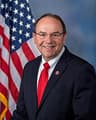 Thomas Tiffany
Republican · Wisconsin