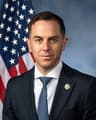
A Democratic bill with 2 Republican cosponsors · See all 16 cosponsors
Last activity — Ordered to be Reported (Amended) by the Yeas and Nays: 36 - 0.
Introduced, nothing more yet
Formally proposed, and not yet handed to a committee.
Nearly every bill is sent to a committee within days. Introduction alone is not a sign of support, of momentum, or of any likelihood of passing — any member may introduce any bill.
Its path through Congress
- Introduced
What this bill would do
This bill, known as the ``Strategic Task Force on Scam Prevention Act'', directs the Federal Trade Commission and the Department of Justice to form an interagency task force. The task force is created for the specific purpose of addressing scams. It includes members from various departments and agencies such as Homeland Security, the Treasury, and the Social Security Administration. The group is charged with developing a national strategy that includes public education and coordination with industry and international partners. Additionally, the task force must submit a report on its actions to Congress and the public within one year. The task force is set to terminate 10 years after the Act is enacted.
Yes· 3 of 19
- Scored +8
Would people over 65 be better off under this?
Seniors are often high-priority targets for scams, and this act specifically coordinates agencies like Social Security to protect them.
- Scored +8
Would retired people be better off under this?
Retirees are primary targets for scams and benefit from the coordination of SSA and other agencies.
- Scored +8
Does this give people more protection from unfair business practices?
The bill creates a national strategy to address scams, protect consumers from fraud, and improve recovery resources for victims.
The opposite
No question was scored the opposite.
Who it would affect, and how
Potential Positive Impacts for People
-
National Strategy against Scams: The task force will develop and implement a national strategy to address scams through actions like public education and coordination with industry entities (Section 2(c)(1)).
-
Reduced Financial Risk: The strategy includes efforts to reduce the systemic risk of financial losses resulting from scams (Section 2(c)(1)(F)).
-
Improved Victim Support: The bill aims to improve recovery resources for people who have been victims of scams (Section 2(c)(1)(F)).
-
Use of Existing Investigative Tools: The task force will use enforcement actions and existing authorities related to fraud, human trafficking, and money laundering to address scams (Section 2(c)(1)(D)).
Potential Negative Impacts for People
- No specific negative impacts are mentioned in the text.
Groups and Interests Ranking
Every group the model scored this bill for, from -10 to +10. Tap or hover a score for the reason it gave.
- Demographic And Interest Groups
- Would retired people be better off under this? — Retirees are primary targets for scams and benefit from the coordination of SSA and other agencies. Would people over 65 be better off under this? — Seniors are often high-priority targets for scams, and this act specifically coordinates agencies like Social Security to protect them. Would households on low incomes be better off under this? — Low-income households are disproportionately affected by financial losses from scams. Would veterans be better off under this, taking everything together? — The Department of Veterans Affairs is specifically included in the task force composition. Would people in middle age be better off under this? — Provides protection and recovery resources for adults targeted by financial scams. Would middle-income households be better off under this? — Increases protection and recovery resources for middle-class fraud victims. Would billionaires be better off under this? — Provides general protections against high-value financial scams. Would high-income households be better off under this? — Provides general protections against financial scams. Would people with substantial wealth be better off under this? — Provides general protections against high-value financial scams. Would students be better off under this? — Students are often targets of educational and employment scams. Would the very wealthiest people be better off under this? — Provides general protections against high-value financial scams. Would people in their twenties and thirties be better off under this? — Young adults using dating apps and P2P payments are frequently targeted by scams.
- Economy And Finance
- Does this give people more protection from unfair business practices? — The bill creates a national strategy to address scams, protect consumers from fraud, and improve recovery resources for victims.
- Governance And Ideology
- Does this make what the government does easier for the public to see? — The bill requires a public report to be submitted to Congress and made available to the public. Does this give the federal government more power? — The bill establishes a new interagency task force to implement a national strategy.
- National Security And Foreign Policy
- Does this better protect the country from computer attacks? — The bill focuses on combating online scams and coordinating with the FBI's Internet Crime Complaint Center. Does this strengthen ties with allied countries? — The task force is directed to coordinate with international partners to address scams.
- Education And Technology
- Does this put more rules on large technology companies? — The bill mandates coordination with online platforms and AI applications to combat scams.
- Social Issues And Justice
- Is this likely to lift people out of poverty? — Reducing systemic financial losses from scams can prevent people from falling deeper into poverty.
- 9/16/2026
- Committee Consideration and Mark-up Session Held
- Ordered to be Reported (Amended) by the Yeas and Nays: 36 - 0.
- 9/2/2026
- 1 Cosponsor added.
- 9/1/2026
- Subcommittee Consideration and Mark-up Session Held
- Forwarded by Subcommittee to Full Committee (Amended) by Voice Vote.
- 4/27/2026
- 1 Cosponsor added.
- 1/8/2026
- 1 Cosponsor added.
- 12/11/2025
- 1 Cosponsor added.
- 11/12/2025
- 1 Cosponsor added.
- 11/10/2025
- 1 Cosponsor added.
- 11/7/2025
- Referred to the Committee on Energy and Commerce, and in addition to the Committee on the Judiciary, for a period to be subsequently determined by the Speaker, in each case for consideration of such provisions as fall within the jurisdiction of the committee concerned.
- Referred to the Subcommittee on Commerce, Manufacturing, and Trade.
- 10 Cosponsors added.
- Introduced in House
 Wesley Bell
Democrat · Missouri
 Kathy Castor
Democrat · Florida
 Angie Craig
Democrat · Minnesota
 Troy Carter
Democrat · Louisiana
 Debbie Dingell
Democrat · Michigan
 Brian Fitzpatrick
Republican · Pennsylvania
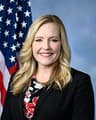 Erin Houchin
Republican · Indiana
 Robin Kelly
Democrat · Illinois
 Jennifer McClellan
Democrat · Virginia
 Eleanor Norton
Democrat · District of Columbia
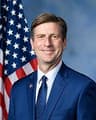 Greg Stanton
Democrat · Arizona
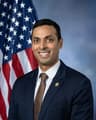 Suhas Subramanyam
Democrat · Virginia
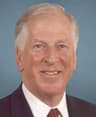 Mike Thompson
Democrat · California
 Derek Tran
Democrat · California
 Eugene Vindman
Democrat · Virginia
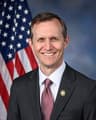 George Whitesides
Democrat · California