
A Republican bill with 1 Republican cosponsor · See the cosponsor
Last activity — Referred to the Committee on Energy and Commerce, and in addition to the Committee on Ways and Means, for a period to be subsequently determined by the Speaker, in each case for consideration of such provisions as fall within the jurisdiction of the committee concerned.
In committee
Introduced and handed to a committee in the chamber it started in.
The committee holds it, and most bills are never heard from again. A hearing or a committee vote would be news; silence is the usual outcome, and it kills the bill without anyone voting against it.
Its path through Congress
- Introduced
- In Committee
What this bill would do
This bill is titled the We Want Our Healthcare Money Back Act of 2025. It requires the Inspector General of the Department of Health and Human Services to submit reports on Medicare and Medicaid fraud. The first report is due not later than 3 months after the enactment of the Act. Subsequent reports must be submitted not less frequently than every 3 months thereafter until the date that is 2 years after the enactment of the Act. These reports must be sent to specific committees in the House of Representatives and the Senate. The reports must include details on fraud investigations, criminal prosecutions, civil actions, alleged dollar amounts, charges, and the number of individuals and entities excluded from participating in federal health care programs.
Yes· 3 of 6
- Scored +3
Does this make what the government does easier for the public to see?
The bill mandates regular reporting on Medicare and Medicaid fraud investigations and prosecutions to key congressional committees, enhancing transparency.
- Scored +2
Would people over 65 be better off under this?
By tracking and combatting Medicare fraud, the bill helps protect resources intended for senior healthcare.
- Scored +2
Would households on low incomes be better off under this?
By addressing Medicaid fraud, the bill helps safeguard program integrity for low-income individuals who rely on it.
The opposite
No question was scored the opposite.
Who it would affect, and how
Potential Positive Impacts for People
-
Under Section 2(a), the Inspector General must submit regular reports on Medicare and Medicaid fraud to specific congressional committees. This keeps the officials we vote for accountable by requiring them to receive regular updates on fraud investigations, prosecutions, and civil actions.
-
Under Section 2(b), the reports must detail the dollar amount of fraud alleged in each criminal prosecution and civil action, as well as the number of individuals and entities excluded from participating in federal health care programs due to fraud. This ensures transparency regarding how bad actors are being kept out of federal health care programs.
Potential Negative Impacts for People
- Based on the provided text, there are no explicitly stated negative impacts or burdens for individuals or groups of people in the United States.
Groups and Interests Ranking
Every group the model scored this bill for, from -10 to +10. Tap or hover a score for the reason it gave.
- Demographic And Interest Groups
- Would households on low incomes be better off under this? — By addressing Medicaid fraud, the bill helps safeguard program integrity for low-income individuals who rely on it. Would people with disabilities be better off under this? — Protects Medicaid integrity, which many individuals with disabilities rely on for essential care. Would retired people be better off under this? — Safeguards Medicare programs that many retirees depend upon for their healthcare needs. Would people over 65 be better off under this? — By tracking and combatting Medicare fraud, the bill helps protect resources intended for senior healthcare.
- Governance And Ideology
- Does this make what the government does easier for the public to see? — The bill mandates regular reporting on Medicare and Medicaid fraud investigations and prosecutions to key congressional committees, enhancing transparency.
- Economy And Finance
- Does this make the government pay for what it commits to? — The bill enhances oversight of Medicare and Medicaid spending by requiring regular fraud reports without authorizing additional funds.
- 10/31/2025
- Referred to the Committee on Energy and Commerce, and in addition to the Committee on Ways and Means, for a period to be subsequently determined by the Speaker, in each case for consideration of such provisions as fall within the jurisdiction of the committee concerned.
- 1 Cosponsor added.
- Introduced in House
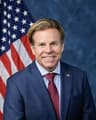 Mike Haridopolos
Republican · Florida