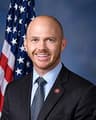
William Timmons (R-SC)
Federal Supervisor Education Act
A Republican bill with no cosponsors
Last activity — Received in the Senate and Read twice and referred to the Committee on Homeland Security and Governmental Affairs.
In the other chamber's committee
Passed one chamber and has been handed to a committee in the other.
The committee decides whether it goes any further, and most bills that reach a committee never leave it. A committee that simply does nothing kills a bill without anyone ever voting against it, so no news from here is usually the news.
Its path through Congress
- Introduced
- Passed House voice vote
- In Senate committee
The House by voice vote (members called out yes or no together): no member's position on it was recorded.
What this bill would do
H.R. 5810, known as the Federal Supervisor Education Act, requires federal government agencies to establish mandatory training programs and management succession programs for supervisors. Under this bill, newly appointed supervisors must complete these training programs within one year, and all supervisors must retake parts of the training at least once every three years. The legislation also directs the Office of Personnel Management to issue guidance on management competencies. Finally, agencies are required to assess the performance and overall capacity of their supervisors based on these competencies.
Yes· 3 of 15
- Scored +3
Does this give the federal government more power?
The legislation establishes federal mandates for agency supervisor training programs and OPM oversight guidance.
- Scored +3
Does this make what the government does easier for the public to see?
The bill requires agencies to measure and assess supervisor performance and training effectiveness.
- Scored +2
Would women be better off under this?
Mandatory training on handling reports of harassment and hostile work environments creates a safer workplace for women.
The opposite
No question was scored the opposite.
Who it would affect, and how
Potential Positive Impacts for People
-
Section 2, amending section 4121(b)(2)(A)(iv), requires training programs to foster a work environment characterized by fairness, respect, equal opportunity, and attention paid to the merit of the work of employees. This could benefit federal employees by promoting a fairer and more respectful workplace.
-
Section 2, amending section 4121(b)(2)(A)(vii), mandates training on addressing reports of a hostile work environment, retaliation, or harassment. This is a positive step for workers because it equips supervisors with the knowledge to better handle and stop workplace mistreatment.
-
Section 2, amending section 4121(b)(2)(C), establishes programs where experienced supervisor mentors provide guidance to new or underperforming supervisors. This helps improve leadership skills and overall workplace productivity by sharing practical knowledge.
Potential Negative Impacts for People
- Section 2, amending section 4121(d)(1) and (d)(2), requires supervisors to complete initial training within one year of appointment and repeat specific components at least once every three years. This could place a heavy time burden on supervisors who must balance these mandatory classes with their regular daily responsibilities.
Groups and Interests Ranking
Every group the model scored this bill for, from -10 to +10. Tap or hover a score for the reason it gave.
- Demographic And Interest Groups
- Would union members be better off under this? — Better trained supervisors handling grievances and performance fairly can improve labor-management relations. Would women be better off under this? — Mandatory training on handling reports of harassment and hostile work environments creates a safer workplace for women. Would Black Americans be better off under this? — Emphasizing fairness and equal opportunity in federal supervision benefits minority employees. Would Asian Americans be better off under this? — Emphasizing fairness and equal opportunity in federal supervision benefits minority employees. Would Hispanic Americans be better off under this? — Emphasizing fairness and equal opportunity in federal supervision benefits minority employees. Would LGBTQ people be better off under this? — Focusing on a work environment of respect and equal opportunity supports LGBTQ+ federal employees. Would men be better off under this? — Improved federal workplace standards benefit all employees. Would Native Americans be better off under this? — Emphasizing fairness and equal opportunity in federal supervision benefits minority employees. Would people with disabilities be better off under this? — Emphasis on equal opportunity and respect helps protect employees with disabilities from discrimination. Would white Americans be better off under this? — Standardized supervisor training applies generally to all federal employees regardless of background.
- Governance And Ideology
- Does this make what the government does easier for the public to see? — The bill requires agencies to measure and assess supervisor performance and training effectiveness. Does this give the federal government more power? — The legislation establishes federal mandates for agency supervisor training programs and OPM oversight guidance. Does this protect the right to fair treatment by the courts? — Training on prohibited personnel practices and employee rights helps ensure proper due process procedures are followed.
- Social Issues And Justice
- Does this narrow the gap between how men and women are treated? — Mandatory training on addressing harassment and fostering equal opportunity supports gender equity in the federal workplace. Does this narrow racial gaps in how people are treated? — The bill promotes a work environment characterized by fairness, respect, and equal opportunity.
- 12/16/2025
- Received in the Senate and Read twice and referred to the Committee on Homeland Security and Governmental Affairs.
- 12/15/2025
- Motion to reconsider laid on the table Agreed to without objection.
- Passed/agreed to in House: On motion to suspend the rules and pass the bill, as amended Agreed to by voice vote. (text: CR H5861)
- On motion to suspend the rules and pass the bill, as amended Agreed to by voice vote. (text: CR H5861)
- DEBATE - The House proceeded with forty minutes of debate on H.R. 5810.
- Considered under suspension of the rules. (consideration: CR H5861-5862)
- Mr. Timmons moved to suspend the rules and pass the bill, as amended.
- 12/2/2025
- Committee Consideration and Mark-up Session Held
- Ordered to be Reported (Amended) by the Yeas and Nays: 43 - 0.
- 10/21/2025
- Referred to the House Committee on Oversight and Government Reform.
- Introduced in House