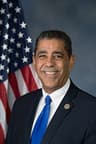
A Democratic bill with 1 Republican cosponsor · See all 2 cosponsors
Last activity — Referred to the House Committee on Energy and Commerce.
In committee
Introduced and handed to a committee in the chamber it started in.
The committee holds it, and most bills are never heard from again. A hearing or a committee vote would be news; silence is the usual outcome, and it kills the bill without anyone voting against it.
Its path through Congress
- Introduced
- In Committee
What this bill would do
The Community Mental Wellness Worker Training Act authorizes the Secretary of Health and Human Services to award grants for training community mental wellness workers. These grants allow eligible entities to fund training, certification, and supervision for workers focused on mental health and substance use conditions. The program also covers costs for digital platforms used for screening and treatment delivery. Priority for these grants is given to areas with high poverty, unemployment, or substance use rates, as well as medically underserved communities. The Secretary can also provide technical assistance to help entities implement these programs.
Yes· 3 of 12
- Scored +7
Does this make mental health care easier to get?
The bill funds the training of workers to provide screening and evidence-s-informed counseling for mental health and substance use disorders.
- Scored +5
Does this make health care easier to get in general?
The bill aims to increase healthcare access through trained community workers and digital platforms for treatment delivery.
- Scored +5
Does this do more about addiction and overdose deaths?
The bill specifically includes training for those at risk for substance use disorders.
The opposite
No question was scored the opposite.
Who it would affect, and how
Potential Positive Impacts for People
-
Expanded Mental Health Services: The bill allows for the training of workers to screen for conditions and deliver evidence-sinformed counseling and interviewing interventions for those at risk for mental and substance use disorders (Section 2, subsection (b)(1)).
-
Improved Access in High-Need Areas: Grant priority is given to entities in areas with high rates of poverty, unemployment, or substance use, as well as medically underserved communities (Section 2, subsection (d)).
-
Culturally Competent Care: Training is designed to ensure services are culturally and linguistically competent, addressing various characteristics such as gender, race, ethnicity, and socioeconomic level (Section 2, subsection (g)(2)).
-
Support for High-Risk Populations: Priority is given to communities serving individuals who are dually eligible for both Medicare and Medicaid at rates exceeding the national average (Section 2, subsection (d)(4)).
-
Technical Assistance for Providers: The Secretary may provide training and technical assistance to help eligible entities integrate workers into their workflows and identify diverse candidates (Section 2, subsection (c)(1)).
Potential Negative Impacts for People
-
Legal Liability and Malpractice Standards: The bill specifies that certain provisions regarding malpractice and negligence suits will apply to covered entities, including officers, governing board members, employees, or contractors participating in the program (Section 2, subsection (e)(1) and (e)(3)).
-
Administrative Requirements for Entities: Entities receiving grants must submit and update a list of each officer, governing board member, employee, or contractor participating in the program (Section 2, subsection (e)(2)).
Groups and Interests Ranking
Every group the model scored this bill for, from -10 to +10. Tap or hover a score for the reason it gave.
- Demographic And Interest Groups
- Would households on low incomes be better off under this? — The bill prioritizes service delivery to communities with high poverty and high rates of Medicaid/Medicare dual eligibility. Would Native Americans be better off under this? — The bill includes technical assistance resources for Indian Tribes and Tribal organizations. Would Hispanic Americans be better off under this? — The bill emphasizes culturally and linguistically competent care which includes considerations of nationality and ethnicity. Would people with disabilities be better off under this? — The bill includes disability as a consideration for culturally competent care delivery. Would veterans be better off under this, taking everything together? — The bill includes veteran status as a factor in providing culturally competent care. Would people in rural areas be better off under this? — The bill targets medically underserved communities which often includes rural areas.
- Healthcare
- Does this make mental health care easier to get? — The bill funds the training of workers to provide screening and evidence-s-informed counseling for mental health and substance use disorders. Does this make health care easier to get in general? — The bill aims to increase healthcare access through trained community workers and digital platforms for treatment delivery. Does this do more about addiction and overdose deaths? — The bill specifically includes training for those at risk for substance use disorders. Does this put more money into Medicaid, the health coverage for people on low incomes? — The bill prioritizes communities with high rates of individuals dually eligible for Medicare and Medicaid.
- Economy And Finance
- Is this likely to create jobs? — The bill authorizes grants to train and employ new community mental wellness workers.
- Social Issues And Justice
- Is this likely to lift people out of poverty? — The bill prioritizes grant funding for areas with high rates of poverty.
- 6/30/2026
- 1 Cosponsor added.
- 10/10/2025
- Referred to the House Committee on Energy and Commerce.
- 1 Cosponsor added.
- Introduced in House
2 bills Congress.gov lists as related to this one — companions in the other chamber, earlier versions, and bills this one absorbed or was folded into.
 Michael Lawler
Republican · New York
 Deborah Ross
Democrat · North Carolina