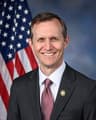
George Whitesides (D-CA)
To amend title 32, United States Code, to establish the FireGuard Program as a program of record of the National Guard.
A Democratic bill with 1 Republican cosponsor · See all 4 cosponsors
Last activity — Referred to the House Committee on Armed Services.
In committee
Introduced and handed to a committee in the chamber it started in.
The committee holds it, and most bills are never heard from again. A hearing or a committee vote would be news; silence is the usual outcome, and it kills the bill without anyone voting against it.
Its path through Congress
- Introduced
- In Committee
What this bill would do
This bill proposes to amend title 32 of the United States Code. The main goal is to establish the FireGuard Program as a program of record for the National Guard. It changes the language regarding the program from "may" to "shall" and includes it as a program of record. The bill also requires the Secretary to submit five annual briefings to the Committees on Armed Services. These briefings must cover information regarding recipients of data, wildfire maps, alert timing, and technology integration. Finally, the bill includes a sunset provision for the program.
Yes· 3 of 6
- Scored +5
Does this improve help for people hit by a disaster?
The bill codifies the FireGuard Program as a program of record to improve wildfire tracking and alert timing for responders.
- Scored +5
Does this make what the government does easier for the public to see?
The bill mandates annual briefings to Congressional committees regarding the FireGuard Program's data and technology integration.
- Scored +4
Does this better protect air, water and wildlife?
The bill enhances the capabilities of wildfire detection and mapping to better manage environmental disasters.
The opposite
No question was scored the opposite.
Who it would affect, and how
Potential Positive Impacts for People
-
Increased Accountability and Oversight: The bill requires the Secretary to submit five annual briefings to the Committees on Armed Services, which includes details on which local and Tribal governments received information (Section 1(a)(2)(c)(1)).
-
Improved Wildfire Tracking: The required briefings include a comparative analysis of wildfire maps, comparing the initial fire to the perimeter after containment (Section 1(a)(2)(c)(2)).
-
Enhanced Response Efficiency: The bill requires an analysis of the time between detecting a fire through satellite data and when alerts are sent to local responders (Section 1(a)(2)(c)(3)).
-
Technological Integration: There will be a review of efforts to integrate new satellite and aerial surveillance technologies from various sectors (Section 1(a)(2)(c)(4)).
Potential Negative Impacts for People
- Program Termination: The bill includes a sunset provision that mandates the FireGuard Program shall terminate on December 31, 2031 (Section 1(a)(2)(d)).
Groups and Interests Ranking
Every group the model scored this bill for, from -10 to +10. Tap or hover a score for the reason it gave.
- Environment Energy And Infrastructure
- Does this improve help for people hit by a disaster? — The bill codifies the FireGuard Program as a program of record to improve wildfire tracking and alert timing for responders. Does this better protect air, water and wildlife? — The bill enhances the capabilities of wildfire detection and mapping to better manage environmental disasters.
- Demographic And Interest Groups
- Would people in rural areas be better off under this? — Improved wildfire tracking and faster alerts provide increased safety for those in wildfire-prone areas. Would Native Americans be better off under this? — The bill mandates reporting on how wildfire data is shared with Tribal governments.
- Governance And Ideology
- Does this make what the government does easier for the public to see? — The bill mandates annual briefings to Congressional committees regarding the FireGuard Program's data and technology integration.
- Social Issues And Justice
- Does this narrow racial gaps in how people are treated? — The bill requires reporting on information provided to Tribal governments, which supports oversight for these communities.
- 9/26/2025
- Referred to the House Committee on Armed Services.
- 4 Cosponsors added.
- Introduced in House
 Salud Carbajal
Democrat · California
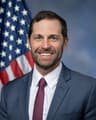 Jason Crow
Democrat · Colorado
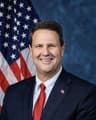 Jeff Crank
Republican · Colorado
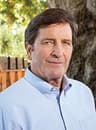 John Garamendi
Democrat · California