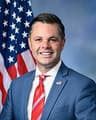
Zachary Nunn (R-IA)
Revitalizing Rural Communities Act of 2025
A Republican bill with 5 Democratic cosponsors · See all 5 cosponsors
Last activity — Referred to the Subcommittee on Commodity Markets, Digital Assets, and Rural Development.
In committee
Introduced and handed to a committee in the chamber it started in.
The committee holds it, and most bills are never heard from again. A hearing or a committee vote would be news; silence is the usual outcome, and it kills the bill without anyone voting against it.
Its path through Congress
- Introduced
- In Committee
What this bill would do
The Revitalizing Rural Communities Act of 2025 aims to extend and increase funding for the Department of Agriculture's Rural Economic Development Loan and Grant Program. It amends Section 313B of the Rural Electrification Act of 1936. Specifically, it replaces the previous funding of $10,000,000 for fiscal years 2019 through 2023 with $12,000,000 for fiscal years 2026 through 2030.
Yes· 3 of 14
- Scored +9
Would people in rural areas be better off under this?
Specifically targets and increases funding for rural economic development.
- Scored +8
Does this invest in rural communities?
The bill specifically increases funding for the Rural Economic Development Loan and Grant Program.
- Scored +7
Would business owners be better off under this?
Directly provides more funding for loans and grants available to rural businesses.
The opposite
- Scored -2
Does this reduce what the federal government spends?
The bill increases annual funding from $10 million to $12 million.
- Scored -1
Does this reduce what the federal government owes?
Increasing federal spending by $2 million annually slightly increases the national debt.
- Scored -1
Does this make the government pay for what it commits to?
Increases spending without specified offsets.
Who it would affect, and how
Potential Positive Impacts for People
-
Increased Funding: Section 2 increases the annual funding from $10,000,000 to $12,000,000, providing more resources for the Rural Economic Development Loan and Grant Program.
-
Extended Program Availability: Section 2 extends the program through fiscal year 2030, ensuring the availability of these loans and grants for a longer period.
Potential Negative Impacts for People
- No negative impacts for people were explicitly stated in the provided text.
Groups and Interests Ranking
Every group the model scored this bill for, from -10 to +10. Tap or hover a score for the reason it gave.
- Demographic And Interest Groups
- Would people in rural areas be better off under this? — Specifically targets and increases funding for rural economic development. Would business owners be better off under this? — Directly provides more funding for loans and grants available to rural businesses. Would farmers be better off under this? — Farmers and agricultural business owners in rural areas benefit from economic development grants. Would households on low incomes be better off under this? — Rural economic development helps create jobs and opportunities in impoverished areas. Would people in middle age be better off under this? — Business owners and workers in rural areas benefit from increased development funding. Would middle-income households be better off under this? — Generally positive impact via improved local economy. Would Native Americans be better off under this? — Positive impact for those living in rural tribal lands through development funding. Would people in their twenties and thirties be better off under this? — Economic development can create more local opportunities for young adults in rural areas.
- Environment Energy And Infrastructure
- Does this invest in rural communities? — The bill specifically increases funding for the Rural Economic Development Loan and Grant Program.
- Economy And Finance
- Does this make it easier to run a small business? — Provides more grants and loans specifically aimed at rural economic development and small business ventures. Is this likely to grow the economy? — Direct investment in rural economic development supports regional growth. Is this likely to create jobs? — Increased funding for rural economic development loans and grants typically stimulates local business growth and job creation. Does this reduce what the federal government spends? — The bill increases annual funding from $10 million to $12 million. Does this make the government pay for what it commits to? — Increases spending without specified offsets. Does this reduce what the federal government owes? — Increasing federal spending by $2 million annually slightly increases the national debt.
- Social Issues And Justice
- Is this likely to lift people out of poverty? — Economic development in rural areas helps reduce poverty in underserved communities.
- Governance And Ideology
- Does this give the federal government more power? — Increases federal spending and administration of grants to local areas.
- 2/2/2026
- 1 Cosponsor added.
- 12/18/2025
- 2 Cosponsors added.
- 12/2/2025
- Referred to the Subcommittee on Commodity Markets, Digital Assets, and Rural Development.
- 10/14/2025
- 1 Cosponsor added.
- 9/26/2025
- Referred to the House Committee on Agriculture.
- 1 Cosponsor added.
- Introduced in House
 Donald Davis
Democrat · North Carolina
 Josh Gottheimer
Democrat · New Jersey
 Kristen McDonald Rivet
Democrat · Michigan
 Joe Neguse
Democrat · Colorado
 Eugene Vindman
Democrat · Virginia