
Vince Fong (R-CA)
To amend the Federal Water Pollution Control Act to make certain technology investments eligible for additional subsidization, and for other purposes.
A Republican bill with 2 Democratic cosponsors · See all 2 cosponsors
Last activity — Referred to the Subcommittee on Water Resources and Environment.
In committee
Introduced and handed to a committee in the chamber it started in.
The committee holds it, and most bills are never heard from again. A hearing or a committee vote would be news; silence is the usual outcome, and it kills the bill without anyone voting against it.
Its path through Congress
- Introduced
- In Committee
What this bill would do
H.R. 5513 is a bill that amends the Federal Water Pollution Control Act. It aims to make specific technology investments eligible for additional subsidization. These investments include software for asset management, operational analysis, and advanced digital construction management systems. The goal is to support projects that focus on water and energy efficiency, stormwater runoff mitigation, and sustainable planning.
Yes· 3 of 27
- Scored +5
Does this better protect air, water and wildlife?
The bill specifically targets stormwater runoff mitigation to reduce pollution.
- Scored +4
Would people in cities be better off under this?
Stormwater runoff mitigation is critical for urban areas to prevent flooding and pollution.
- Scored +4
Does this cut the pollution that drives climate change?
Subsidies for energy-efficiency goals and sustainable construction help lower carbon footprints.
The opposite
- Scored -1
Does this reduce what the federal government owes?
Additional subsidization may increase government spending.
- Scored -1
Does this reduce what the federal government spends?
The bill expands eligibility for subsidies, potentially increasing spending.
Who it would affect, and how
Potential Positive Impacts for People
-
Water and Energy Efficiency: By subsidizing technologies that address water-efficiency goals (Section 1) and energy-efficiency goals (Section 1), the bill could lead to more efficient resource use.
-
Environmental Protection: The bill provides subsidization for technologies used to mitigate stormwater runoff (Section 1), which can help manage water flow and reduce pollution.
-
Sustainable Infrastructure: The bill allows for additional subsidization of projects that are sustainably planned, designed, constructed, and cost-effective (Section 1).
Potential Negative Impacts for People
- No negative impacts for people are explicitly mentioned in the provided text.
Groups and Interests Ranking
Every group the model scored this bill for, from -10 to +10. Tap or hover a score for the reason it gave.
- Demographic And Interest Groups
- Would people in cities be better off under this? — Stormwater runoff mitigation is critical for urban areas to prevent flooding and pollution. Would business owners be better off under this? — Technology and software companies specializing in asset management benefit from increased subsidization. Would people in rural areas be better off under this? — Subsidies for water efficiency and technology improve rural utility management. Would farmers be better off under this? — Improved stormwater management and water efficiency can benefit agricultural runoff control. Would households on low incomes be better off under this? — Improved water and stormwater management often protects low-income areas most vulnerable to flooding. Would union members be better off under this? — Increased construction and technology implementation projects may create unionized labor opportunities. Would Black Americans be better off under this? Would Asian Americans be better off under this? Would children be better off under this? — Long-term environmental improvements lead to healthier environments for children. Would high-income households be better off under this? Would Hispanic Americans be better off under this? Would people in middle age be better off under this? Would middle-income households be better off under this? Would Native Americans be better off under this? Would people over 65 be better off under this? Would white Americans be better off under this? Would people in their twenties and thirties be better off under this? — Sustainable infrastructure planning benefits future generations.
- Environment Energy And Infrastructure
- Does this better protect air, water and wildlife? — The bill specifically targets stormwater runoff mitigation to reduce pollution. Does this cut the pollution that drives climate change? — Subsidies for energy-efficiency goals and sustainable construction help lower carbon footprints. Does this improve help for people hit by a disaster? — Stormwater runoff mitigation reduces the risk and impact of urban flooding. Does this put more money into wind, solar and other renewable power? — Encouraging energy-efficiency goals often aligns with renewable energy adoption. Does this invest in rural communities? — Water infrastructure improvements benefit rural municipalities managing water systems. Does this reduce how much oil, gas and coal is produced? — Focus on energy efficiency indirectly reduces reliance on fossil fuels.
- Economy And Finance
- Is this likely to grow the economy? — Investment in water and energy efficiency infrastructure promotes long-term economic productivity. Is this likely to create jobs? — Increased subsidization for digital construction and technology investments may spur demand for specialized labor. Does this make it easier to run a small business? — Software and technology providers may see increased demand for their services. Does this reduce what the federal government spends? — The bill expands eligibility for subsidies, potentially increasing spending. Does this reduce what the federal government owes? — Additional subsidization may increase government spending.
- Governance And Ideology
- Does this give the federal government more power? — Expands federal subsidization authority over local water pollution control projects.
- 10/28/2025
- 1 Cosponsor added.
- 9/20/2025
- Referred to the Subcommittee on Water Resources and Environment.
- 9/19/2025
- Referred to the House Committee on Transportation and Infrastructure.
- 1 Cosponsor added.
- Introduced in House
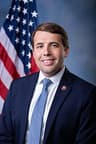 Chris Pappas
Democrat · New Hampshire
 Eugene Vindman
Democrat · Virginia