
A Democratic bill with 4 Republican cosponsors · See all 14 cosponsors
Last activity — Referred to the House Committee on Energy and Commerce.
In committee
Introduced and handed to a committee in the chamber it started in.
The committee holds it, and most bills are never heard from again. A hearing or a committee vote would be news; silence is the usual outcome, and it kills the bill without anyone voting against it.
Its path through Congress
- Introduced
- In Committee
What this bill would do
This bill, known as the "Michelle Alyssa Go Act," seeks to amend the Social Security Act regarding Medicaid. It specifically targets the definition of an "institution for mental diseases." The goal is to exclude certain smaller facilities from this definition. Specifically, institutions with 36 beds or less can be excluded if they meet specific standards. These standards must be approved by the Secretary and include evidence-based practices. The changes would take effect 180 days after the bill is enacted.
Yes· 3 of 6
- Scored +5
Does this make mental health care easier to get?
The bill facilitates the operation of smaller mental health facilities by allowing them to meet specific evidence-based standards to be excluded from the restrictive 'institution for mental diseases' category.
- Scored +4
Does this do more about addiction and overdose deaths?
The bill specifically requires facilities treating substance use disorders to meet nationally recognized, evidence-based standards.
- Scored +4
Would people with disabilities be better off under this?
The bill facilitates higher quality, evidence-based mental health care for those requiring specialized assistance.
The opposite
No question was scored the opposite.
Who it would affect, and how
Potential Positive Impacts for People
-
Exclusion of smaller facilities: Institutions with 36 beds or less can be excluded from the definition of an "institution for mental diseases" if they meet specific requirements (Section 2).
-
High quality of care standards: To be excluded, institutions must meet nationally recognized, evidence-based standards for mental health programs (Section 2).
-
Substance use disorder support: For institutions providing treatment for substance use disorders, the bill requires meeting evidence-based standards, such as those from the American Society of Addiction Medicine (Section 2).
-
Clear service requirements: The standards approved by the Secretary can include specific types of services, hours of clinical care, and staffing credentials (Section 2).
Potential Negative Impacts for People
- No negative impacts are explicitly stated in the provided text.
Groups and Interests Ranking
Every group the model scored this bill for, from -10 to +10. Tap or hover a score for the reason it gave.
- Healthcare
- Does this make mental health care easier to get? — The bill facilitates the operation of smaller mental health facilities by allowing them to meet specific evidence-based standards to be excluded from the restrictive 'institution for mental diseases' category. Does this do more about addiction and overdose deaths? — The bill specifically requires facilities treating substance use disorders to meet nationally recognized, evidence-based standards. Does this put more money into Medicaid, the health coverage for people on low incomes? — By excluding smaller facilities from the 'institution for mental diseases' definition, it allows them to potentially access Medicaid funding differently through state plans.
- Demographic And Interest Groups
- Would people with disabilities be better off under this? — The bill facilitates higher quality, evidence-based mental health care for those requiring specialized assistance. Would households on low incomes be better off under this? — The bill potentially improves access to mental health services for Medicaid recipients, who are often low-income households.
- Social Issues And Justice
- Is this likely to lift people out of poverty? — Improved access to mental health and substance use treatment through smaller facilities can support long-term economic stability for low-income individuals.
- 11/4/2025
- 2 Cosponsors added.
- 10/24/2025
- 1 Cosponsor added.
- 10/14/2025
- 1 Cosponsor added.
- 10/8/2025
- 1 Cosponsor added.
- 10/3/2025
- 1 Cosponsor added.
- 9/18/2025
- Referred to the House Committee on Energy and Commerce.
- 8 Cosponsors added.
- Introduced in House
 Julia Brownley
Democrat · California
 Don Bacon
Republican · Nebraska
 Nanette Barragán
Democrat · California
 Yvette Clarke
Democrat · New York
 Judy Chu
Democrat · California
 Dan Crenshaw
Republican · Texas
 Josh Harder
Democrat · California
 Michael Lawler
Republican · New York
 Seth Moulton
Democrat · Massachusetts
 Jerrold Nadler
Democrat · New York
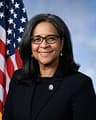 Marilyn Strickland
Democrat · Washington
 Andrea Salinas
Democrat · Oregon
 Claudia Tenney
Republican · New York
 Shri Thanedar
Democrat · Michigan