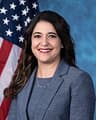
Stephanie Bice (R-OK)
NWR Modernization Act of 2025
A Republican bill with 3 Democratic cosponsors · See all 4 cosponsors
Last activity — Referred to the House Committee on Science, Space, and Technology.
In committee
Introduced and handed to a committee in the chamber it started in.
The committee holds it, and most bills are never heard from again. A hearing or a committee vote would be news; silence is the usual outcome, and it kills the bill without anyone voting against it.
Its path through Congress
- Introduced
- In Committee
What this bill would do
This bill, known as the "NOAA Weather Radio Modernization Act of 2025," directs the modernization of the NOAA Weather Radio All Hazards network. It tasks the Administrator with expanding coverage and ensuring the reliability of broadcasts for weather and non-weather hazards. The legislation focuses on upgrading telecommunications infrastructure and transitioning toward internet protocol-based communications. It also requires the acquisition of new transmitters to reach rural, underserved, and recreational areas. Additionally, the Administrator must conduct an assessment regarding access and management of the system.
Yes· 3 of 7
- Scored +6
Would people in rural areas be better off under this?
The bill explicitly mandates expanding transmitter coverage to reach rural and remote areas.
- Scored +5
Does this invest in rural communities?
The bill directs the acquisition of additional transmitters specifically to expand coverage to rural communities.
- Scored +3
Would Native Americans be better off under this?
The bill emphasizes providing weather radio access to all people within the United States and Tribal lands.
The opposite
No question was scored the opposite.
Who it would affect, and how
Potential Positive Impacts for People
-
Expanded Coverage for Vulnerable Areas: The Administrator is directed to acquire additional transmitters to reach rural and underserved communities, as well as national parks and recreation areas (Section 4(b)). This could help ensure people in these locations have better access to life-saving alerts.
-
Reliability in Poor Service Areas: The bill requires maintaining support for existing systems in areas that have poor quality cellular service (Section 4(a)(1)). This provides a safety net for people who cannot rely on mobile phone networks.
-
Enhanced Emergency Messaging: The bill calls for enhancing the ability to amplify Non-Weather Emergency Messages (Section 4(a)(3)). This could provide more critical information during various types of hazards.
-
Improved Digital Access: By upgrading infrastructure for internet protocol-based communications and consulting with the private sector, the bill aims to enhance the accessibility and usability of weather data (Section 5(a)(1) and 5(a)(3)). This could make it easier for people to receive alerts via websites and mobile applications.
-
System Continuity: The bill directs the development of options like satellite backup and commercial provider partnerships to ensure broadcasts continue even if a Weather Forecast Office experiences an outage (Section 5(a)(4)). This helps protect people from losing access to vital information during emergencies.
Potential Negative Impacts for People
- No specific negative impacts or burdens are explicitly mentioned in the text provided.
Groups and Interests Ranking
Every group the model scored this bill for, from -10 to +10. Tap or hover a score for the reason it gave.
- Demographic And Interest Groups
- Would people in rural areas be better off under this? — The bill explicitly mandates expanding transmitter coverage to reach rural and remote areas. Would Native Americans be better off under this? — The bill emphasizes providing weather radio access to all people within the United States and Tribal lands. Would households on low incomes be better off under this? — The expansion of coverage to underserved areas provides better emergency information for low-income communities.
- Environment Energy And Infrastructure
- Does this invest in rural communities? — The bill directs the acquisition of additional transmitters specifically to expand coverage to rural communities.
- Education And Technology
- Does this put more money into scientific research? — The bill directs the research and development of alternative transmission options like microwave capabilities.
- National Security And Foreign Policy
- Does this better protect the country from computer attacks? — The bill includes an assessment of the effects of electromagnetic pulses on the weather radio network.
- Social Issues And Justice
- Is this likely to lift people out of poverty? — The bill provides improved emergency alert access for underserved communities, which indirectly supports safety for low-income populations.
- 12/15/2025
- 1 Cosponsor added.
- 9/18/2025
- Referred to the House Committee on Science, Space, and Technology.
- 3 Cosponsors added.
- Introduced in House
 Suzanne Bonamici
Democrat · Oregon
 Laura Gillen
Democrat · New York
 Max Miller
Republican · Ohio
 Dina Titus
Democrat · Nevada