
Danny Davis (D-IL)
To provide low-income individuals with opportunities to enter and follow a career pathway in the health professions, and for other purposes.
A Democratic bill with 17 Democratic cosponsors · See all 17 cosponsors
Last activity — Referred to the House Committee on Ways and Means.
In committee
Introduced and handed to a committee in the chamber it started in.
The committee holds it, and most bills are never heard from again. A hearing or a committee vote would be news; silence is the usual outcome, and it kills the bill without anyone voting against it.
Its path through Congress
- Introduced
- In Committee
What this bill would do
The Pathways to Health Careers Act aims to provide low-income individuals with opportunities to enter and follow career pathways in the health professions. This legislation establishes a grant program to train people for various roles, including nursing, emergency medical services, and allied health. It includes specific demonstration projects for individuals with arrest or conviction records and for maternal mortality through pregnancy and postpartum services. The bill outlines requirements for support services like childcare, transportation, and case management. It also sets aside funding for Indian populations and U.S. territories.
Yes· 3 of 14
- Scored +7
Would households on low incomes be better off under this?
The bill specifically targets individuals with family incomes not exceeding 200 percent of the Federal poverty level with training and financial support.
- Scored +6
Would Native Americans be better off under this?
The bill reserves specific funds and provides technical assistance tailored to Indian tribes and tribal organizations.
- Scored +6
Would women be better off under this?
The bill includes a demonstration project specifically addressing maternal mortality through training for pregnancy and postpartum services.
The opposite
No question was scored the opposite.
Who it would affect, and how
Potential Positive Impacts for People
-
Career Opportunities for Low-Income Individuals: The bill provides training for health professions that pay well or lead to well-treading occupations, specifically targeting those with family incomes not exceeding 200 percent of the Federal poverty level (Section 2(a)(1), Section 2(k)(5)).
-
Support for People with Criminal Records: A specific demonstration project is designed to help individuals with arrest or conviction records gain credentials, licensure, and employment in high-demand health careers (Section 2(a)(3)(A), Section 2(c)(2)(B)(i)(I)).
-
Legal Assistance for Job Seekers: Participants in the demonstration project for those with arrest or conviction records can access legal assistance to address workforce barriers (Section 2(d)(2)(A)(v), Section 2(d)(2)(B)(vi)).
-
Maternal Health Support: A demonstration project focuses on training individuals for careers in pregnancy, childbirth, and postpartum services to address maternal mortality (Section 2(c)(2)(B)(i)(II)).
-
Essential Support Services: The bill requires projects to include support such as childcare, transportation, and case management to help participants succeed (Section 2(d)(2)(A)(ii-iv)).
-
Financial Stability Tools: The grant allows for the provision of cash stipends, wage supplements, and emergency cash funds to assist participants financially (Section 2(a)(1)(7), Section 2(b)(5), Section 2(d)(2)(B)(i)).
Potential Negative Impacts for People
-
Income Limitations: Support is restricted only to "eligible individuals," meaning those whose family income does not exceed 200 percent of the Federal poverty level (Section 2(d)(5), Section 2(k)(5)).
-
Strict Eligibility for Demonstration Projects: For the maternal mortality pathway, the project must be conducted in a State that already recognizes doulas or midwives and provides payment for their services (Section 2(c)(2)(B)(i)(II)).
Groups and Interests Ranking
Every group the model scored this bill for, from -10 to +10. Tap or hover a score for the reason it gave.
- Demographic And Interest Groups
- Would households on low incomes be better off under this? — The bill specifically targets individuals with family incomes not exceeding 200 percent of the Federal poverty level with training and financial support. Would Native Americans be better off under this? — The bill reserves specific funds and provides technical assistance tailored to Indian tribes and tribal organizations. Would women be better off under this? — The bill includes a demonstration project specifically addressing maternal mortality through training for pregnancy and postpartum services. Would people in rural areas be better off under this? — The bill provides preference for applications that include projects serving rural areas. Would people in their twenties and thirties be better off under this? — The bill provides career pathways and training that can benefit young adults entering the workforce. Would people with disabilities be better off under this? — The bill provides support services like case management and career coaching that can assist various populations. Would people in cities be better off under this? — The training and workforce development programs are likely to have significant impact in urban health sectors.
- Social Issues And Justice
- Is this likely to lift people out of poverty? — The bill targets low-income individuals by providing training, stipends, and support services to enter well-paying careers. Does this make child care cost less? — The bill requires grantees to provide childcare support services to assist project participants. Does this shorten or soften prison sentences? — The bill includes a demonstration project to provide training and legal assistance to help individuals with arrest or conviction records enter the workforce.
- Economy And Finance
- Is this likely to create jobs? — The bill funds training pathways for high-demand health profession roles. Is this likely to grow the economy? — By training individuals for high-demand healthcare sectors, the bill aims to support economic stability and workforce development.
- Healthcare
- Does this make health care easier to get in general? — The bill addresses workforce shortages in essential areas like nursing and emergency services to improve access to care.
- Education And Technology
- Does this make college cost less? — The bill provides funding for postsecondary credentials and training materials for low-income participants.
- 10/1/2026
- 1 Cosponsor added.
- 5/29/2026
- 1 Cosponsor added.
- 9/16/2025
- Referred to the House Committee on Ways and Means.
- 15 Cosponsors added.
- Introduced in House
One bill Congress.gov lists as related to this one — companions in the other chamber, earlier versions, and bills this one absorbed or was folded into.
 Brendan Boyle
Democrat · Pennsylvania
 Nanette Barragán
Democrat · California
 Judy Chu
Democrat · California
 Lloyd Doggett
Democrat · Texas
 Dwight Evans
Democrat · Pennsylvania
 Jimmy Gomez
Democrat · California
 Steven Horsford
Democrat · Nevada
 John Larson
Democrat · Connecticut
 Gwen Moore
Democrat · Wisconsin
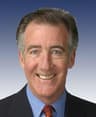 Richard Neal
Democrat · Massachusetts
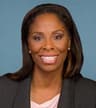 Stacey Plaskett
Democrat · Virgin Islands
 Jimmy Panetta
Democrat · California
 Terri Sewell
Democrat · Alabama
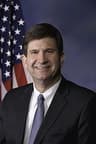 Bradley Schneider
Democrat · Illinois
 Thomas Suozzi
Democrat · New York
 Andrea Salinas
Democrat · Oregon
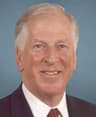 Mike Thompson
Democrat · California