
Marilyn Strickland (D-WA)
Capital for Beginning Farmers and Ranchers Act of 2025
A Democratic bill with 8 Democratic cosponsors · See all 8 cosponsors
Last activity — Referred to the Subcommittee on General Farm Commodities, Risk Management, and Credit.
In committee
Introduced and handed to a committee in the chamber it started in.
The committee holds it, and most bills are never heard from again. A hearing or a committee vote would be news; silence is the usual outcome, and it kills the bill without anyone voting against it.
Its path through Congress
- Introduced
- In Committee
What this bill would do
H.R. 5367, known as the Capital for Beginning Farmers and Rancher Act of 2025, creates a pilot program to provide development loans and loan guarantees to qualified beginning farmers and ranchers. Congress found that current programs often finance multi-year investments as annual operating loans, which causes beginning farmers to under-invest and struggle to build working capital. The new pilot program will finance development expenditures that benefit a farming or ranching business for more than one year. Loans under this program will have repayment terms between three and ten years, amounts up to $100,000, and interest rates between zero and three percent. The bill also requires the Secretary to provide comprehensive training and support to borrowers addressing farm and ranch management issues. Additionally, the Secretary must evaluate the pilot program and submit biennial reports to Congress.
Yes· 3 of 17
- Scored +8
Would farmers be better off under this?
The bill directly aids qualified beginning farmers and ranchers by providing favorable loan terms, low interest rates, and critical management support.
- Scored +8
Does this invest in rural communities?
The bill specifically aids rural development by facilitating capital investments, long-term soil fertility improvements, and asset acquisition for beginning farmers and ranchers.
- Scored +7
Would business owners be better off under this?
Beginning farmers and ranchers receive direct financial assistance, multi-year investment loans, and business management support.
The opposite
No question was scored the opposite.
Who it would affect, and how
Potential Positive Impacts for People
-
Section 3 (adding Section 320(b) to the Consolidated Farm and Rural Development Act): This section establishes a pilot program for development loans and loan guarantees for qualified beginning farmers and ranchers. This is positive because it gives new agricultural workers access to dedicated financing for multi-year investments rather than forcing them to rely on annual operating loans.
-
Section 3 (adding Section 320(c)(1)(E) and (G) to the Consolidated Farm and Rural Development Act): This provision sets low interest rates between zero and three percent and allows for flexible principal repayment where only 1 percent of the remaining balance is due annually. This is beneficial because it lowers the financial burden on new farmers while they are trying to establish their businesses.
-
Section 3 (adding Section 320(d) to the Consolidated Farm and Rural Development Act): This part requires the Secretary to provide comprehensive training and support to borrowers regarding bookkeeping, taxation, credit, regulatory compliance, cash flow, and risk management. This helps beginning farmers and ranchers succeed by giving them essential business management education.
Potential Negative Impacts for People
- Section 3 (adding Section 320(c)(1)(C) to the Consolidated Farm and Rural Development Act): This provision caps the loan amount at $100,000. For beginning farmers and ranchers who need substantial early-stage investments for specialized production and marketing strategies, this strict cap might not provide enough capital to cover all necessary startup costs.
Groups and Interests Ranking
Every group the model scored this bill for, from -10 to +10. Tap or hover a score for the reason it gave.
- Demographic And Interest Groups
- Would farmers be better off under this? — The bill directly aids qualified beginning farmers and ranchers by providing favorable loan terms, low interest rates, and critical management support. Would business owners be better off under this? — Beginning farmers and ranchers receive direct financial assistance, multi-year investment loans, and business management support. Would people in rural areas be better off under this? — Rural economies and agricultural communities are supported through enhanced investment and business development tools for new operators. Would people in their twenties and thirties be better off under this? — Young adults entering agriculture benefit significantly from accessible startup capital and dedicated training programs. Would households on low incomes be better off under this? — Low-income individuals attempting to enter farming gain access to low-interest development loans and flexible repayment terms. Would Black Americans be better off under this? — Minority and socially disadvantaged beginning farmers historically face credit barriers and can benefit from targeted loan access. Would Hispanic Americans be better off under this? — Hispanic beginning farmers and ranchers can utilize the new pilot program to secure development expenditures and training. Would Native Americans be better off under this? — Native American beginning agricultural operators may benefit from expanded access to specialized agricultural development loans. Would veterans be better off under this, taking everything together? — Beginning farmer programs frequently intersect with veteran agricultural initiatives, aiding those transitioning into farming. Would women be better off under this? — Women entering the agricultural sector often face capital hurdles and can benefit from targeted loan and training provisions.
- Economy And Finance
- Does this make it easier to run a small business? — The legislation directly establishes a dedicated pilot program providing development loans, low interest rates, and business management training for beginning farmers and ranchers. Is this likely to create jobs? — The bill supports agricultural business startups and specialized production which can foster employment opportunities on new farms. Is this likely to grow the economy? — By providing dedicated financing for multi-year agricultural investments, the bill encourages productive early-stage capital formation.
- Environment Energy And Infrastructure
- Does this invest in rural communities? — The bill specifically aids rural development by facilitating capital investments, long-term soil fertility improvements, and asset acquisition for beginning farmers and ranchers.
- Governance And Ideology
- Does this make what the government does easier for the public to see? — The bill requires the Secretary to evaluate the pilot program on an ongoing basis and submit biennial reports to congressional committees. Does this give the federal government more power? — The bill directs the Secretary of Agriculture to establish a new federal pilot program, training requirements, and reporting mandates.
- Social Issues And Justice
- Is this likely to lift people out of poverty? — Assisting new agricultural entrepreneurs helps build sustainable livelihoods and economic stability in rural communities.
- 8/31/2026
- 1 Cosponsor added.
- 12/2/2025
- Referred to the Subcommittee on General Farm Commodities, Risk Management, and Credit.
- 10/24/2025
- 1 Cosponsor added.
- 9/26/2025
- 1 Cosponsor added.
- 9/15/2025
- Referred to the House Committee on Agriculture.
- 5 Cosponsors added.
- Introduced in House
One bill Congress.gov lists as related to this one — companions in the other chamber, earlier versions, and bills this one absorbed or was folded into.
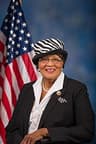 Alma Adams
Democrat · North Carolina
 André Carson
Democrat · Indiana
 Troy Carter
Democrat · Louisiana
 Shomari Figures
Democrat · Alabama
 Jimmy Panetta
Democrat · California
 Adam Smith
Democrat · Washington
 Terri Sewell
Democrat · Alabama
 Eugene Vindman
Democrat · Virginia