
Julie Johnson (D-TX)
Protect Elections from Deceptive AI Act
A Democratic bill with 4 Republican cosponsors · See all 10 cosponsors
Last activity — Referred to the House Committee on House Administration.
In committee
Introduced and handed to a committee in the chamber it started in.
The committee holds it, and most bills are never heard from again. A hearing or a committee vote would be news; silence is the usual outcome, and it kills the bill without anyone voting against it.
Its path through Congress
- Introduced
- In Committee
What this bill would do
The ``Protect Elections from Deceptive AI Act'' aims to stop the distribution of fake AI-generated media of federal candidates. It prohibits people, political committees, or other entities from knowingly sharing deceptive audio or visual content that looks or sounds real to influence an election or ask for money. The bill defines deceptive media as AI-generated content that would cause a reasonable person to have a different understanding of a candidate's appearance or speech. Certain groups, like news organizations and satirists, are exempt from these rules under specific conditions. If the law is violated, candidates can take legal action to stop the distribution or seek damages.
Yes
- Scored +5
Does this make elections run better?
The bill protects election integrity by prohibiting the distribution of deceptive AI media meant to influence elections.
The opposite
- Scored -2
Does this protect the individual right to speak freely?
The bill places potential restrictions on speech regarding candidates and news through legal liabilities.
Who it would affect, and how
Potential Positive Impacts for People
-
Protection of Candidate Reputation: Candidates can seek injunctive relief to stop the distribution of deceptive media and can sue for general or special damages if their likeness or voice is used in a deceptive way (Section 2(a)(3)(1) and (2)).
-
Legal Recourse for Deception: The bill establishes that a violation of this act constitutes defamation per se, which can be used in defamation actions (Section 2(b)).
-
Legal Cost Support: In successful civil actions, courts may award the prevailing party reasonable attorney's fees and costs (Section 2(a)(3)(2)(B)).
Potential Negative Impacts for People
- Burden of Proof on Candidates: In any civil action regarding a violation, the candidate (the plaintiff) carries the burden of proving the violation through clear and convincing evidence (Section 2(a)(3)(3)).
Groups and Interests Ranking
Every group the model scored this bill for, from -10 to +10. Tap or hover a score for the reason it gave.
- Governance And Ideology
- Does this make elections run better? — The bill protects election integrity by prohibiting the distribution of deceptive AI media meant to influence elections. Does this protect the individual right to speak freely? — The bill places potential restrictions on speech regarding candidates and news through legal liabilities.
- 10/15/2026
- 1 Cosponsor added.
- 9/10/2026
- 1 Cosponsor added.
- 9/8/2026
- 1 Cosponsor added.
- 8/31/2026
- 1 Cosponsor added.
- 6/10/2026
- 1 Cosponsor added.
- 6/8/2026
- 1 Cosponsor added.
- 4/9/2026
- 1 Cosponsor added.
- 9/10/2025
- Referred to the House Committee on House Administration.
- 3 Cosponsors added.
- Introduced in House
One bill Congress.gov lists as related to this one — companions in the other chamber, earlier versions, and bills this one absorbed or was folded into.
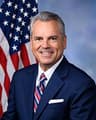 Mark Alford
Republican · Missouri
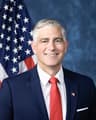 Michael Baumgartner
Republican · Washington
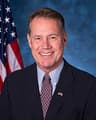 Ed Case
Democrat · Hawaii
 Brian Fitzpatrick
Republican · Pennsylvania
 Valerie Foushee
Democrat · North Carolina
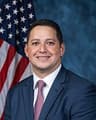 Tony Gonzales
Republican · Texas
 Chrissy Houlahan
Democrat · Pennsylvania
 Val Hoyle
Democrat · Oregon
 Jerrold Nadler
Democrat · New York
 Eugene Vindman
Democrat · Virginia