
A Republican bill with 6 Democratic cosponsors · See all 7 cosponsors
Last activity — Referred to the House Committee on the Judiciary.
In committee
Introduced and handed to a committee in the chamber it started in.
The committee holds it, and most bills are never heard from again. A hearing or a committee vote would be news; silence is the usual outcome, and it kills the bill without anyone voting against it.
Its path through Congress
- Introduced
- In Committee
What this bill would do
This bill is known as the Protecting Older Americans Act of 2025. It changes title 9 of the United States Code regarding the arbitration of age discrimination disputes. Under the bill, certain pre-dispute arbitration agreements and pre-dispute joint-action waivers will not be valid or enforceable if a person alleging age discrimination chooses not to use them. This choice applies to cases filed under Federal, Tribal, or State law involving age discrimination. A court, rather than an arbitrator, will decide whether these rules apply to a specific dispute. The new rules apply to any dispute or claim that arises on or after the date the act is enacted.
Yes· 3 of 6
- Scored +8
Would people over 65 be better off under this?
Older Americans benefit directly by being empowered to choose court litigation instead of mandatory arbitration for age discrimination disputes.
- Scored +8
Would retired people be better off under this?
Retirees and older workers are protected by invalidating forced arbitration clauses in disputes related to age discrimination.
- Scored +8
Does this protect the right to fair treatment by the courts?
The bill enhances legal protections and due process by allowing older workers to bypass mandatory arbitration and have their age discrimination claims heard in court.
The opposite
- Scored -3
Would business owners be better off under this?
Employers lose the ability to enforce pre-dispute arbitration agreements and joint-action waivers for age discrimination claims.
Who it would affect, and how
Potential Positive Impacts for People
-
Section 2 adding section 502(a) gives the person alleging age discrimination the power to choose whether a pre-dispute arbitration agreement or pre-dispute joint-action waiver is valid and enforceable. This is positive because it ensures older workers are not forced into private arbitration and can instead take their age discrimination claims to court if they so choose.
-
Section 2 adding section 502(b) states that a court, rather than an arbitrator, will decide whether the new chapter applies and whether the arbitration agreement is valid and enforceable. This is positive because it places these important legal decisions in the hands of a public judge rather than a private arbitrator.
Potential Negative Impacts for People
- The provided text does not explicitly contain any specific sections or provisions that outline negative consequences or burdens for individuals or groups of people in the United States.
Groups and Interests Ranking
Every group the model scored this bill for, from -10 to +10. Tap or hover a score for the reason it gave.
- Demographic And Interest Groups
- Would retired people be better off under this? — Retirees and older workers are protected by invalidating forced arbitration clauses in disputes related to age discrimination. Would people over 65 be better off under this? — Older Americans benefit directly by being empowered to choose court litigation instead of mandatory arbitration for age discrimination disputes. Would people in middle age be better off under this? — Workers aged 40 and older gain the right to bypass mandatory pre-dispute arbitration agreements for age discrimination claims. Would middle-income households be better off under this? — Middle-class older workers gain stronger legal recourse against age discrimination in employment. Would business owners be better off under this? — Employers lose the ability to enforce pre-dispute arbitration agreements and joint-action waivers for age discrimination claims.
- Governance And Ideology
- Does this protect the right to fair treatment by the courts? — The bill enhances legal protections and due process by allowing older workers to bypass mandatory arbitration and have their age discrimination claims heard in court. Does this give the federal government more power? — The bill establishes federal rules invalidating certain pre-dispute arbitration agreements and ensuring court review.
- 9/24/2026
- 1 Cosponsor added.
- 7/2/2026
- 1 Cosponsor added.
- 6/23/2026
- 1 Cosponsor added.
- 6/8/2026
- 1 Cosponsor added.
- 6/4/2026
- 1 Cosponsor added.
- 6/3/2026
- 1 Cosponsor added.
- 4/27/2026
- 1 Cosponsor added.
- 9/3/2025
- Referred to the House Committee on the Judiciary.
- Introduced in House
3 bills Congress.gov lists as related to this one — companions in the other chamber, earlier versions, and bills this one absorbed or was folded into.
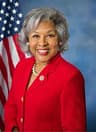 Joyce Beatty
Democrat · Ohio
 Brian Fitzpatrick
Republican · Pennsylvania
 Julie Johnson
Democrat · Texas
 Eleanor Norton
Democrat · District of Columbia
 Josh Riley
Democrat · New York
 Shri Thanedar
Democrat · Michigan
 Derek Tran
Democrat · California