
Frank Lucas (R-OK)
Weather Act Reauthorization Act of 2025
A Republican bill with 14 Democratic cosponsors · See all 26 cosponsors
Last activity — Ordered to be Reported (Amended) by Voice Vote.
Introduced, nothing more yet
Formally proposed, and not yet handed to a committee.
Nearly every bill is sent to a committee within days. Introduction alone is not a sign of support, of momentum, or of any likelihood of passing — any member may introduce any bill.
Its path through Congress
- Introduced
What this bill would do
The "Weather Research and Forecasting Innovation Reauthorization Act of 2025" aims to modernize weather and environmental data collection, communication, and forecasting systems. It focuses on enhancing the National Oceanic and Atmospheric Administration's capabilities and the National Weather Service's workforce and infrastructure. The legislation seeks to expand commercial opportunities for weather data while improving how hazardous weather risks are communicated to the public. Additionally, it includes programs to address specific threats like tornadoes, hurricanes, tsunamis, and atmospheric rivers. The bill also prioritizes optimized forecasting for agriculture, water management, and drought monitoring.
Yes· 3 of 21
- Scored +7
Does this put more money into scientific research?
The bill authorizes significant funding for weather-related research including atmospheric rivers, coastal flooding, and aviation weather.
- Scored +6
Would farmers be better off under this?
The bill provides dedicated funding for improving precipitation and drought forecasts specifically for agricultural needs.
- Scored +5
Does this better protect air, water and wildlife?
The bill invests heavily in monitoring systems for atmospheric rivers, coastal flooding, and soil moisture to better manage environmental risks.
The opposite
No question was scored the opposite.
Who it would affect, and how
Potential Positive Impacts for People
-
Improved Tornado Safety: The bill establishes a program to improve tornado forecasts, predictions, and warnings to reduce the loss of life or property (Section 103).
-
Enhanced Hurricane Preparedness: A program is maintained to improve hurricane forecasting and communicate risks like inland flooding and storm surges to help people decide whether to evacuate or shelter in place (Section 104).
-
Improved Tsunami Response: The act reauthorizes the Tsunami Warning and Education Act to include research and update alert levels to ensure they produce the desired response from communities (Section 105).
-
Increased Radar Capabilities: The bill includes a plan to replace the Next Generation Weather Radar (NEXRAD) system to improve coverage and accuracy (Section 202).
-
Support for Vulnerable Areas: There are provisions to ensure equitable weather observation coverage in under-observed or highly vulnerable regions, such as urban areas (Section 203).
-
Improved Atmospheric River Forecasts: A program is established to provide more accurate warnings for atmospheric rivers to reduce loss of life and property (Section 204).
-
Coastal Protection: The bill establishes a program to improve forecasts for coastal flooding and storm surges to help communities respond more effectively (Section 205).
-
Aviation Safety: An airborne observation program is maintained to provide better weather and turbulence information for the protection of lives and property in the airspace system (Section 206).
-
Improved Weather Forecasting: The bill supports reanalysis and reforecasting to improve weather and climate datasets, which helps in predicting extreme weather (Sec. 209).
-
Enhanced Workforce Support: The Director of the National Weather Service is tasked with assessing medical impacts, including stress and long-term health, related to rotating shifts to improve employee benefits (Sec. 210(b)).
-
Improved Flood Risk Management: The designation of service hydrologists is intended to help users respond more effectively to flood events and improve water resource management (Sec. 210(c)(4)).
-
Access to Commercial Innovation: The Commercial Data Program allows for the acquisition of diverse data from private sector entities, including satellite and ground-based observations (Sec. 302(b)).
-
Better Public Risk Communication: A new program aims to simplify and improve how hazardous weather risks are communicated to the public to prevent loss of life and property (Sec. 402(b)).
-
Enhanced Weather Radio Reliability: The bill directs the expansion of NOAA Weather Radio coverage, specifically to assist rural and underserved communities (Sec. 405(a)).
-
Support for Agricultural and Water Sectors: Pilot projects are established to improve subseasonal to seasonal precipitation forecasts for water management in the western United States and agriculture in the central United States (Sec. 501(a)).
-
Drought Response: The expansion of the National Integrated Drought Information System aims to enhance timely responses to drought through better monitoring and forecasting (Sec. 502(a)).
-
Improved Road Safety: The National Mesonet Program is directed to provide real-time road weather and surface conditions to support surface transportation (Sec. 503(b)(6)).
Potential Negative Impacts for People
-
Staffing Limitations: While the bill discusses hiring, the designation of service hydrologists is explicitly prohibited from increasing the authorized number of full-time equivalent employees at the National Weather Service (Sec. 210(c)(2)).
-
Outsourcing Concerns: The assessment for hiring at the National Weather Service includes recommendations that could lead to outsourcing hiring to entities other than the National Weather Service (Sec. 210(a)(1)).
Groups and Interests Ranking
Every group the model scored this bill for, from -10 to +10. Tap or hover a score for the reason it gave.
- Demographic And Interest Groups
- Would farmers be better off under this? — The bill provides dedicated funding for improving precipitation and drought forecasts specifically for agricultural needs. Would business owners be better off under this? — The bill expands commercial opportunities for the provision of weather data. Would people in rural areas be better off under this? — The bill prioritizes expanding weather radio coverage and mesonet systems in rural and underserved areas. Would Native Americans be better off under this? — The bill specifically mentions consultation with Tribal organizations and Native Hawaiian organizations for hazard mitigation. Would people over 65 be better off under this? — Improved weather communications and radio coverage provide better safety information for elderly populations. Would people in cities be better off under this? — The bill addresses data voids in urban areas through mapping campaigns and enhanced observation coverage. Would households on low incomes be better off under this? — Better hazard communication and increased observation coverage help low-income households prepare for extreme weather.
- Environment Energy And Infrastructure
- Does this better protect air, water and wildlife? — The bill invests heavily in monitoring systems for atmospheric rivers, coastal flooding, and soil moisture to better manage environmental risks. Does this improve help for people hit by a disaster? — The bill improves forecasting and communication for major hazards like hurricanes, tornadoes, and tsunamis, which aids disaster preparedness. Does this invest in rural communities? — The bill expands weather radio coverage and mesonet systems which specifically benefits rural and underserved communities. Does this repair or build roads and bridges? — The National Mesonet Program provides real-time road weather information to support surface transportation safety. Does this reduce how much oil, gas and coal is produced? — Improved weather and climate data can support the transition to more resilient renewable energy infrastructure.
- Economy And Finance
- Is this likely to grow the economy? — By improving weather forecasting for agriculture, water management, and aviation, the bill helps reduce economic disruptions caused by weather events. Is this likely to create jobs? — The bill funds weather research, workforce development, and technological innovation which can stimulate employment in those sectors. Does this make it easier to run a small business? — The bill enhances weather data accessibility and creates expansion of commercial opportunities which can assist small businesses in risk management.
- Education And Technology
- Does this put more money into scientific research? — The bill authorizes significant funding for weather-related research including atmospheric rivers, coastal flooding, and aviation weather.
- Social Issues And Justice
- Does this narrow racial gaps in how people are treated? — The bill includes provisions to ensure equitable weather observation coverage in underserved and highly vulnerable regions. Is this likely to lift people out of poverty? — Improved weather forecasting can help mitigate economic losses for vulnerable populations.
- Governance And Ideology
- Does this make what the government does easier for the public to see? — The bill requires regular reporting to Congress regarding various weather observation and data programs.
- Healthcare
- Does this make health care easier to get in general? — The bill's focus on heat health information systems and extreme weather protection can indirectly support public health outcomes.
- National Security And Foreign Policy
- Does this increase the pay, pensions or support veterans receive? — Improved weather forecasting may indirectly benefit veterans by improving disaster response and safety.
- 10/3/2025
- 3 Cosponsors added.
- 9/19/2025
- 1 Cosponsor added.
- 9/10/2025
- Committee Consideration and Mark-up Session Held
- Ordered to be Reported (Amended) by Voice Vote.
- 1 Cosponsor added.
- 9/8/2025
- 1 Cosponsor added.
- 9/3/2025
- 1 Cosponsor added.
- 9/2/2025
- Referred to the Committee on Science, Space, and Technology, and in addition to the Committee on Natural Resources, for a period to be subsequently determined by the Speaker, in each case for consideration of such provisions as fall within the jurisdiction of the committee concerned.
- 19 Cosponsors added.
- Introduced in House
3 bills Congress.gov lists as related to this one — companions in the other chamber, earlier versions, and bills this one absorbed or was folded into.
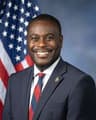 Gabe Amo
Democrat · Rhode Island
 Suzanne Bonamici
Democrat · Oregon
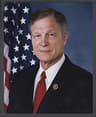 Brian Babin
Republican · Texas
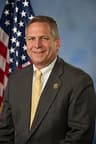 Mike Bost
Republican · Illinois
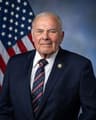 James Baird
Republican · Indiana
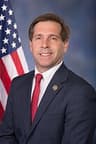 Charles Fleischmann
Republican · Tennessee
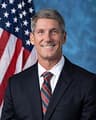 Scott Franklin
Republican · Florida
 Maxwell Frost
Democrat · Florida
 Valerie Foushee
Democrat · North Carolina
 Laura Friedman
Democrat · California
 Laura Gillen
Democrat · New York
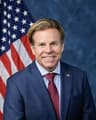 Mike Haridopolos
Republican · Florida
 Zoe Lofgren
Democrat · California
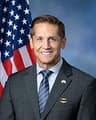 Richard McCormick
Republican · Georgia
 Max Miller
Republican · Ohio
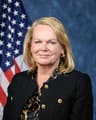 April McClain Delaney
Democrat · Maryland
 Tim Moore
Republican · North Carolina
 Sarah McBride
Democrat · Delaware
 Eleanor Norton
Democrat · District of Columbia
 Deborah Ross
Democrat · North Carolina
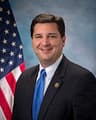 David Rouzer
Republican · North Carolina
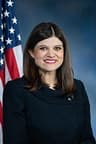 Haley Stevens
Democrat · Michigan
 Claudia Tenney
Republican · New York
 Eugene Vindman
Democrat · Virginia
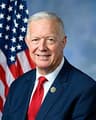 Randy Weber
Republican · Texas
 George Whitesides
Democrat · California