
Andy Biggs (R-AZ)
Keep Offenders Off Our Streets Act.
A Republican bill with 5 Republican cosponsors · See all 5 cosponsors
Last activity — Referred to the House Committee on Oversight and Government Reform.
In committee
Introduced and handed to a committee in the chamber it started in.
The committee holds it, and most bills are never heard from again. A hearing or a committee vote would be news; silence is the usual outcome, and it kills the bill without anyone voting against it.
Its path through Congress
- Introduced
- In Committee
What this bill would do
This bill is titled the Keep Offenders Off Our Streets Act. It stops the District of Columbia from letting people charged with a crime go free before their trial without a secured appearance bond. The mayor cannot enforce rules that allow release without this bond, and the D.C. Council cannot pass them. The bill repeals release on personal recognizance and changes the D.C. Home Rule Act to include this prohibition. These rules apply to people who appear before a judicial officer before, on, or after the date the act is passed. If any part of the act is found invalid, the rest of the act stays valid.
Yes
- Scored +6
Does this give the federal government more power?
Federal legislation directly overrides local D.C. governance and amends the D.C. Home Rule Act.
- Scored +2
Would high-income households be better off under this?
Wealthier individuals can more easily afford secured appearance bonds if charged with an offense.
The opposite· 3 of 10
- Scored -7
Would households on low incomes be better off under this?
Low-income defendants will face severe pretrial detention burdens due to the inability to afford secured appearance bonds.
- Scored -6
Does this leave more decisions to the states?
Preempts local legislative and executive authority in the District of Columbia.
- Scored -5
Does this shorten or soften prison sentences?
Restricts judicial discretion by mandating secured appearance bonds and repealing release on personal recognizance.
Who it would affect, and how
Potential Positive Impacts for People
-
Section 2(a): This section prohibits releasing individuals charged with an offense in the District of Columbia pending trial without executing a bail bond with solvent sureties. This might be considered positive because it requires a financial guarantee to help assure the person appears for trial as required.
-
Section 2(b)(1): This section repeals release on personal recognizance and updates the D.C. Official Code to require the execution of a bail bond with solvent sureties in an amount reasonably necessary to assure the person's appearance. This might be considered positive as it ensures individuals cannot simply be released on their own word without financial backing to guarantee they show up in court.
Potential Negative Impacts for People
- Section 2(a): By prohibiting the release of any charged individual without a secured appearance bond, this rule takes away a judge's ability to release someone on personal recognizance. This might be considered a burden or negative for individuals who are charged with an offense but lack the financial resources to pay for a bail bond or secure solvent sureties, potentially keeping them detained simply because they cannot afford it.
Groups and Interests Ranking
Every group the model scored this bill for, from -10 to +10. Tap or hover a score for the reason it gave.
- Demographic And Interest Groups
- Would high-income households be better off under this? — Wealthier individuals can more easily afford secured appearance bonds if charged with an offense. Would households on low incomes be better off under this? — Low-income defendants will face severe pretrial detention burdens due to the inability to afford secured appearance bonds. Would people in cities be better off under this? — Directly impacts urban residents in the District of Columbia by restructuring local criminal justice procedures. Would Black Americans be better off under this? — Disproportionately affects minority defendants in the District of Columbia who are statistically more likely to be impacted by cash bail requirements. Would Hispanic Americans be better off under this? — May negatively impact minority populations facing pretrial financial barriers. Would people in their twenties and thirties be better off under this? — Younger demographic cohorts often experience higher rates of poverty and could be disproportionately impacted by mandatory secured bail requirements.
- Social Issues And Justice
- Does this shorten or soften prison sentences? — Restricts judicial discretion by mandating secured appearance bonds and repealing release on personal recognizance. Is this likely to lift people out of poverty? — Imposes financial requirements for pretrial release that can heavily penalize impoverished individuals. Does this narrow racial gaps in how people are treated? — Eliminating personal recognizance disproportionately burdens low-income defendants and minority communities who may lack financial resources for bail.
- Governance And Ideology
- Does this give the federal government more power? — Federal legislation directly overrides local D.C. governance and amends the D.C. Home Rule Act. Does this leave more decisions to the states? — Preempts local legislative and executive authority in the District of Columbia. Does this protect the right to fair treatment by the courts? — Removes judges' flexibility to release defendants without financial bonds, potentially keeping individuals detained solely due to inability to pay.
- 9/8/2025
- 1 Cosponsor added.
- 9/4/2025
- 1 Cosponsor added.
- 8/22/2025
- Referred to the House Committee on Oversight and Government Reform.
- 3 Cosponsors added.
- Introduced in House
 Elijah Crane
Republican · Arizona
 Andy Harris
Republican · Maryland
 Clay Higgins
Republican · Louisiana
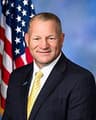 Troy Nehls
Republican · Texas
 Marlin Stutzman
Republican · Indiana