
A Democratic bill with 1 Republican cosponsor · See the cosponsor
Last activity — Referred to the House Committee on Science, Space, and Technology.
In committee
Introduced and handed to a committee in the chamber it started in.
The committee holds it, and most bills are never heard from again. A hearing or a committee vote would be news; silence is the usual outcome, and it kills the bill without anyone voting against it.
Its path through Congress
- Introduced
- In Committee
What this bill would do
The Fusion Workforce Act aims to support fusion education and the development of a skilled technical workforce. The bill authorizes the National Science Foundation and the Department of Energy to provide awards for research, development, and educational activities related to fusion. It includes provisions for creating industry-oriented curricula, supporting teacher training, and providing research opportunities for students. Additionally, the bill establishes a pilot program to bring industry professionals into educational settings. Finally, it creates a Fusion Skilled Technical Workforce and STEM Education Coordination Hub to centralize workforce development and information.
Yes· 3 of 15
- Scored +8
Does this put more money into scientific research?
The bill authorizes $150 million over five years to support fusion research and education.
- Scored +7
Does this put more money into medical research?
The bill authorizes significant funding for research and development in fusion technologies through the NSF and DOE.
- Scored +6
Would students be better off under this?
The bill specifically funds research experiences, graduate fellowships, and industry-oriented curricula for students.
The opposite
No question was scored the opposite.
Who it would affect, and how
Potential Positive Impacts for People
-
Workforce Development: The bill supports the growth of a diverse and sustainable workforce for fusion-related fields to meet the needs of industry and government (Section 3(a)(1)).
-
Educational Access and Tools: Funds can be used to provide students with access to National Laboratories, Federal training facilities, and industry-standard equipment and software (Section 3(a)(2)(D)).
-
Career Opportunities: The bill supports internships, fellowships, apprenticeships, and other work-based learning opportunities related to fusion (Section 3(b)(2)(A)).
-
Teacher and Researcher Support: Provisions include training and professional development for teachers, researchers, and educators in fusion-related fields (Section 3(a)(2)(B) and Section 3(b)(2)(D)).
-
Increased Diversity and Outreach: The bill includes specific outreach efforts to include junior or community colleges, Hispanic-serving institutions, Historically Black colleges and universities, Tribal Colleges or Universities, and institutions serving rural communities (Section 3(c)(5) and Section 4(f)(5)).
-
Industry Expertise in Education: A pilot program allows for the appointment of private sector professionals to educate students on fusion sciences and engineering (Section 3(c)(1)).
Potential Negative Impacts for People
- No negative impacts or burdens are explicitly mentioned in the provided text.
Groups and Interests Ranking
Every group the model scored this bill for, from -10 to +10. Tap or hover a score for the reason it gave.
- Demographic And Interest Groups
- Would students be better off under this? — The bill specifically funds research experiences, graduate fellowships, and industry-oriented curricula for students. Would Hispanic Americans be better off under this? — The bill specifically targets outreach to Hispanic-serving institutions. Would Native Americans be better off under this? — The bill includes outreach to Tribal Colleges and Universities and Native American-serving institutions. Would people in rural areas be better off under this? — The bill includes outreach to institutions serving rural communities and EPSCoR institutions. Would people in their twenties and thirties be better off under this? — The bill creates numerous pathways for students through internships, apprenticeships, and fellowships. Would households on low incomes be better off under this? — The bill includes support for junior or community colleges and low-income scholar programs. Would veterans be better off under this, taking everything together? — The bill supports industry pathway programs that serve or support veterans. Would women be better off under this? — The bill explicitly includes outreach efforts to increase the participation of women in STEM.
- Education And Technology
- Does this put more money into scientific research? — The bill authorizes $150 million over five years to support fusion research and education. Does this make college cost less? — The bill provides for various fellowships, traineeships, and research opportunities for students.
- Economy And Finance
- Is this likely to create jobs? — The bill supports the development of a skilled technical workforce to meet the evolving needs of the fusion industry. Is this likely to grow the economy? — By investing in fusion education and workforce development, the bill aims to foster a new industrial sector.
- Social Issues And Justice
- Does this narrow racial gaps in how people are treated? — The bill mandates outreach to Hispanic-serving institutions, Historically Black colleges and universities, and Tribal colleges. Does this narrow the gap between how men and women are treated? — The bill includes specific outreach to increase the participation of women in fusion-related STEM fields.
- Healthcare
- Does this put more money into medical research? — The bill authorizes significant funding for research and development in fusion technologies through the NSF and DOE.
- 8/19/2025
- Referred to the House Committee on Science, Space, and Technology.
- 1 Cosponsor added.
- Introduced in House
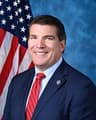 Jay Obernolte
Republican · California